
Pruning
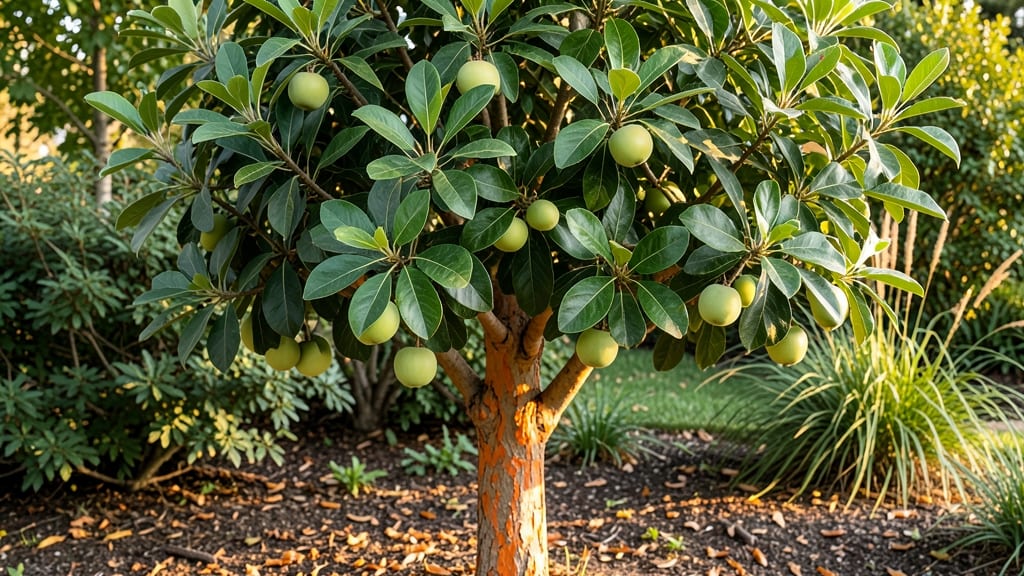
Your persimmon tree is loaded with hard, astringent fruit that won’t soften no matter how long you wait—this is the classic sign of unripe persimmons. 🌿 The problem often starts with pruning (or lack of it), but temperature, sunlight, and even pollination play a role too.
I’ve watched my own trees go from frustrating to fruitful by making just a few key adjustments.
First, check your pruning habits—aggressive cuts can stress the tree and delay ripening. Instead, focus on open-center shaping to improve airflow and sunlight penetration. Thin out crowded branches in late winter, and avoid heavy pruning after June, when the tree needs energy for fruit development.
Even a single late-season pruning can push back ripening by weeks.
With the right approach, you’ll see sweeter, softer fruit by early fall—no more waiting until frost. The secret is balancing pruning with proper watering (deep but infrequent) and ensuring bees have access for pollination. I’ve gone from bitter disappointment to harvesting perfect persimmons by mid-October every year.
This method works for both Asian (like Fuyu) and American persimmons (like American Beauty). The key is patience—persimmons ripen on the tree, not off it, so timing matters. Let’s turn those astringent orbs into the velvety-sweet treats they’re meant to be.
Root Causes Behind Unripe Persimmons
Understanding why your persimmon tree produces unripe fruit is the first step toward fixing the issue. Several key factors—ranging from environmental conditions to tree health—can delay or prevent proper ripening. Let’s break down the science behind each cause and what you can do about it.
Persimmons (Diospyros spp.) are sun-loving trees that require full sunlight (6–8+ hours daily) to trigger the ripening process. When trees are shaded—by nearby structures, taller trees, or even dense foliage—their fruit struggles to develop the necessary sugars and pigments.
Why it happens:
- Photosynthesis slowdown: Shade reduces chlorophyll production, limiting energy for fruit maturation.
- Hormonal imbalance: Sunlight regulates ethylene production (the ripening hormone), and low light disrupts this cycle.
- Temperature fluctuations: Shaded areas stay cooler, further stalling ripening.
Actionable fix:
- Prune competing branches 🔪 that block sunlight, especially on the tree’s south or west sides (in the Northern Hemisphere).
- Thin the canopy to ensure light penetrates the inner fruit clusters.
- Consider relocation if the tree is permanently shaded—persimmons thrive in USDA Zones 5–9 with full sun.
Persimmons are drought-tolerant but hate soggy roots or inconsistent moisture, both of which can derail ripening.
Why it happens:
- Drought stress: Underwatering causes the tree to prioritize survival over fruit development, leading to small, hard, and unripe fruit.
- Overwatering: Poor drainage or excessive moisture drowns roots, starving the tree of nutrients and hormones needed for ripening.
- Irregular watering: Uneven moisture triggers abscisic acid (a stress hormone) that halts fruit maturation.
Actionable fix:
- Deep watering (1–2 inches per week) 💦 during dry spells, focusing on the root zone (not the foliage).
- Improve drainage by amending soil with compost or sand if your area retains water.
- Mulch properly (2–3 inches of organic mulch, kept 6 inches from the trunk) to retain moisture without suffocating roots.
Persimmons are not self-pollinating (except for a few varieties like ‘Fuyu’). If pollinators (bees, wind, or human intervention) fail to transfer pollen effectively, fruit may set but never ripen properly.
Why it happens:
- Lack of pollinators: Early spring frosts or pesticide use can kill bees before the tree blooms.
- Poor timing: Persimmons bloom in late spring, and if temperatures drop below 50°F (10°C) during flowering, pollen won’t transfer.
- Genetic incompatibility: Some cultivars (like ‘Hachiya’) require cross-pollination from another persimmon tree within 100 feet.
Actionable fix:
- Plant a second persimmon tree (different cultivar) 🌳 if you only have one.
- Hand-pollinate on cool, cloudy days by gently shaking branches or using a paintbrush to transfer pollen.
- Avoid early-season pesticides that harm bees—opt for neem oil or horticultural soap instead.
Persimmons need warm days (75–90°F / 24–32°C) and cool nights (50–60°F / 10–15°C) during fruit development. Deviations can lock fruit in an unripe state.
Why it happens:
- Heatwaves: Temperatures above 95°F (35°C) cause sunscald and premature fruit drop.
- Late frosts: A freeze after flowering (below 28°F / -2°C) can kill blossoms, reducing fruit set.
- Early autumn chills: If nights drop too fast before harvest, fruit stalls at the astringent (unripe) stage.
Actionable fix:
- Use shade cloth (30–50% coverage) 🌞 during extreme heatwaves to protect fruit.
- Cover young trees with frost blankets if late frosts are forecasted.
- Choose late-maturing cultivars (like ‘Iachetta’) for warmer climates to avoid early cold snaps.
Unripe persimmons often signal nutrient deficiencies, particularly potassium, nitrogen, or boron, which are critical for sugar development and cell wall softening.
Why it happens:
- Potassium deficiency: Leads to small, hard fruit with poor color (a classic sign of unripe persimmons).
- Nitrogen excess: While green leaves may look healthy, too much nitrogen delays ripening by promoting leafy growth over fruit maturation.
- Boron or calcium shortages: Cause blossom end rot or cracked, underdeveloped fruit.
Actionable fix:
- Soil test first! 📊 Use a home test kit or send a sample to a local extension office.
- Apply balanced fertilizer (10-10-10) early spring, then switch to low-nitrogen, high-potassium (5-10-10) in summer.
- Add compost or wood ash (for potassium) and lime (for calcium) if soil is acidic.
- For boron issues, use borax (sodium borate) at 1/4 lb per 100 sq ft in early spring.
Certain pests and diseases sap the tree’s energy, leaving fruit underdeveloped and astringent.
Why it happens:
- Aphids, scale, or spider mites: 🐜 Suck sap, weakening the tree and reducing fruit sugar content.
- Powdery mildew or anthracnose: Fungal infections distort fruit and prevent proper ripening.
- Root-knot nematodes: Stunt root growth, limiting nutrient uptake for fruit.
Actionable fix:
- Inspect leaves regularly for sticky residue (aphids), webbing (spider mites), or white powder (mildew).
- Spray neem oil 🌿 (every 7–10 days) to deter pests and fungi.
- Encourage beneficial insects like ladybugs by planting dill or marigolds nearby.
- Solarize soil (cover with clear plastic for 4–6 weeks in summer) to kill nematodes if infestation is severe.
Over-pruning or pruning at the wrong time can stress the tree, delaying ripening.
Why it happens:
- Late-summer pruning: Removing branches after June encourages new growth that won’t harden before winter, weakening the tree.
- Over-thinning: Reduces the tree’s ability to photosynthesize enough energy for fruit maturation.
- Poor cuts: Stubs or torn bark invite disease, further stressing the tree.
Actionable fix:
- Prune in late winter or early spring (before buds swell) to shape the tree without shocking it.
- Remove only dead, diseased, or crossing branches—never cut more than 25% of the canopy in one season.
- Use sharp, clean tools 🔪 to make smooth cuts just outside the branch collar.
Some persimmon cultivars are naturally slower to ripen or require specific conditions to soften properly.
Why it happens:
- Astringent varieties (e.g., ‘Hachiya’): Must be completely soft and deep orange before eating—picking too early = bitter, unripe fruit.
- Late-maturing types: Some cultivars (like ‘Tanenashi’) take longer to ripen than others.
- Climate mismatches: Tropical persimmons (e.g., Diospyros kaki) may struggle in short growing seasons.
Actionable fix:
- Research your cultivar’s ripening timeline—some need 120–180 days from bloom to harvest.
- Pick at the right stage: ‘Hachiya’ should jiggle when shaken and have a deep orange color.
- **Consider
Fixing Unripe Persimmons Naturally
Now that you understand why your persimmon tree might be struggling to ripen fruit, let’s tackle the solutions—practical, step-by-step fixes tailored to each common cause. Whether it’s environmental factors, tree health, or pruning issues, these strategies will help coax those sweet, vibrant persimmons to maturity.
Cause: Overcrowded branches or improper pruning block sunlight and airflow. Fix: 🔥 Step 1: Assess the Tree’s Structure
- Remove dead, diseased, or crossing branches first. These compete for energy and can harbor pests.
- Use sharp, sterilized pruners to make clean cuts just above a bud or branch collar.
🍳 Step 2: Thin Out Overlapping Branches
- Aim for an open canopy—space branches 12–18 inches apart to allow sunlight to penetrate.
- Focus on vertical branches (growing straight up) and water sprouts (thin, fast-growing shoots).
👨🍳 Step 3: Prioritize Fruit-Bearing Branches
- Keep 3–5 main scaffold branches (large, sturdy limbs) and prune back any that are too dense.
- Pro Tip: 💡 Prune in late winter or early spring (before buds swell) to minimize stress on the tree.
🥘 Step 4: Encourage Airflow
- Avoid "honeycomb" pruning (leaving stubs)—always cut back to a bud or branch.
- Goal: 70–80% sunlight should reach the inner canopy where fruit forms.
Cause: Persimmons need full sun (6+ hours/day) and warmth to ripen. Fix: 🌡️ Step 1: Check Sun Exposure
- If your tree is in partial shade, consider relocating it (if possible) or thinning nearby trees/shrubs.
- Quick Test: Use a sunlight tracker (or a white sheet) to measure daily sunlight—aim for 6+ hours.
🎯 Step 2: Protect from Late Frost
- Persimmons require frost-free nights in late summer to ripen.
- Use frost cloth or row covers if frost threatens after flowering.
✨ Step 3: Boost Soil Warmth
- Mulch heavily (3–4 inches of wood chips or straw) to retain heat in the root zone.
- Avoid wet soil—persimmons hate soggy roots. Ensure well-draining soil with a pH of 6.0–7.0.
Cause: Over/under-watering or nutrient deficiencies stall ripening. Fix: 📊 Step 1: Water Deeply but Infrequently
- Deep watering (1–2 inches per week) encourages strong root growth.
- Avoid wetting leaves to prevent fungal diseases like anthracnose.
💪 Step 2: Fertilize Strategically
- Spring: Apply balanced fertilizer (10-10-10) to promote new growth.
- Summer (when fruit sets): Switch to low-nitrogen, high-potassium (5-10-10) to support fruiting.
- Pro Tip: 🌿 Avoid over-fertilizing—too much nitrogen = more leaves, fewer fruits!
🥗 Step 3: Test Soil Health
- Soil test kits (available at garden centers) check for nitrogen, phosphorus, potassium, and micronutrients.
- Common Fixes:
- Magnesium deficiency? Add Epsom salt (1 tbsp per gallon of water, sprayed on leaves).
- Zinc deficiency? Use chelated zinc or apply zinc sulfate to soil.
Cause: Insects (aphids, borers) or diseases (powdery mildew) drain the tree’s energy. Fix: 🔪 Step 1: Inspect for Pests
- Aphids? Blast off with water spray or use neem oil.
- Borers? Prune infested branches below the entry hole and treat with beneficial nematodes.
🛡️ Step 2: Prevent Fungal Diseases
- Powdery mildew? Spray with baking soda solution (1 tbsp baking soda + 1 gallon water + a drop of soap).
- Anthracnose? Remove fallen leaves and apply copper fungicide in early spring.
🎯 Step 3: Encourage Beneficial Insects
- Plant companion plants like marigolds or dill to attract ladybugs and lacewings, which eat pests.
Once your persimmons are ripening beautifully, keep the momentum going with these habits:
- Prune annually in late winter to maintain an open canopy.
- Monitor soil moisture—persimmons hate drought stress but also dislike waterlogged roots.
- Harvest at the right time—persimmons soften when ripe (or use a sugar test: ripe fruit has 20–30% sugar).
- Thin fruit early (if overloaded) to avoid small, underripe persimmons.
Final Note: Patience is key—persimmons can take 120–150 days to ripen! With these fixes, your tree will thank you with sweet, jewel-toned fruit come fall. 🍊✨
Frequently asked questions about persimmon tree fruit ripening
Why do my persimmon fruits stay hard and bitter even when they're orange?
This is the classic sign of astringency—a chemical that makes unripe persimmons taste bitter. Most varieties (like 'Hachiya') won't soften until they're fully ripe on the tree. Check for these signs: deep orange color, slight give when squeezed, and no astringent taste when you cut one open.
Can I force unripe persimmons to ripen indoors?
No, persimmons must ripen on the tree—they won't soften properly indoors like bananas or avocados. The ethylene gas method (common for other fruits) doesn't work because persimmons have unique ripening chemistry. Your best bet is to wait until they're fully ripe on the tree or choose a non-astringent variety like 'Fuyu'.
How do I know if my persimmon tree needs more sunlight?
Look for these clues: small, hard fruit, leggy growth (branches stretching toward light), or yellowing leaves in the inner canopy. A simple test is to place a white sheet under the tree for a day—if it's shaded for more than 4 hours, you need to prune or relocate the tree to full sun (6+ hours daily).
What's the best time of year to prune my persimmon tree for optimal ripening?
Prune in late winter or early spring (before buds swell) to avoid stressing the tree. Never prune after June—new growth won't harden before winter, delaying next year's fruit ripening. Focus on removing dead wood, crossing branches, and thinning the canopy to improve airflow and sunlight.
How can I tell if my persimmon tree has a nutrient deficiency causing unripe fruit?
Watch for these signs: small, hard fruit with poor color (potassium deficiency), yellowing leaves with green veins (magnesium), or cracked fruit (calcium). The best fix is a soil test—persimmons often need more potassium (for sugar development) and boron (for cell wall softening) during fruiting season.