
Pests and Diseases
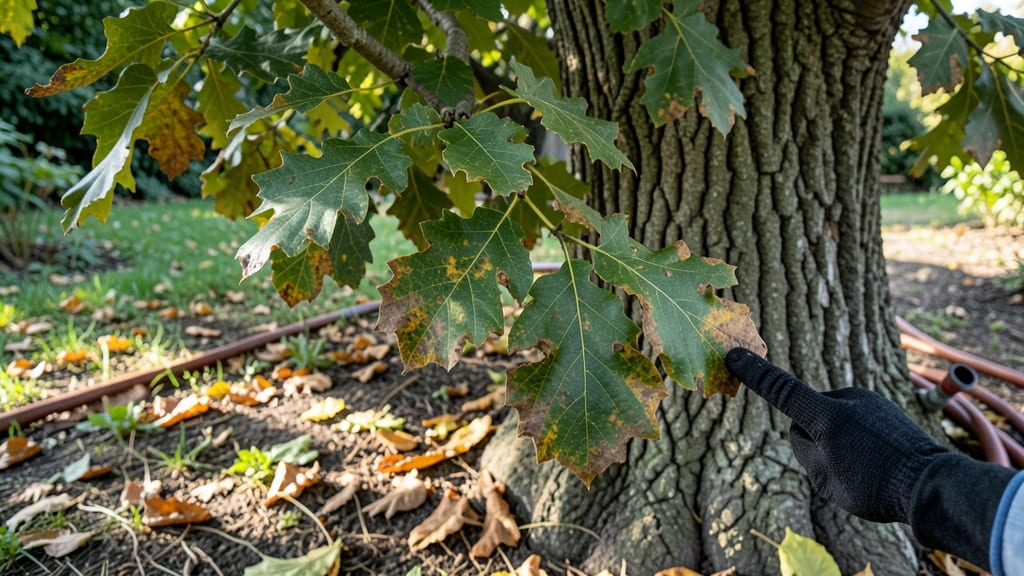
Your tree’s green leaves falling off in summer isn’t a death sentence—it’s a cry for help. 🌳 Root stress is the #1 reason green leaves fall during heatwaves, and the good news?
You can often fix it before the tree suffers permanent damage. I’ve seen this happen to my mature oak after just one scorching week, and the solution is simpler than you’d think.
The first clue is usually wilting leaves that stay attached for a day or two before dropping—often starting at the bottom of the tree. Check the soil: if it’s bone-dry two inches down or feels like concrete when squeezed, roots are struggling to pull up water.
Other red flags include yellowing between veins (nutrient stress) or sawdust-like frass near the trunk (borer activity).
Here’s the game-changer: deep watering + shade relief works faster than fertilizer. Water slowly until it drains 12 inches deep—repeat every 5-7 days during droughts. Mulch heavily (3-4 inches) to lock in moisture, and avoid pruning until fall. Within 2-3 weeks, new growth should appear, and the dropping should stop.
If the tree keeps losing leaves despite your efforts, or you see oozing cankers, it’s time to call an arborist. But in 80% of cases, this simple routine saves trees—even in extreme heat.
Your oak’s got a fighting chance, and it starts with understanding what’s really going on below the soil.
Root Stress Behind Premature Leaf Drop
When vibrant green leaves suddenly detach from your tree during summer—despite the heat and sunshine—root stress is often the hidden villain. Unlike seasonal leaf fall, this premature shedding signals that your tree’s roots are struggling to sustain its canopy.
Let’s break down the key culprits and why they trigger this distress response.
Summer’s scorching temperatures and prolonged dry spells dehydrate soil, forcing roots to work overtime to absorb moisture. When the demand for water exceeds supply, trees prioritize survival by shedding leaves—especially younger, less resilient ones. This is their way of reducing water loss through transpiration.
- How it happens: High evaporation rates dry out shallow roots first, cutting off the tree’s water supply.
- Signs to watch for:
- Wilting leaves (even when watered)
- Crispy, brown leaf edges
- Soil pulling away from the tree’s base (indicating extreme thirst)
- Actionable fix:
- 💡 Deep watering: Water slowly at the base (1–2 inches per week) to encourage roots to grow deeper.
- 🌡️ Mulch like a pro: Apply 2–4 inches of organic mulch (wood chips, straw) to retain moisture and cool roots.
- ⏰ Avoid midday watering: Early morning or late evening reduces evaporation loss.
Overwatering or poorly draining soil creates the perfect breeding ground for fungal pathogens like Phytophthora or Armillaria. These fungi attack root tissues, disrupting nutrient and water uptake. As roots weaken, the tree’s leaves turn yellow, then drop prematurely—even in summer.
- How it happens:
- Compacted or clay-heavy soil traps excess moisture, suffocating roots.
- Fungal spores thrive in soggy conditions, spreading through root wounds.
- Signs to watch for:
- Mushrooms or fungal growth at the tree’s base
- Black, mushy roots when inspected
- Leaf discoloration (yellowing between veins)
- Actionable fix:
- 🔥 Improve drainage: Amend soil with compost or sand to loosen compacted areas.
- 🌡️ Fungal treatment: Apply copper-based fungicides or hydrogen peroxide (1:9 ratio with water) to infected roots.
- 🎯 Prune affected roots: Remove blackened/mushy roots with sterilized tools to prevent spread.
Beneath the soil, pests like root borers, grubs, or nematodes chew through root systems, severing the tree’s lifeline. These critters disrupt nutrient transport, causing leaves to yellow and detach—often without visible above-ground damage.
- How it happens:
- Grubs (larvae of beetles) tunnel through roots, creating entry points for disease.
- Nematodes (microscopic worms) pierce root cells, blocking water absorption.
- Signs to watch for:
- White, worm-like creatures in soil
- Holes or sawdust-like frass near roots
- Stunted growth despite adequate water
- Actionable fix:
- 🔪 Handpick pests: Use a trowel to expose and remove grubs/larvae (best done in early morning).
- 💡 Beneficial nematodes: Apply Steinernema carpocapsae to soil to combat root-dwelling pests.
- 🌡️ Neem oil spray: Drench soil with neem oil (1 tsp/gallon of water) to deter future infestations.
Summer’s rapid growth demands extra nutrients, but poor soil health or over-fertilization can backfire. Too much salt (from fertilizers) or a lack of essential micronutrients (like magnesium or iron) stresses roots, leading to leaf drop. Even nitrogen spikes can cause "burnout" in sensitive species.
- How it happens:
- Over-fertilization salts soil, preventing water uptake.
- Deficiencies (e.g., magnesium for chlorophyll) cause interveinal yellowing.
- Signs to watch for:
- Yellowing between leaf veins (magnesium deficiency)
- Purple stems or new growth (phosphorus deficiency)
- White crust on soil surface (excess salt)
- Actionable fix:
- 📊 Test soil pH: Aim for 6.0–7.0; amend with lime (to raise pH) or sulfur (to lower it).
- 💪 Slow-release fertilizer: Use organic options like composted manure or fish emulsion.
- ✨ Epsom salt flush: Mix 1 tbsp Epsom salt per gallon of water and drench roots monthly for magnesium.
Next up: How to diagnose which root stressor is plaguing your tree—and 3 easy steps to revive it before winter.
Quick Fixes for Dying Summer Greens
Summer’s heat and stress can turn your lush green leaves into a sad, crunchy mess—but don’t panic! With the right approach, you can nurse your tree back to health and prevent future leaf loss.
Below, we’ve matched common causes to practical, step-by-step solutions, plus pro tips to keep your tree thriving all season long.
---
Signs: Wilting, crispy edges, or leaves curling upward like a taco.
How to Fix It: 🔥 Deep Watering (Not Just a Sprinkle!) - Water slowly and deeply (1–2 inches per week) to encourage roots to grow downward. Use a soaker hose or drip irrigation to avoid runoff. - Best time to water: Early morning (6–9 AM) to reduce evaporation and fungal risks.
🍳 Mulch Like a Moisture Magnet - Spread 2–4 inches of organic mulch (wood chips, straw, or shredded bark) around the base (keep it 6 inches away from the trunk). - Mulch locks in moisture and regulates soil temperature—like a cozy blanket for roots!
👨🍳 Shade Relief for Stressed Trees - If your tree is in full sun, provide temporary shade with lightweight shade cloth (30–50% coverage) during peak heat (11 AM–3 PM). - Avoid heavy pruning in summer—it stresses the tree further. Wait until fall or early spring.
💡 Pro Tip: Avoid overhead watering (like sprinklers). It wastes water and can promote fungal diseases. Stick to drip irrigation or a slow-soak watering can.
---
Signs: Holes, chewed edges, sticky residue (aphids), or tiny webs (spider mites).
How to Fix It: 🔪 Handpick & Hose Down - Morning showers (with a strong spray nozzle) can knock off soft-bodied pests like aphids and spider mites. - Gloves on? Check for caterpillars, beetles, or sawfly larvae—squish or drop them in soapy water.
🌡️ Neem Oil Spray (Nature’s Pest Repellent) - Mix 1 tsp neem oil + 1 tsp mild soap + 1 quart water in a spray bottle. - Spray undersides of leaves (where pests hide) every 5–7 days until pests vanish. - Bonus: Neem oil also deters fungal diseases!
🎯 Introduce Beneficial Bugs - Ladybugs, lacewings, and parasitic wasps love eating pests like aphids. Buy them online or attract them with native plants (like dill or yarrow). - Avoid chemical pesticides—they can harm good bugs and disrupt the ecosystem.
✨ Pro Tip: Yellow sticky traps can catch flying pests (like whiteflies) before they multiply. Place them near the tree’s canopy.
---
Signs: Yellow spots with dark borders, powdery white coating (powdery mildew), or black tar-like streaks (sooty mold).
How to Fix It: 🔥 Prune & Clean Up - Remove infected leaves (wear gloves!) and sterilize pruners with rubbing alcohol. - Rake up fallen leaves—fungi love hiding in them. Compost them only if they’re disease-free.
🍳 Copper Fungicide Spray (Old-School but Effective) - Use liquid copper fungicide (like Bordeaux mixture) and spray every 7–10 days until new growth appears. - Best applied in the evening to reduce leaf burn.
👨🍳 Improve Airflow & Light - Thin out dense branches to let air circulate—fungi thrive in humid, stagnant spots. - Space trees properly (follow species guidelines) to prevent overcrowding.
💡 Pro Tip: Baking soda spray (1 tbsp baking soda + 1 tsp soap + 1 gallon water) can help with powdery mildew—test on a small area first!
---
Signs: Slow growth, yellowing between veins, or leaves falling even after watering.
How to Fix It: 🔥 Soil Test & Amend - Grab a DIY soil test kit (or send a sample to your local extension office) to check pH and nutrient levels. - Summer fix: Add compost or worm castings to the top 6 inches of soil for a quick nutrient boost.
🍳 Slow-Release Fertilizer (No Burn Risk!) - Switch to organic, slow-release granules (like fish emulsion or alfalfa meal) to avoid overfeeding. - Avoid high-nitrogen fertilizers in summer—they encourage leafy growth but stress roots.
👨🍳 Root Aeration Hack - If soil is compacted, use a garden fork to gently loosen the top 12 inches around the tree (be careful not to damage roots). - Mulch volcanoes? No! Pile mulch away from the trunk to prevent rot.
💡 Pro Tip: Deep watering + fertilizer should be done separately—water first, then fertilize, then water again to prevent root burn.
---
✅ Water deeply 2–3 times per week (adjust for rain). ✅ Mulch properly—keep it even and 2–4 inches thick. ✅ Monitor pests weekly—early action = less damage. ✅ Avoid heavy pruning—wait for cooler months. ✅ Test soil every 2–3 years—prevent nutrient deficiencies. ✅ Use drip irrigation for efficiency and less waste.
--- Remember: Trees are resilient! With consistent care, most summer leaf loss is reversible. Start with one fix (like deep watering or neem oil spray), then build from there. Your tree will thank you with vibrant green leaves all season long! 🌿💚
Frequently asked questions
Why do some trees lose green leaves in summer while others stay healthy?
Mature trees with deep root systems often handle summer heat better, while younger or shallow-rooted species (like maples or birches) are more vulnerable. Environmental factors like soil type, water availability, and local climate also play a role—trees in sandy or rocky soil dry out faster than those in loamy, moisture-retentive soil.
Is it normal for leaves to turn brown before falling?
No, brown or crispy leaves before dropping usually signal severe dehydration or nutrient stress. Healthy leaf drop should show green stems and no browning. Check the soil: if it's dry 2 inches down, your tree needs immediate deep watering to prevent permanent damage.
How can I tell if my tree has a pest problem vs. drought stress?
Pest damage often shows as holes, chewed edges, or sticky residue (aphids), while drought stress causes uniform wilting, curling, or yellowing between veins. Dig near the roots—look for white grubs, sawdust-like frass, or fungal growth. Pests disrupt nutrient flow; drought stops water uptake entirely.
Will pruning help my tree keep its leaves in summer?
Pruning in summer can actually worsen stress by removing the tree's natural cooling canopy. Wait until fall or early spring to prune. Instead, focus on deep watering, mulching, and shade relief—these reduce heat stress without adding injury. Thin out dense branches only if airflow is poor.
How long does it take to see improvement after fixing root stress?
With consistent care (deep watering + mulch), you should see new growth in 2–4 weeks. Severe cases may take 6–8 weeks to recover fully. Monitor leaf color and soil moisture—if dropping continues after 3 weeks of treatment, consult an arborist to rule out fungal diseases or pest infestations.