
Pruning
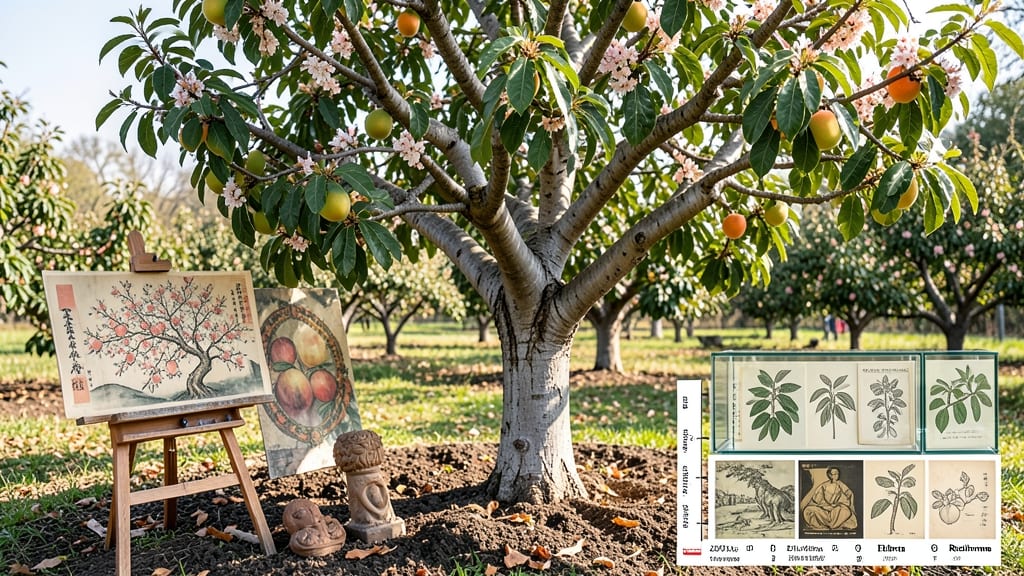
The history of peach trees begins in China around 2,000 BCE, where wild varieties were first cultivated. Their journey continued through Persia and Rome before reaching the Americas, establishing themselves as a key crop in Mediterranean and temperate regions worldwide.
The peach tree's ancient origins in China make it one of the world's oldest cultivated fruits. 🌱 Archaeologists have uncovered evidence of peach pits dating back over 4,000 years, suggesting early farmers selectively bred the sweetest wild varieties.
This careful cultivation not only created the fruit we know today but also tied peaches to Chinese mythology and medicine, where they symbolized longevity and healing.
What's fascinating is how these trees traveled with traders along the Silk Road, eventually reaching Persia and Rome. 🌍 Roman gardeners were particularly fond of peaches, introducing them to Europe where they thrived in the Mediterranean climate.
When European explorers arrived in the Americas, they brought peach seeds that adapted remarkably well to the continent's varied growing zones.
💡 In This Article
- Ancient China’s Role in Peach Tree Domestication
- How Peach Trees Spread Across Continents
Ancient China’s role in peach tree domestication
Archaeologists have uncovered peach pits in China dating back to 2,000 BCE, proving these trees were among the first fruits domesticated in history. The wild peach, known as Prunus persica, grew in China’s mountainous regions, where early farmers selected the sweetest, largest fruits for cultivation.
This selective breeding process—choosing seeds from the ripest peaches—created the first cultivated varieties, which bore fruit 30-40% larger than their wild ancestors.
The peach’s significance in Chinese culture went far beyond food.
Ancient texts like the Shijing (Book of Songs), composed around 1,000 BCE, mention peaches in poetic contexts, symbolizing immortality and prosperity. 🌿 Confucian scholars also linked peaches to moral lessons, as their delicate flesh was seen as a metaphor for virtue.
Meanwhile, traditional Chinese medicine recognized peaches for their anti-inflammatory properties, using them to treat digestive issues and skin conditions.
One of the most groundbreaking discoveries came from the Xianrendong Cave in Jiangxi Province, where 8,000-year-old peach pits were found. These artifacts revealed that early Chinese farmers not only ate peaches but also preserved them through drying and fermentation.
The pits’ size and shape suggest these ancient trees produced fruit similar to modern Chinese flat peaches, prized today for their intense sweetness and lack of fuzz.
What makes China’s contribution even more remarkable is how these early cultivars laid the foundation for global peach varieties. The white-fleshed peaches developed in China’s northern regions, for example, later became the basis for European and American hybrids.
Without this 4,000-year head start, peaches might never have gained the worldwide popularity they enjoy today.
Botanists studying ancient Chinese agricultural practices found that farmers used grafting techniques as early as 1,500 BCE to ensure consistent fruit quality. By attaching desirable peach varieties onto hardier rootstocks, they could grow trees that produced year-round harvests rather than relying on unpredictable wild crops.
This innovation not only stabilized food supplies but also allowed peaches to spread more easily along trade routes.
Today, genetic studies confirm that nearly all modern peach varieties trace back to these ancient Chinese cultivars.
The Prunus persica genome, sequenced in 2009, revealed that Chinese peaches contributed 90% of the genetic material in commercial varieties worldwide. 🌟 This legacy proves how a single fruit’s journey from wild bush to global staple began with China’s early farmers.