
Blooming
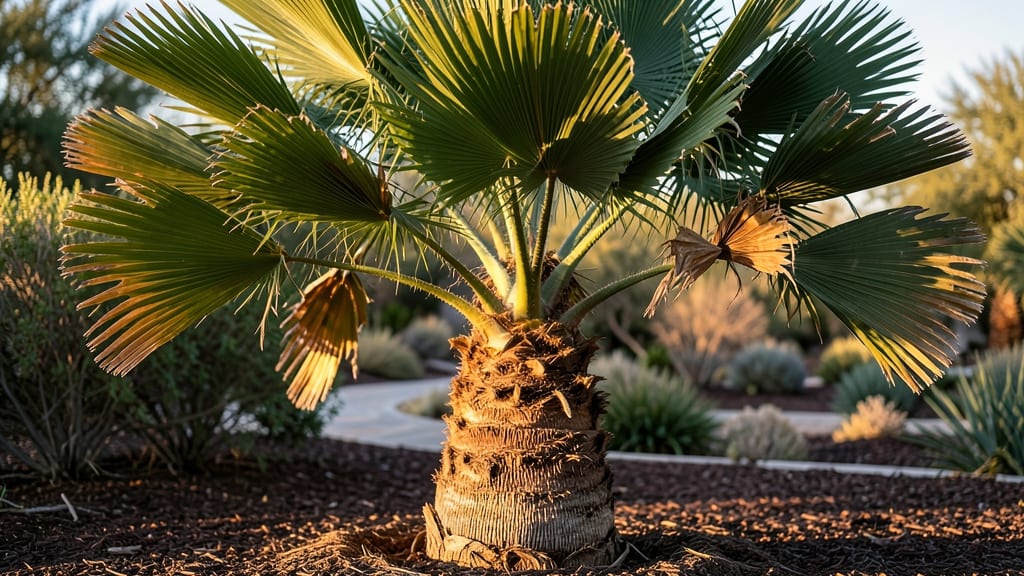
Palm trees grow long over time, with mature heights ranging from 10 feet for dwarf varieties like the Pygmy Date Palm to over 100 feet for giants like the Royal Palm. Growth rates vary by species, averaging 1-3 feet annually in ideal conditions.
Understanding how tall palm trees get depends entirely on the species you're dealing with—some stay compact while others reach skyscraper heights. 🌴 For instance, the Pygmy Date Palm tops out around 10 feet, making it perfect for small yards, while the towering Royal Palm can stretch over 100 feet in tropical climates.
What's fascinating is how their growth rates adapt to local conditions—some tropical varieties shoot up 3-4 feet per year when given perfect sunlight and moisture, while desert-adapted palms might grow just 6 inches annually.
The key difference often comes down to leaf size and trunk thickness, which determine how much energy the tree can invest in vertical growth.
If you're planning to grow palm trees, knowing these variations helps with spacing and long-term maintenance. For example, a Coconut Palm might need 50 feet of clearance at maturity, while a Dwarf Palmetto stays under 5 feet.
I always recommend checking a species' native habitat—palms from rainforests tend to grow faster than those from arid regions. 🌱
💡 In This Article
- Palm Tree Height Variations by Species
- Factors That Influence Palm Tree Growth Speed
Palm tree height variations by species
The height of a palm tree isn't just about genetics—it's a fascinating mix of evolutionary adaptations and environmental pressures. Take the Coconut Palm (Cocos nucifera), for example: in tropical coastal regions, it can reach 80-100 feet with a thick, fibrous trunk designed to withstand hurricane-force winds.
Meanwhile, its relative, the Areca Palm (Dypsis lutescens), stays compact at 10-15 feet because its native Madagascar climate offers more protection from storms. The difference comes down to leaf structure and trunk density—taller palms need stronger structural support to prevent toppling.
Dwarf varieties like the Pygmy Date Palm (Phoenix roebelenii) max out at 6-10 feet and thrive in containers, making them ideal for patios. Their slow growth (6-12 inches per year) is an energy conservation strategy for their arid Southeast Asian habitats.
Contrast that with the Royal Palm (Roystonea regia), which grows 3-4 feet annually in Florida's humid climate, reaching 60-100 feet with a single, unbranched trunk. The Royal Palm's rapid vertical growth is an adaptation to compete for sunlight in dense tropical forests.
Climate plays a surprising role in final height—palms from high-altitude regions often stay shorter. The Mountain Palm (Chamaedorea tepejilote), native to Mexico's cloud forests, rarely exceeds 10 feet because cooler temperatures slow photosynthesis.
In contrast, Seaforthia elegans palms in Southeast Asia's lowland swamps can grow 20-30 feet thanks to warm, nutrient-rich soils. Even within species, regional variations exist: California's Mexican Fan Palms (Washingtonia filifera) grow 10-20% taller than their Arizona counterparts due to better water availability.
Here's what most people overlook: palm height correlates with leaf size. The Canary Island Date Palm (Phoenix canariensis) has massive 6-8 foot long fronds that require a 50-65 foot trunk to support them, while the Parlor Palm (Chamaedorea elegans) with its 12-inch leaves stays under 6 feet.
The physics are simple—bigger leaves mean more surface area for photosynthesis, but also more weight that demands structural reinforcement through height. 🌿
For practical purposes, these height differences matter when planning landscapes. A Coconut Palm planted near a house needs at least 30 feet of clearance at maturity, while a Bamboo Palm (Chamaedorea seifrizii) fits comfortably under 10 feet ceilings.
I always recommend checking a species' native range—palms from windy coastal areas develop thicker trunks for stability, while those from sheltered forests grow taller with thinner trunks to reach sunlight.
One fascinating exception is the Traveller's Palm (Ravenala madagascariensis), which grows 20-30 feet tall but with a unique fan-shaped crown that resembles a dinosaur's frond.
Its height isn't just for sunlight—it's also an adaptation to Madagascar's seasonal droughts, where storing water in its trunk allows it to support that massive canopy. The lesson? Palm height is never just about genetics—it's a complex interplay of survival strategies shaped by millions of years of evolution. 🌴