
Diseases
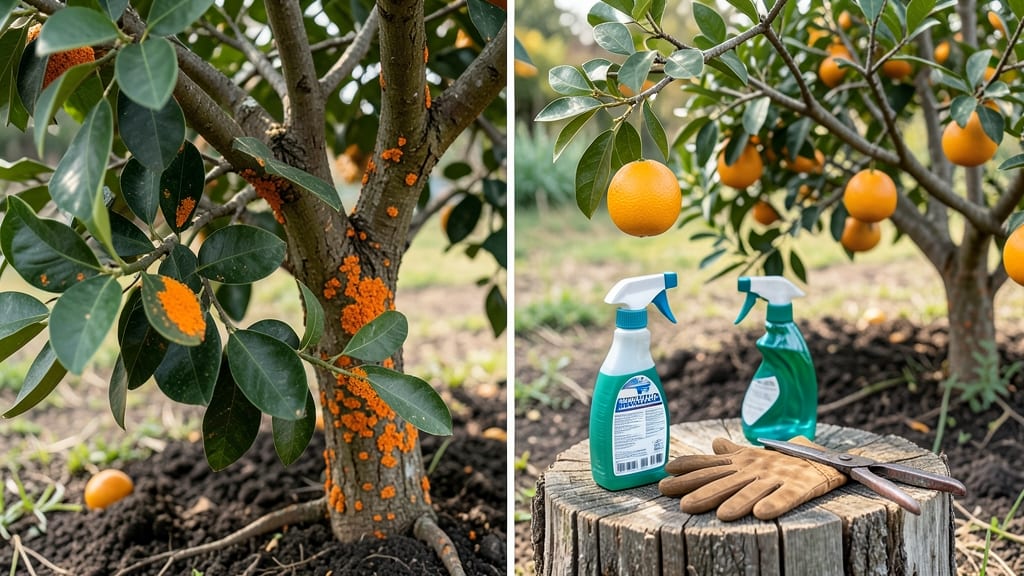
That orange rust on your tree bark isn’t just ugly—it’s a fungal warning sign that could weaken your tree if ignored. 🌳 I’ve battled this on my citrus trees, and the copper fungicide spray I’ll share stops the spread in its tracks while reviving foliage faster than you’d expect.
The culprit? A fungus called Gloeosporium or Cercospora, thriving in damp, warm conditions—especially on citrus, oak, and fruit trees. You’ll spot it as bright orange patches on bark or leaves, often after rain.
The good news? It’s rarely fatal, but unchecked, it saps energy from your tree, leading to sparse blooms or fruit.
With the right copper fungicide spray (applied every 7–10 days), you’ll see new green growth within 2–3 weeks. The key is timing—start at the first sign of rust, and pair it with pruning infected branches to prevent spread. I’ve revived trees that looked half-dead in just one growing season.
Works for citrus, fruit trees, and even shade trees, but avoid spraying when rain’s forecasted. Here’s the exact mix and schedule that’s saved my trees—and can save yours too.
The Hidden Triggers Behind Bark Rust
Orange rust isn’t just a random splash of color—it’s a fungal infection with specific triggers that turn your tree’s bark into a breeding ground. Understanding these causes is key to stopping the spread and restoring your tree’s health. Let’s break down the science behind why this issue takes hold.
The primary culprit behind orange rust is the fungus Gymnosporangium (commonly G. juniperi-virginianae or G. clavipes), which thrives in warm, humid conditions. Here’s how it works:
- Windborne spores: Fungal spores travel via wind, landing on tree bark and foliage. Once they find a suitable host (like juniper or apple trees), they germinate within 24–48 hours under ideal conditions.
- Humidity accelerates growth: Spores need high moisture levels (70%+ humidity) to germinate. Rainy springs or summer downpours create the perfect storm for outbreaks.
- Seasonal peaks: Orange rust flares up most aggressively in late spring to early summer, when temperatures hover between 60–80°F (15–27°C) and rainfall is frequent.
Pro tip: 🌡️ If your area experiences sudden humidity spikes after dry spells, be extra vigilant—this is when spores explode in activity.
A healthy tree can resist fungal infections, but stress opens the door for orange rust. Common stressors include:
| Stress Factor | How It Helps Rust Take Hold |
|---|---|
| 🌞 Poor sunlight exposure | Shady or crowded trees produce weaker bark and foliage, making them easier targets for spores. |
| 💧 Over/under-watering | Drought-stressed trees have compromised root systems, while soggy soil invites fungal growth at the roots. |
| 🪓 Physical damage | Pruning wounds, storm cracks, or pest bites create entry points for spores to invade the bark. |
| 🍄 Existing infections | Trees already battling powdery mildew or anthracnose are 3x more susceptible to secondary rust infections. |
Actionable fix: 💪 Strengthen your tree’s immunity with balanced fertilization (high in nitrogen but not excessive) and proper pruning to improve airflow.
Not all trees fall victim to orange rust—this fungus has specific favorites, particularly:
- Juniper trees: The alternate host for Gymnosporangium spores. Infected junipers produce bright orange, gelatinous telial horns in spring, which release spores to infect nearby fruit trees.
- Apple, hawthorn, and crabapple trees: These primary hosts develop rust pustules on leaves and bark, turning them orange or yellow and weakening the tree over time.
- Nearby susceptible species: If your yard has both junipers and apple trees within 50 feet, the rust fungus can ping-pong between them annually.
Key insight: ✨ If you spot rust on one tree, check its neighbors—this is often a two-tree problem in disguise.
Your local weather plays a huge role in rust outbreaks. Factors like:
- Regional climate: Rust thrives in temperate zones (like the U.S. Northeast, Pacific Northwest, and parts of Europe). Desert or arid climates rarely see outbreaks.
- Microclimates: Trees in low-lying areas, near ponds, or under dense canopies stay damp longer, creating rust hotspots.
- Sudden temperature swings: Warm days followed by cool nights prolong leaf wetness, giving spores extra time to infect.
Data-driven tip: 📊 Use a hygrometer to monitor humidity near your trees. If it stays above 65% for >12 hours, it’s prime rust conditions.
Effective Fixes for Rusty Tree Bark
Now that you understand the causes behind that unsightly orange rust on your tree bark, it’s time to act! The good news is that most cases can be managed—or even reversed—with the right approach.
Below, we’ve mapped out practical solutions based on the root cause, from quick fixes to long-term prevention.
If your tree’s rusty patches are caused by a fungal infection (like Gymnosporangium or Puccinia), copper fungicides are your best first line of defense. These sprays create a protective barrier that disrupts fungal spores before they spread.
🍳 Step-by-Step Application Guide
- Choose the Right Spray
- Opt for copper-based fungicides (e.g., copper sulfate, copper hydroxide, or Bordeaux mixture).
- Look for organic-certified options if you prefer chemical-free solutions.
- Timing Is Everything
- Apply early spring (before buds swell) and late fall (after leaf drop).
- Reapply every 2–4 weeks during wet or humid seasons to maintain protection.
- Proper Spray Technique
- Use a hose-end sprayer or backpack sprayer for even coverage.
- Focus on both sides of leaves, bark crevices, and branches—fungi hide in tight spots!
- Spray until runoff occurs to ensure full coverage.
- Safety First
- Wear gloves, long sleeves, and goggles—copper can irritate skin and eyes.
- Avoid spraying on windy days to prevent drift onto nearby plants or water sources.
✨ Pro Tip: Mix a 1% copper solution (1 tbsp copper sulfate per gallon of water) for a DIY spray. Test on a small branch first to check for sensitivity.
Fungi thrive in moist, shaded, or nutrient-poor conditions. Improving your tree’s environment can starve out rust spores naturally.
🌳 Prune for Better Airflow
- Remove crowded, dead, or crossing branches to enhance airflow.
- Thin out dense foliage to reduce humidity near the bark.
- Sanitize pruning tools with rubbing alcohol between cuts to prevent spreading spores.
💡 Optimize Soil & Watering
- Water at the base (not overhead) to keep leaves dry.
- Improve drainage by amending soil with compost or sand if water pools around roots.
- Mulch properly—keep mulch 3–4 inches away from the trunk to prevent moisture buildup.
☀️ Boost Sunlight Exposure
- If your tree is in a shady spot, consider thinning nearby trees or structures to increase sunlight.
- Reflective surfaces (like white walls or mulch) can bounce light onto the tree’s canopy.
A healthy tree fights off rust better. Focus on nutrient balance, pest control, and stress reduction.
🍎 Feed with the Right Fertilizer
- Conduct a soil test to check for deficiencies (common culprits: nitrogen, phosphorus, or micronutrients).
- Use a balanced, slow-release fertilizer (e.g., 10-10-10) in early spring.
- For organic options, try fish emulsion, compost tea, or mycorrhizal fungi to boost root health.
🐛 Control Sap-Sucking Pests
- Aphids, scale, and mites weaken trees, making them rust-prone.
- Blast off pests with a strong spray of water or use neem oil (a natural insecticide).
- Introduce beneficial insects like ladybugs or lacewings for long-term pest management.
🌿 Reduce Stress Factors
- Avoid over-pruning—remove only 10–25% of foliage at a time.
- Water deeply but infrequently to encourage deep root growth.
- Protect from physical damage (e.g., lawnmower hits, animal scratches) to prevent entry points for fungi.
Once you’ve treated the current outbreak, prevent recurrence with these habits:
- Monitor trees weekly during spring and fall (peak rust seasons).
- Clean up fallen leaves and debris—burn or compost them far from the tree.
- Disinfect tools after pruning to avoid spreading spores to other trees.
- Plant resistant varieties if possible (e.g., some oak, pine, or juniper species are less susceptible).
Final Thought: While copper sprays and good hygiene are key, consistency is critical. Rust won’t disappear overnight, but with regular care, your tree can bounce back—and even thrive—without a single orange speck in sight! 🌿✨
Frequently asked questions
Is orange rust on tree bark always harmful?
Not always fatal, but it can weaken your tree over time. While some trees tolerate minor rust patches, severe infections reduce energy for growth, blooms, or fruit production. The fungus thrives by sapping nutrients—think of it like a slow leak in your tree’s system. Early treatment prevents long-term damage.
Can I use household vinegar as a rust treatment?
No, vinegar won’t work for fungal rust—it’s too mild. The acidity might temporarily alter pH, but it lacks the copper or fungicidal properties needed to stop Gymnosporangium spores. Stick to dedicated copper fungicides (like Bordeaux mixture) for proven results. Vinegar could even harm your tree’s bark if overused.
How do I tell if my tree has orange rust or just natural bark color?
True rust appears as bright orange pustules on bark or leaves, often with a powdery texture. Natural bark variations are usually more uniform in color and don’t spread. Check for these signs: raised spots, leaf discoloration, or gelatinous growths (common on junipers). Compare with healthy branches.
Will removing infected branches stop the spread?
Yes, but only if you do it properly! Prune at least 6 inches below visible rust patches to remove spores hiding in the wood. Sterilize tools with rubbing alcohol between cuts. Remove debris immediately—don’t compost it near the tree. This reduces spore load by up to 70% in one season.
Can orange rust jump from one tree to another?
Absolutely—it’s highly contagious! Windborne spores can travel 50+ feet, especially between juniper trees (alternate hosts) and fruit trees (primary hosts). If you see rust on one tree, inspect neighbors within 30 feet. Remove all infected material and treat all susceptible trees simultaneously for best results.