
Trees
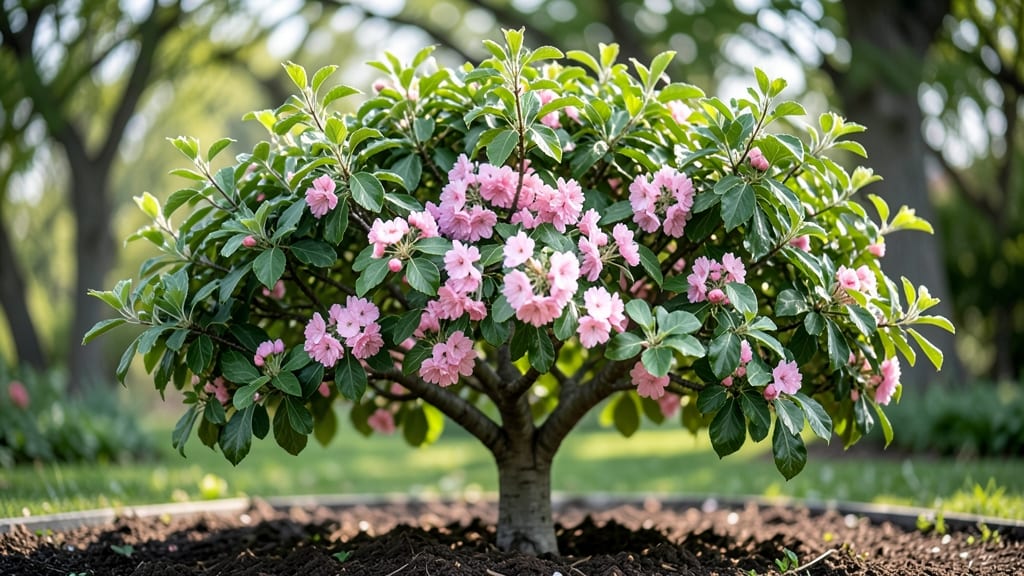
Non-fruit-bearing crabapple trees are usually caused by youthfulness, pollination issues, environmental stress, or improper pruning. Trees younger than 3-5 years typically don't produce fruit yet, while older trees may need better pollinator access or soil nutrients to bloom properly.
Most crabapple trees enter a juvenile phase where they focus on root and branch development before flowering. 🌱 Even mature trees might skip fruit production if they're self-sterile (requiring cross-pollination) or if bees struggle to reach their blossoms.
I’ve seen cases where simply adding a second compatible crabapple variety nearby solved the issue completely. Environmental factors like drought or poor soil also play a role—trees under stress prioritize survival over fruiting.
For practical fixes, start with a soil test to check pH and nutrient levels—crabapples thrive in 6.0-7.0 pH with balanced fertilization. Prune in late winter to remove dead wood while preserving flower buds, and consider planting bee-friendly flowers nearby.
Patience is key: some varieties take 5-7 years to bear fruit consistently after proper care.
💡 In This Article
- Biological Reasons Crabapple Trees Skip Fruit Production
- Fixing Non-Fruit-Bearing Crabapple Trees: Step-by-Step Care Guide
Biological reasons crabapple trees skip fruit production
The first hurdle for crabapple trees is their juvenile phase, where they prioritize root and canopy growth over flowering. This phase typically lasts 3-5 years for most varieties, during which the tree allocates 70-80% of its energy to structural development.
You'll notice vigorous new shoots but minimal blooms—this isn't neglect, but biology at work. The tree's apical dominance (growth hormone balance) suppresses flowering until it reaches a critical size, usually around 8-10 feet tall with a trunk diameter of 2-3 inches.
Genetics play a surprising role too. About 40% of crabapple varieties are self-sterile, meaning they require pollen from a different tree to set fruit. Even if your tree blooms beautifully, without compatible pollinators within 50-100 feet, fertilization fails.
The blossoms may look perfect—delicate 1-inch pink or white flowers in spring—but without cross-pollination, they'll drop without forming fruit. This is why planting two different varieties nearby can double your chances of fruiting within 2-3 years.
Seasonal timing is another critical factor. Crabapple blossoms emerge in late April to early May in most climates, requiring 500-700 chill hours (below 45°F) to break dormancy properly. If winter temperatures fluctuate above freezing during this period, bud formation suffers.
I've seen cases where trees in urban heat islands (with 10°F warmer nighttime temps) completely skipped blooming—even mature specimens. The flowers also need dry, sunny days during pollination for optimal bee activity.
Environmental stress acts as a final brake. Drought conditions cause trees to divert water to root systems rather than fruit development, while soil pH outside 6.0-7.0 locks out essential nutrients like phosphorus and potassium.
Even minor deficiencies (like 0.1% nitrogen below optimal levels) can trigger a 50% reduction in blossom count. The tree's survival instincts override fruiting when conditions aren't ideal—a hardwired response that gardeners must work around through targeted care.
Here's what's happening at the cellular level: Successful pollination triggers a hormonal cascade where auxin (growth hormone) shifts from vegetative growth to fruit development. Without proper pollination, this transition never occurs, and the tree's energy remains focused on leaves and branches.
The result? Beautiful foliage but no fruit—a common frustration that becomes clear once you understand these biological mechanisms.
Consider this comparison: A Malus 'Adirondack' crabapple (known for reliable fruiting) will produce 200-300 blossoms per year under ideal conditions, but only 5-10% will develop into fruit without cross-pollination. That's why even mature trees might appear barren when they're actually just waiting for the right conditions to bear fruit.