
Pruning
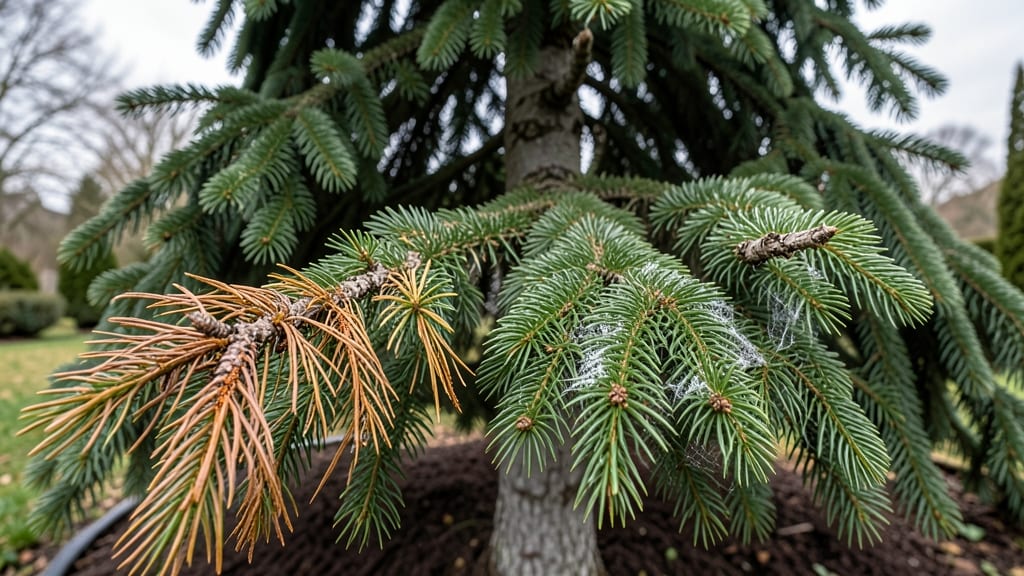
Seeing nordmann fir tree problems with brown needles isn’t the end—it’s a sign your evergreen just needs some TLC. 🌲 I’ve nursed back more than my fair share of these trees from straw-like needles to lush, dark green glory, and I’m sharing the exact steps that work.
The key is catching issues early before they spiral into bigger problems.
Most needle issues stem from three culprits: water stress (too much or too little), pests like spider mites or bagworms, or fungal diseases hiding in damp shade. My first year, I nearly lost a tree to needle blight because I ignored the yellowing—don’t make that mistake.
A quick inspection of the needles’ undersides and bark tells you exactly what’s wrong.
Once you identify the problem, fixes are simpler than you’d think. For brown needles, it’s often a matter of adjusting watering or pruning to improve airflow. Pests? A strong spray of water or neem oil does the trick.
The goal is to restore that rich, vibrant green you planted for in just 4-6 weeks with consistent care.
Here’s the good news: Nordmann firs are resilient. With the right approach, you’ll have a tree that stays healthy, holds its shape, and keeps that fresh pine scent year-round. Let’s get those needles looking fresh again!
Root Causes Of Needle Issues
Your Nordmann fir tree’s needles turning brown or yellow isn’t just a random act of nature—it’s usually a clear signal that something specific is off. Understanding the why behind these problems is the first step to fixing them.
Below, we break down the most common culprits, from environmental stressors to hidden pests, with the science behind each one.
Nordmann firs thrive in cool, stable climates, but when temperatures swing too hot or too cold, their needles react dramatically. Here’s how it happens:
- Heat Stress (Drought or Sunburn):
- When soil moisture drops below 30-40% capacity, roots struggle to absorb water, causing oxidative stress in needles. This triggers chlorophyll breakdown, turning them yellow or brown.
- Direct afternoon sun (especially in dry climates) can scorch needles, leading to crispy, brown tips—a condition called needle burn.
- Cold Damage (Winter Burn):
- Sudden temperature drops below -15°F (-26°C) can rupture needle cell walls, causing desiccation (drying out). This is why you see brown tips in late winter.
- Wind exacerbates the problem by increasing evaporative loss, drying needles faster than roots can replace moisture.
Pro Tip: 💡 Mulch around the base with 3-4 inches of organic matter (like pine bark or wood chips) to insulate roots and retain moisture. For heat stress, water deeply 2-3 times per week during dry spells.
While underwatering is a common issue, overwatering is just as damaging—especially in compacted or clay-heavy soils. Here’s the science:
| Problem | What Happens Inside the Tree | Visual Clues |
|---|---|---|
| Root Rot (Fungal Infection) | Excess moisture creates anaerobic conditions, where fungi like Phytophthora thrive. Roots suffocate, and the tree can’t absorb nutrients or water. | Yellowing needles (starting at the bottom), soft or mushy stems, and a foul smell at the base. |
| Nutrient Leaching | Overwatering washes away essential micronutrients (like magnesium and iron), leading to chlorosis (yellowing between needle veins). | Bright yellow patches on older needles, stunted growth. |
Fix It: 🌡️ Test your soil’s drainage by digging a 12-inch hole and filling it with water. If it doesn’t drain within 4 hours, amend with sand or perlite. For established trees, reduce watering to once per week (unless it’s extremely hot).
Pests don’t just nibble—they inject toxins, suck sap, or lay eggs that trigger needle death. Here’s how they do it:
- Spider Mites (🕷️):
- These microscopic pests pierce needles to feed on sap, injecting saliva that causes chlorophyll destruction, leading to stippling and browning.
- Severe infestations create a web-like appearance on needles.
- Bagworms (🐛):
- Caterpillars spin silk bags on branches and defoliate the tree, stripping it of needles. Their frass (droppings) clogs stomata (pores), suffocating the tree.
- Look for brown, cone-shaped bags hanging from branches.
- Adelgids (🐜):
- These sap-sucking insects (like woolly adelgids) excrete honeydew, which attracts sooty mold—a black fungus that blocks sunlight and smothers needles.
- Infested branches often droop and appear sticky.
Act Now: ✨ For mites, blast needles with a strong stream of water to dislodge them. For bagworms, handpick bags and drown them in soapy water. Use neem oil or horticultural oil in early spring to smother eggs.
Nordmann firs are heavy feeders, and when soil lacks key nutrients, needles show the first signs. Here’s what’s missing and why:
| Deficiency | Symptoms | Why It Happens |
|---|---|---|
| Magnesium (Mg) | Yellowing between needle veins (chlorosis), starting on older needles. | Magnesium is crucial for chlorophyll production. Compacted or acidic soils (pH < 5.0) lock it out. |
| Iron (Fe) | Bright yellow needles with green veins, often on new growth. | Iron is immobile in plants, so deficiencies show first in new needles. Calcareous (alkaline) soils (pH > 7.0) make iron unavailable. |
| Nitrogen (N) | Overall pale green or yellow needles, slow growth, and thin canopy. | Nitrogen is the building block of chlorophyll. Poor soil or over-pruning depletes it. |
Boost Nutrients: 💪 Test your soil and amend with:
- Epsom salt (for Mg): 1 tbsp per gallon of water, sprayed on needles.
- Iron chelate: Apply in early spring for iron-deficient soils.
- Slow-release fertilizer (10-10-10): Sprinkle around the root zone in early spring.
Practical fixes for nordmann fir
Reviving your Nordmann fir doesn’t have to be a guessing game—once you pinpoint the issue, the solution is often straightforward. Below, we’ve mapped the most common problems to actionable fixes, including quick remedies and long-term prevention tips to keep your tree lush and vibrant year-round.
---
Fix it fast: 1. Check the soil 🔍 – Stick your finger 2–3 inches into the soil. If it’s soggy or smells like mildew, your tree is drowning. 2. Repot or improve drainage 🏺 – If potted, move to a container with drainage holes. For in-ground trees, amend the soil with perlite or sand to aerate it. 3. Adjust watering 💧 – Water only when the top inch of soil is dry. Nordmann firs prefer consistency over sogginess. 4. Trim affected branches ✂️ – Snip off yellowing needles to encourage new growth.
Prevent it: - Use well-draining potting mix (like a blend of peat, perlite, and pine bark). - Avoid placing pots in saucers that trap water. - In winter, reduce watering—dormant trees need less moisture.
---
Fix it fast: 1. Water deeply and regularly 💦 – Give your tree a thorough soak once a week (more in extreme heat). Ensure water penetrates the root zone. 2. Move to partial shade 🌞 – If needles are crispy and brown on the tips, it’s likely sunburn. Relocate to a spot with morning sun and afternoon shade. 3. Mulch the base 🌱 – Apply 2–3 inches of organic mulch (like pine straw or wood chips) to retain moisture and protect roots.
Prevent it: - Group potted firs together to create a microclimate with higher humidity. - Avoid pruning in peak summer heat—wait for cooler days. - Use a moisture meter to track soil dampness.
---
Fix it fast: 1. Hose off pests 🚿 – Spray the tree with a strong stream of water to dislodge mites or bagworms. 2. Apply neem oil 🌿 – Mix 1–2 tbsp of neem oil with a teaspoon of mild soap and 1 quart of water. Spray thoroughly (repeat weekly if needed). 3. Handpick bagworms 👶 – Look for small, sack-like cocoons on branches. Pluck them off and drop them in soapy water. 4. Introduce beneficial insects 🐞 – Ladybugs and lacewings prey on spider mites—release them near the tree.
Prevent it: - Inspect your tree weekly during growing season (spring–fall). - Avoid over-fertilizing with nitrogen, which attracts pests. - Prune to improve airflow and reduce hiding spots for pests.
---
Fix it fast: 1. Protect from wind 🌬️ – Wrap the tree in burlap or use a windbreak shield to prevent desiccation. 2. Water before freeze ❄️ – Give the tree a deep watering a few days before the first frost to help it withstand cold. 3. Apply anti-desiccant spray 🌧️ – Use a product like Wilt-Pruf to create a protective barrier on needles. 4. Prune damaged branches ✂️ – Trim back any brown, brittle branches in early spring to encourage new growth.
Prevent it: - Mulch heavily around the base (4–6 inches deep) to insulate roots. - Avoid pruning in late summer or early fall—it reduces the tree’s cold resistance. - Choose a location sheltered from harsh winds.
---
Fix it fast: 1. Fertilize in early spring 🌱 – Use a balanced, slow-release fertilizer (like 10-10-10) or an organic option like fish emulsion. 2. Test your soil 📊 – A simple soil test kit can reveal deficiencies (e.g., iron or magnesium). Amend with chelated iron or Epsom salt if needed. 3. Top-dress with compost 🥬 – Spread a 1-inch layer of compost around the base (keep it 6 inches away from the trunk).
Prevent it: - Fertilize only in early spring—avoid late-season feeding, which encourages tender new growth. - Water after fertilizing to help nutrients absorb. - Rotate fertilizer types annually to avoid buildup.
--- Pro Tip: 💡 Most problems start with improper watering—whether too much or too little. Master this, and you’ve solved half the battle! For stubborn issues, consult a local arborist to rule out disease (like needle blight) or root rot.
Frequently asked questions
Why are my Nordmann fir needles turning brown in patches but not all at once?
Patchy browning usually signals localized stress from pests like spider mites or bagworms, or fungal issues like needle blight. Check the undersides of needles for tiny webs (mites) or small brown bags (bagworms). If you spot these, treat immediately with neem oil or handpick the pests. Fungal issues often appear after wet weather—prune affected branches and improve airflow around the tree.
Can I save a Nordmann fir with completely brown needles?
It depends! If the brown needles are from heat stress or drought, prune them off and adjust your care—deep watering and afternoon shade can revive the tree. However, if the browning is from root rot or severe pest damage, the tree may not recover. Test soil moisture and inspect roots for mushy areas. If roots look healthy, give it time—new growth often emerges within 6-8 weeks with proper care.
How do I tell if my Nordmann fir has needle blight vs. just dryness?
Needle blight causes dark brown, tar-like spots that spread along needles, while dryness creates uniform straw-like browning starting at the tips. Blight often appears after rainy weather, and you may see fungal growth on the spots. Prune infected branches 12 inches below the damage and apply fungicide. For dryness, focus on consistent watering and mulching to retain moisture.
Is it safe to prune a Nordmann fir in winter?
Winter pruning is fine, but avoid cutting in freezing temperatures or during drought. Prune dormant branches in late winter (February-March) to shape the tree and remove dead wood. Never prune more than 25% of the canopy at once—this can stress the tree. Sterilize your tools with rubbing alcohol to prevent disease spread.
Why does my potted Nordmann fir drop needles year-round?
Year-round needle drop in pots usually means root-bound stress or inconsistent moisture. Check if roots are circling the pot—if so, repot into a container 2-3 inches larger with fresh, well-draining soil. Water only when the top 1 inch of soil is dry, and avoid letting the pot sit in saucers that trap water. Potted firs also need higher humidity—mist needles occasionally or place the pot on a tray of pebbles with water.