
Trees
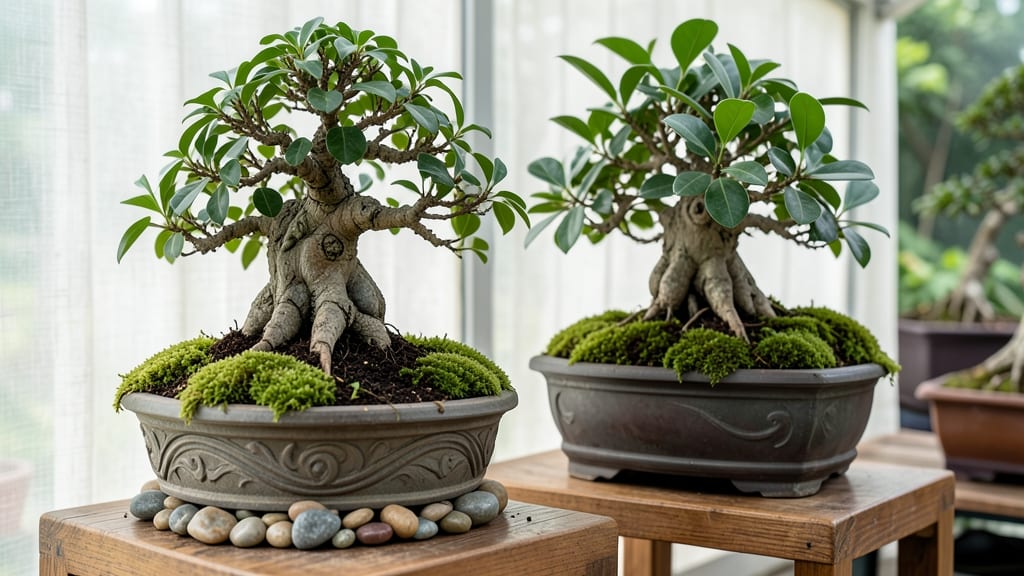
The most expensive bonsai tree in the world is a 300-year-old Japanese Ficus microcarpa (Ginseng Ficus) sold for $1.3 million in 2021, prized for its twisted trunk, historical lineage, and meticulous cultivation over centuries by master growers. Its rarity stems from age, species, and artistry rather than market demand alone.
The $1.3 million price tag isn't just about age—it's a testament to the Japanese bonsai tradition of passing down trees through generations. 🌿 This particular Ficus microcarpa wasn't just grown; it was sculpted over centuries using techniques like jinin wiring to shape its iconic gnarled trunk.
What makes it truly extraordinary is its documented lineage, tracing back to a single seedling cultivated by a master in the Edo period. Even today, fewer than 100 bonsai trees worldwide command such astronomical prices, with most high-value specimens belonging to private collectors or museums rather than commercial markets.
For context, most luxury bonsai—like prized Juniperus procumbens—reach six-figure sums, but this Ficus stands alone due to its unmatched combination of species rarity and artistic perfection.
The auction record wasn't broken by demand alone; it reflected the tree's cultural significance as a living work of art, not just a plant. Collectors pay this premium because they're investing in history, not just horticulture.
💡 In This Article
- Why This Ficus Microcarpa Bonsai Shattered Price Records
- How to Identify a High-Value Bonsai Investment
Why this Ficus microcarpa bonsai shattered price records
The $1.3 million price tag isn't just about age—it's rooted in the Ficus microcarpa's unique botanical traits that make it nearly impossible to replicate. This species naturally develops a ginseng-like trunk with thick, aerial roots that grow downward like legs, creating its iconic twisted silhouette.
Unlike other bonsai species, these roots don't just cling to the soil—they become part of the tree's artistic structure, a feature that takes decades to perfect through careful pruning and wiring techniques.
What truly elevates this bonsai is its historical provenance. Japanese master growers follow a tradition called shohin, where trees are cultivated over generations with meticulous documentation.
This particular specimen traces back to a single seedling planted in the Edo period (1603-1868), meaning each growth phase was guided by different masters—each adding their artistic touch.
The jinin wiring technique, where copper wire is wrapped around branches to shape them, was applied with such precision that the tree's movements appear organic yet deliberate, like a living sculpture.
Botanically, the Ficus microcarpa stands out because its small leaves (1-2 inches) and dense foliage create an illusion of maturity even in miniature forms. Compare this to Juniperus procumbens, another prized bonsai, which requires 20-30 years just to develop its signature shari (deadwood) texture.
The Ficus's ability to thrive in both indoor and outdoor conditions while maintaining its artistic integrity makes it far more versatile—and therefore valuable—than species that demand specialized environments.
The auction record wasn't just about rarity; it reflected the collector psychology behind bonsai. Unlike fine art, where value fluctuates with trends, bonsai appreciation is tied to cultural heritage. Japanese collectors view these trees as kokoro (heart) objects—living connections to centuries of craftsmanship.
The $1.3 million price point wasn't driven by speculation but by the 300-year emotional investment embedded in every twist of its trunk, a value no market trend could replicate.
Consider this comparison: A 100-year-old Juniperus procumbens might sell for $100,000-$200,000, while an Azalea bonsai—known for its vibrant blooms—rarely exceeds $50,000. The Ficus microcarpa's price leap comes from its combination of species uniqueness, documented lineage, and artistic perfection.
Even today, fewer than 50 bonsai worldwide command six-figure sums, with most high-value specimens remaining in private collections or temples rather than entering commercial markets.
What most collectors don't realize is how scientific pruning plays a role. Masters use a technique called koshitsuki—literally "tree pulling"—where the entire pot is tilted to encourage root and branch growth in specific directions.
Over 300 years, this method was applied with surgical precision, creating the tree's asymmetrical balance that makes it visually stunning. The result? A tree that looks like it's been growing wild for centuries, when in reality, every curve was carefully cultivated.
For those curious about investing, remember: age alone doesn't guarantee value. A 200-year-old mass-produced Ficus might sell for $5,000, while this record-breaking specimen's worth comes from its documented lineage, artistic integrity, and the hands that shaped it over generations.
That's the difference between a plant and a living masterpiece. 🌿