
Pruning
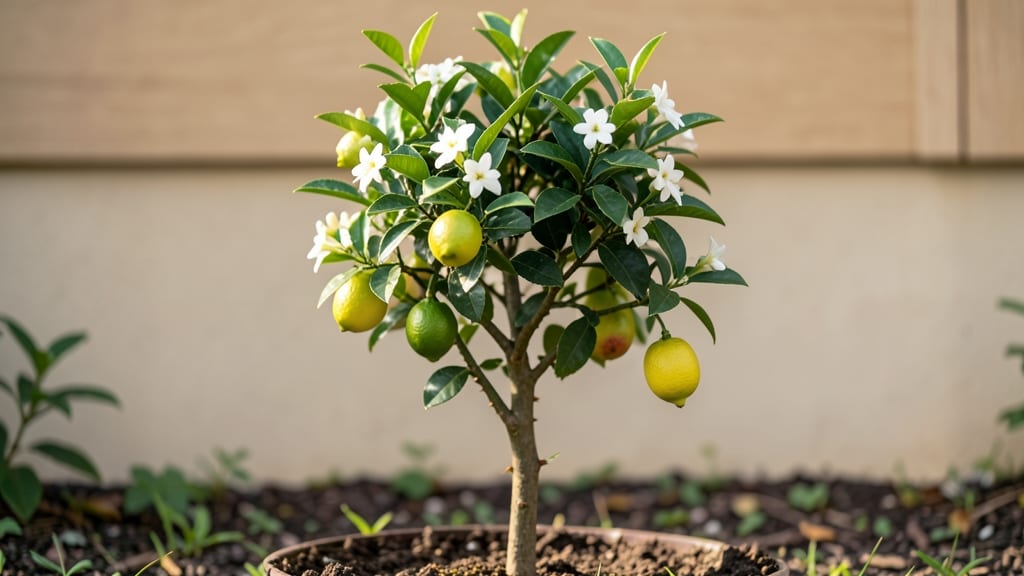
Growing a miniature lemon tree indoors requires bright, indirect sunlight for 6-8 hours daily and temperatures above 60°F. Compact varieties like 'Meyer' or 'Improved Meyer' stay under 4 feet tall with proper pruning, but expect slower growth than outdoor trees due to limited space and light intensity.
Indoor lemon trees thrive when you mimic their natural Mediterranean environment as closely as possible. 🌿 The 6-8 hours of bright light isn't just about photosynthesis—it triggers the chemical processes that give lemons their signature flavor.
I've found that south-facing windows work best, but if your space lacks natural light, a grow light (like a full-spectrum LED) can bridge the gap. The temperature threshold of 60°F isn't arbitrary: below this, root activity slows dramatically, and the tree may drop leaves or fail to flower.
What's fascinating about compact varieties is how they adapt to container life.
The 'Meyer' lemon, for example, naturally stays small because its growth hormones respond to root restriction—something you can leverage by choosing pots just 1-2 inches larger than the root ball. Pruning in late winter (before new growth starts) keeps the tree manageable while encouraging bushier growth.
I always recommend using sterilized pruning shears to prevent disease, and never cutting more than one-third of the foliage at once.
💡 In This Article
- Optimal Light and Temperature Conditions for Indoor Lemon Trees
- Pruning and Container Tips for Keeping Mini Lemon Trees Compact
Optimal light and temperature conditions for indoor lemon trees
Indoor lemon trees rely on photosynthesis efficiency to thrive, which is why 6-8 hours of bright, indirect light is non-negotiable. The key lies in chlorophyll production—when light hits the leaves, it activates enzymes that convert carbon dioxide and water into glucose (the tree's energy source).
Without sufficient light, chlorophyll can't form properly, leading to pale, yellowing leaves. I've noticed this most in winter when natural light drops below 4,000 lux (a standard office has about 500 lux for comparison).
Temperature sensitivity ties directly to root health and flowering triggers. Lemon trees originate from Mediterranean climates where daytime temps hover around 70-85°F and nights stay above 55°F. Below 60°F, root activity slows by 50% as cellular respiration becomes inefficient.
The tree may also stop flowering because cold stress triggers the production of abscisic acid—a hormone that signals dormancy. I once kept a Meyer lemon in a 55°F room for two weeks and watched it drop 30% of its leaves within 10 days.
Grow lights become essential when natural light falls short. Full-spectrum LEDs that mimic sunlight (with red and blue wavelengths) are ideal—they boost photosynthesis by 30-40% compared to standard white bulbs.
Place the light 6-12 inches above the tree and run it for 12-14 hours daily to compensate for shorter winter days. Pro tip: Use a timer to automate cycles and avoid overwatering from inconsistent light exposure.
Watch for heat stress signs like curled leaves or brown tips, which often appear when temps exceed 90°F. Cold stress shows as dark, mushy spots on leaves or stunted new growth.
A simple fix is to move the tree 3-5 feet from heat sources (like vents) or place it near a window with east-facing morning sun, which is gentler than harsh afternoon rays.
Humidity plays a hidden role too. Indoor air is typically 30-40% humidity, but lemon trees prefer 50-60%. Below 45%, leaves develop crisp edges as they lose moisture faster than roots can replace it.
A pebble tray with water or a humidifier near the tree can help maintain optimal levels without soggy soil.
Seasonal adjustments are crucial. In summer, move the tree to a shaded patio for 2-3 hours daily to prevent leaf scorch. In winter, reduce watering by 50% since cooler temps slow evaporation. The goal is to keep the soil lightly moist** (like a wrung-out sponge) rather than soggy.