
Trees
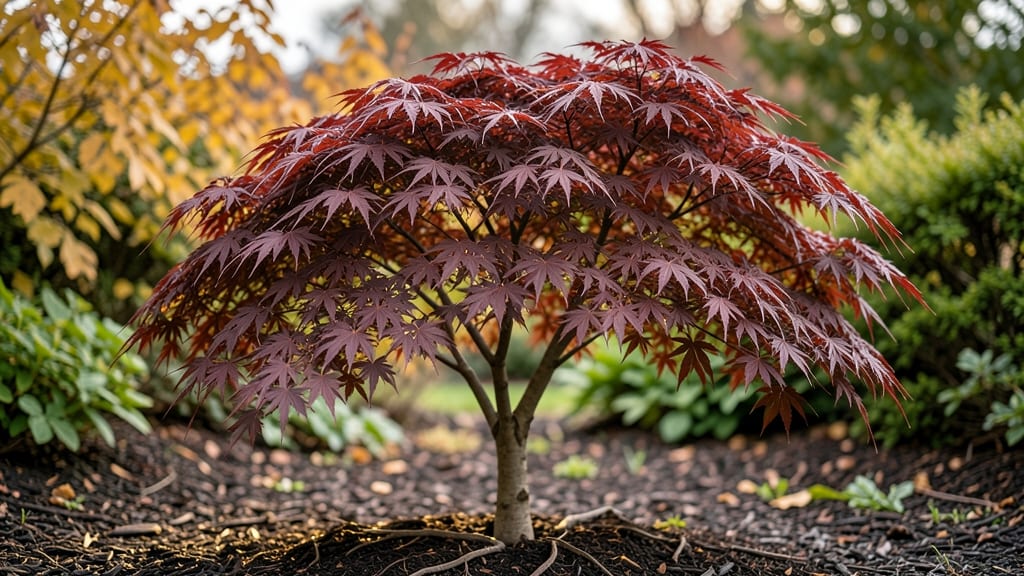
A maple tree with burgundy leaves turns your yard into a masterpiece every fall. 🌿 The rich, deep reds of varieties like 'Red Sunset' or 'Autumn Blaze' don’t just stop at autumn—they create a statement that lasts through winter’s bare branches.
I’ve designed gardens where these trees become the star, drawing eyes with their dramatic color even when other foliage fades. The secret to making them shine? Strategic placement near pathways or patios where their leaves can be admired up close.
Pair them with evergreens like pine or boxwood to create contrast, or add golden-leafed plants like 'Golden Rainbow' Japanese maples to make the burgundy pop even more. A single specimen tree becomes a focal point, while clusters along borders create a stunning seasonal display.
You’ll love how these trees hold their color longer than most, often lasting well into November. Pruning in late winter keeps their shape clean, and their sturdy branches make them perfect for small yards or urban spaces where big trees aren’t an option. The best part?
Their burgundy hues don’t just disappear—they transform into winter interest with peeling bark and elegant silhouettes. For maximum impact, plant them where they’ll get full sun to deepen their color, and mulch well to protect their roots.
Whether you’re going for a bold statement or a subtle autumnal touch, these maples deliver year after year. Ready to make your garden unforgettable?
📚 In This Guide
- What you need
- Instructions
- Tips and common mistakes
- Wrapping up and next steps
What you need
- ● Maple tree seedlings or saplings: Choose red maple (Acer rubrum) or Japanese maple (Acer palmatum) varieties known for burgundy foliage. Quantity: 3–5 plants (for a small garden) or 10+ (for larger landscapes).
- ● Well-draining soil: Mix 60% topsoil, 30% compost, and 10% sand or perlite to prevent waterlogging. Volume: ~5 gallons per plant.
- ● Organic mulch: 3–4 inches of shredded bark or wood chips to retain moisture and regulate temperature.
- ● Watering can or hose: With a gentle spray nozzle for even hydration.
- ● Pruning shears: Sharp, bypass-style shears (for clean cuts) or loppers (for thicker branches).
- ● Gloves: Heavy-duty gardening gloves (to protect from thorns and sap).
- ● Fertilizer: Slow-release, balanced fertilizer (10-10-10) or organic options like fish emulsion (apply in early spring).
- ● Leaf collection tools: Pruning scissors or sterilized shears for harvesting mature leaves (if crafting).
- ● Soil pH tester: Ideal pH for maples: 6.0–7.5. Adjust with lime (to raise pH) or sulfur (to lower).
- ● Epsom salt: 1 tablespoon per gallon of water (monthly spray to enhance burgundy hues).
- ● Decorative stakes or trellises: For guiding young saplings or adding aesthetic support.
- ● Leaf-preservation spray: Clear acrylic sealer (for crafts like wreaths or garlands).
How to grow a maple tree with stunning burgundy leaves
Here's how to cultivate a showstopping maple with deep burgundy foliage that steals the show in every season.
🌱 Step 1: Choose the Right Maple Variety for Burgundy Color
Start with a proven cultivar like 'Bloodgood' or 'Royal Purple' Japanese maple—these are bred specifically for their rich burgundy leaves. Avoid common red maples (Acer rubrum) unless you want more subtle fall color; they're known for their brilliant red fall but lack the year-round burgundy hue you're after. I always check the mature height (typically 15-25 feet) to ensure it fits your landscape vision.
Young trees in nurseries often look pale—don't judge by their current color. The true burgundy emerges as they mature, especially in full sun. If you're planting in a shady spot, consider 'Emperor I' Japanese maple which handles lower light better while still delivering deep purple tones.
☀️ Step 2: Plant in the Perfect Spot with Full Sun Exposure
Burgundy maples thrive in full sun (6+ hours daily) for maximum color intensity. I dig a hole twice as wide as the root ball but only as deep—planting too deep suffocates roots. The top of the root ball should sit 1-2 inches above ground level to prevent waterlogging.
Amend the native soil with 2-3 inches of compost mixed into the bottom of the hole. This gives roots a nutrient boost while encouraging strong establishment. Water deeply before planting to settle the soil and eliminate air pockets around roots.
💧 Step 3: Water Deeply and Mulch for Year-Round Color
Water once weekly for the first month, then taper to every 10-14 days once established (adjust for drought). The soil should be dry 2-3 inches deep before watering again—overwatering causes yellow leaves and weakens the burgundy pigment.
Spread 3 inches of mulch (wood chips or bark) around the base, keeping it 6 inches away from the trunk. This preserves moisture, regulates soil temperature, and prevents weeds that compete for nutrients. Replenish mulch annually in late winter to protect roots during cold snaps.
✂️ Step 4: Prune Strategically to Maintain Color and Shape
Prune in late winter or early spring before new growth begins. Remove only dead, crossing, or inward-growing branches—never more than 25% of the canopy at once. I use clean, sharp pruners to make cuts just outside the branch collar for faster healing.
For Japanese maples, avoid heavy pruning—they develop beautiful layered branches that contribute to their ornamental value. If you notice leggy growth, it's a sign of insufficient light rather than needing pruning. The burgundy color actually intensifies with proper sunlight exposure.
🌿 Step 5: Fertilize Lightly for Vibrant Foliage
Apply a balanced 10-10-10 fertilizer in early spring using ½ pound per inch of trunk diameter. For a 2-inch diameter tree, that's about 1 pound total. Water thoroughly after application to prevent root burn.
Skip fall fertilization—new growth won't harden off before winter. The key to burgundy leaves is moderate fertility, not heavy feeding. Too much nitrogen produces lush green growth at the expense of those stunning purple tones you're after.
Tips & tricks for stunning maple tree burgundy foliage
Here's what I've learned after years of growing vibrant burgundy maples that stay showstopping all season long.
Variety Selection: When choosing your tree, don't just look at the leaves—check the trunk as well. 'Bloodgood' Japanese maples develop a beautiful reddish bark that complements the foliage, while 'Royal Purple' offers slightly deeper purple leaves. I always ask nursery staff about the tree's parentage to ensure true burgundy color rather than just fall red. The key is looking for cultivars specifically bred for year-round burgundy, not just fall color.
Sunlight Strategy: In Step 2, when planting, pay close attention to your location's afternoon sun patterns. While maples need full sun, afternoon shade can actually help protect the vibrant burgundy color from fading in hot climates. If your spot gets intense afternoon sun, consider planting where the tree will receive morning sun and afternoon shade. This subtle adjustment makes a noticeable difference in color retention throughout the growing season.
Watering Wisdom: The watering schedule in Step 3 is crucial for maintaining that rich color. I've found that checking soil moisture with your finger—pushing it 2-3 inches deep—is more reliable than sticking to a strict schedule. If your soil feels dry at that depth, it's time to water. Overwatering is the #1 reason I've seen burgundy leaves turn dull green, so always let the soil dry slightly between waterings. In containers, you'll need to water even more frequently since potting soil dries out faster.
Fertilizer Finesse: When applying that 10-10-10 fertilizer in Step 5, I've discovered a little trick that makes a big difference: split the application into two smaller doses. Apply half in early spring when buds first appear, then the remaining half 6-8 weeks later. This gradual feeding prevents sudden growth spurts that can dilute the burgundy pigment. And remember—less is more with these colorful maples. Too much nitrogen will always win out over that stunning purple hue.
Pro Tips for Maple Tree Burgundy Leaves
- Here's what I've learned after years of growing vibrant burgundy maples that stay showstopping all season long.
- Variety Selection: When choosing your tree, don't just look at the leaves—check the trunk as well.
- Sunlight Strategy: In Step 2, when planting, pay close attention to your location's afternoon sun patterns.
Frequently asked questions
When do maple trees with burgundy leaves change color?
Timing depends on the variety and climate, but most burgundy maples (like ‘Royal Purple’ or ‘Empress’) peak in late September to early November. Cooler nights and sunny days trigger the shift. In warmer regions, expect a slightly delayed show. Check local forecasts for the best viewing window!
Can I plant a burgundy maple tree in a small yard?
Dwarf varieties (e.g., ‘Armstrong’ or ‘Red Sunset’) thrive in tight spaces, reaching just 15–25 feet tall. Just ensure it gets 6+ hours of sunlight and room to spread (15–20 feet wide). Avoid planting too close to sidewalks or foundations—roots can be stubborn! Pro tip: Test soil drainage first to prevent root rot.
Why are my burgundy maple leaves turning brown or crispy?
Brown/crispy edges often signal underwatering, pests, or fungal issues. Check for:
- Dry soil: Water deeply 1–2x/week (more in heatwaves). Mulch helps retain moisture.
- Pests: Inspect for aphids or spider mites (use neem oil if spotted).
- Frost damage: Young trees may scorch in early frost—cover with burlap if temps drop below 25°F.
Are there alternatives to burgundy maples for year-round color?
Yes! Try these low-maintenance, vibrant options:
Tree
Color
Size
Japanese Maple (‘Bloodgood’)
Deep red-purple (all seasons)
15–25 ft tall
Smoke Tree (‘Royal Purple’)
Purple-gray foliage, coral fall
12–15 ft tall
Crape Myrtle (‘Tonto’)
Burgundy leaves + lavender blooms
10–15 ft tall
How long does it take for a burgundy maple to mature?
Patience pays off! Most maples take 5–10 years to reach peak color intensity, but you’ll see hints of burgundy as early as year 2–3. Dwarf varieties mature faster (3–5 years). Pro tip: Prune in late winter to encourage bushier growth and brighter fall hues.
Wrapping up and next steps
Watching your maple tree burst into stunning burgundy leaves is a rewarding experience that brings warmth to any landscape. Whether you're celebrating nature’s artistry or planning a year-round display, these vibrant trees offer beauty, shade, and even seasonal charm. 🌿✨
Ready to make your outdoor space even more breathtaking? Start by choosing the perfect variety—whether for its bold foliage, hardiness, or low-maintenance appeal—and give your maple tree the care it deserves. With the right steps, your tree will thrive and become a standout feature for seasons to come!