
Pruning
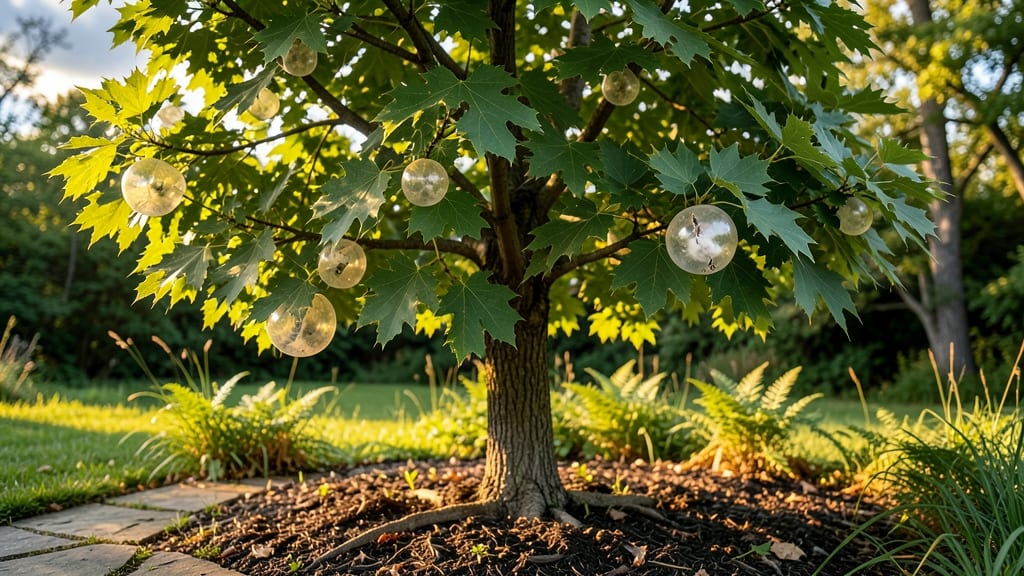
Those weird, balloon-like bumps on your maple branches aren’t just unsightly—they’re bladder galls, and they’re sucking energy from your tree. 🌳 I’ve spent years watching these pop up every spring, only to learn how to manage them without harming the tree.
The good news? Most galls aren’t fatal, but they can weaken growth if left unchecked.
Bladder galls form when tiny wasps (Andricus quercusflocci) lay eggs in the bark, triggering the tree’s defensive response. The result? Those puffy, translucent sacs that look like overinflated balloons. While they’re usually harmless, severe infestations can stress the tree, leaving it vulnerable to disease or pests.
Removing them is simple: just snip them off with clean pruners in late winter or early spring before the wasps emerge. For heavy infestations, a horticultural oil spray in late fall can disrupt the wasp life cycle.
The key is acting early—once the galls turn brown and crispy, the damage is already done.
Not all galls are created equal. If the tree looks otherwise healthy, you might not need to act at all. But if branches are thinning or leaves are sparse, it’s time to intervene. A little pruning now keeps your maple thriving for decades.
The Tiny Invaders Behind Maple Blisters
Those peculiar, balloon-like bumps on your maple tree’s branches—called bladder galls—aren’t just quirky nature art. They’re the result of a hidden battle between your tree and some of the smallest but most persistent pests in the garden.
Understanding why these galls form is the first step to stopping them. Let’s break down the science behind the blisters.
Bladder galls on maple trees are primarily caused by Cynips wasps, a group of tiny, winged insects belonging to the family Cynipidae. Unlike bees or ants, these wasps don’t sting humans—they’re more interested in your maple tree. Here’s how they pull off their sneaky trick:
- Egg-laying precision: Female wasps inject a single egg into a young maple leaf or bud in spring. The egg hatches into a larva, which then triggers a chemical response in the tree.
- Tree’s overreaction: The tree, sensing the intrusion, produces excess plant hormones (like auxins and cytokinins) around the larva. This causes the surrounding cells to swell, forming the characteristic bladder-like gall.
- Safe harbor: The gall acts as a protective nursery, providing the wasp larva with food (tree sap and nutrients) while shielding it from predators and harsh weather.
Pro tip: 🔍 Look closely at the galls in late summer or fall—you might spot tiny exit holes where adult wasps emerge the following spring.
Not all maple trees develop bladder galls, and even within the same species, some trees are more susceptible. Here’s why your tree might be a magnet for these wasps:
| Factor | Why It Matters |
|---|---|
| 🌿 Tree health | Healthy, vigorously growing maples (especially sugar maples and silver maples) are prime targets because their rapid cell division makes them easier to manipulate. Stressed or weak trees may resist gall formation better. |
| 🌳 Tree age | Young maples (under 10 years old) are more vulnerable because their bark is thinner, making it easier for wasps to insert eggs. Mature trees develop thicker bark, offering some protection. |
| 🌞 Sun exposure | Wasps prefer laying eggs on sun-exposed branches where leaves receive plenty of light. Shady maples are less likely to develop galls because the wasps avoid cooler, damp conditions. |
| 🌧️ Moisture levels | Moderate rainfall in early spring (when wasps are most active) creates ideal conditions for egg-laying. Drought-stressed trees may be less appealing, while overly wet soil can attract more wasps. |
Did you know? 🌡️ Some maple varieties, like the Norway maple, are highly resistant to bladder galls, while others, such as the red maple, are more prone to severe infestations.
Bladder galls don’t appear randomly—they thrive when environmental conditions align just right for the wasps. These factors can turn your maple tree into a wasp buffet:
- 🌤️ Warm springs: Temperatures between 50–70°F (10–21°C) in early spring signal wasps to emerge from hibernation and start egg-laying. Warmer-than-average springs can lead to earlier and heavier infestations.
- 🌿 Early leaf flush: Maple trees that leaf out early (before late April in most regions) give wasps a head start. The wasps time their emergence to coincide with this critical window.
- 🐝 Lack of natural predators: Birds, parasitic wasps (yes, other species!), and predatory beetles can keep Cynips wasp populations in check. If these predators are scarce—due to pesticide use or habitat loss—the galls spread unchecked.
- 🌳 Tree density: Maple trees growing in clusters or forests provide more hiding spots for wasps and increase the chances of cross-pollination (metaphorically speaking—wasps don’t pollinate, but they do spread their eggs efficiently).
Actionable insight: ✨ If your area has had an unusually warm winter or early spring, be extra vigilant—this is often a red flag for a bad gall season ahead.
Natural Fixes for Maple Tree Galls
Bladder galls on maple trees might look alarming, but with the right approach, you can restore your tree’s health without harsh chemicals. Below are targeted solutions based on the most common causes—from fungal infections to insect activity—along with proactive prevention tips to keep your tree thriving.
Start by identifying the galls (round, swollen growths on stems or branches) and follow these steps to minimize damage:
- 👨🍳 Inspect & Identify - Wear gloves and examine the galls closely. If they’re soft, spongy, or oozing sap, they’re likely fungal.
Hard, woody galls may indicate insect activity. - Pro tip: 💡 Use a magnifying glass to check for tiny holes (insect exit points) or mold-like growths (fungal signs).
- 🔪 Prune with Precision
- Cut 2–3 inches below the gall using sterilized pruners (wipe blades with rubbing alcohol between cuts).
- Avoid removing large branches—focus on small stems where galls appear.
- Safety first: ✨ Disinfect tools after each cut to prevent spreading pathogens.
- 🧹 Clean Up Debris
- Collect fallen galls and pruned material in a sealed bag and discard in the trash (not compost). This stops spores or insects from reinfesting.
The fix depends on what’s triggering the galls. Here’s how to tackle each issue:
🍄 Fungal Bladder Galls (Most Common)
- Fix: Apply a copper fungicide (like Bordeaux mixture) or a neem oil spray (1 tsp neem oil + 1 quart water + a drop of dish soap).
- When to spray: 🌧️ Early morning or evening, after pruning, and repeat every 2–3 weeks during wet seasons.
- Alternative: 🌿 A baking soda spray (1 tbsp baking soda + 1 quart water + a few drops of soap) works for mild cases.
🐜 Insect-Induced Galls (Maple Bladder Gall Midge)
- Fix: Use insecticidal soap or horticultural oil (like dormant oil) to suffocate larvae.
- Best time to treat: 🌱 Late winter/early spring (before new growth) or fall (when insects are dormant).
- For severe cases: 🔥 Try spinosad (a natural bacteria-based insecticide) as a last resort.
🌿 General Tree Health Boost
- Fix: Improve air circulation and soil health to weaken gall-causing conditions:
- Prune nearby branches to reduce humidity around the tree.
- Mulch properly (2–3 inches of organic mulch, kept 6 inches away from the trunk).
- Water deeply but infrequently (overwatering invites fungal growth).
Stop galls before they start with these low-effort habits:
- 🌳 Monitor regularly – Check your tree monthly for early signs (tiny bumps or discoloration). - 🍂 Clean up fallen leaves – Remove leaf litter around the tree to reduce fungal spores. - 💪 Strengthen the tree – Fertilize with balanced, slow-release fertilizer (like 10-10-10) in early spring. - 🌧️ Improve drainage – If your yard stays soggy, amend soil with compost or sand to prevent waterlogging. - 🐝 Encourage beneficial insects – Ladybugs and lacewings eat gall-causing pests.
Plant marigolds or dill nearby to attract them.
Remember: Most bladder galls are cosmetic and won’t kill your tree, but removing them early prevents spread and keeps your maple looking its best. With consistent care, your tree can bounce back stronger than ever!
Frequently asked questions about maple tree bladder galls
Are bladder galls harmful to my maple tree?
Most bladder galls are cosmetic issues and won't kill your tree, but severe infestations can stress it. The real concern is when galls appear on small branches—this can weaken growth and make the tree more vulnerable to disease. Focus on removing them if they're widespread or appear on young branches.
When is the best time to remove bladder galls?
Remove them in late winter or early spring before the wasps emerge. This prevents the next generation of galls from forming. Avoid pruning during active growth periods (spring/summer) as it stresses the tree. Always use sterilized pruners to prevent spreading infections.
Will my maple tree grow back after removing galls?
Yes! Maple trees are resilient. When you prune galls properly (cutting 2-3 inches below the gall), the tree will seal the wound and grow new healthy branches. Just be patient—it may take 1-2 growing seasons to see full recovery, especially if the infestation was severe.
Can I use home remedies instead of chemicals?
Try neem oil spray (1 tsp neem + 1 quart water) or horticultural oil applied in late fall to suffocate overwintering larvae. For fungal galls, a baking soda solution (1 tbsp baking soda + 1 quart water) works well. Always test remedies on a small area first.
How do I tell if my galls are from insects vs. fungi?
Insect galls are usually hard and woody with tiny exit holes, while fungal galls appear soft, spongy, or oozing. Use a magnifying glass to check for wasp activity. If you see mold-like growth, it's likely fungal. The location matters too—insect galls often appear on young branches.