
Trees
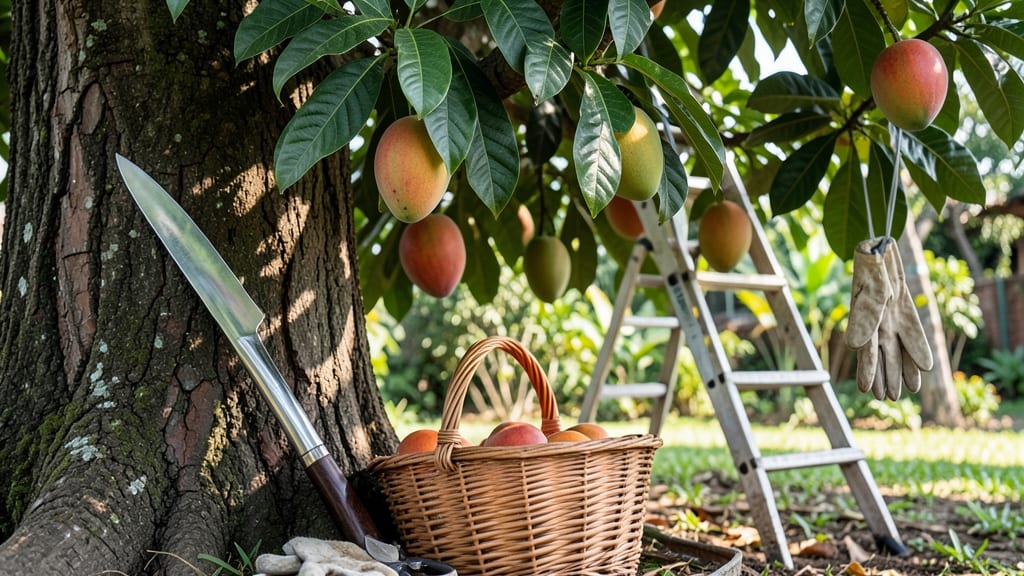
Harvesting a mango tree at the right time means the difference between a fruit so sweet it practically melts in your mouth 🥭 and one that’s either rock-hard or mushy.
Nothing beats the taste of a perfectly ripe mango—sweet, juicy, and bursting with flavor—but timing your harvest wrong can leave you disappointed. Whether you’re growing in Florida’s heat or a California backyard, knowing when to pick ensures you get the best flavor and texture.
You’ll learn how to spot the perfect moment—when the skin softens just right, the scent becomes intoxicating, and the stem releases easily. These clues, along with variety-specific tips, will help you avoid the common mistakes that turn great mangoes into mediocre ones.
Plus, I’ll share how to store your harvest for maximum freshness, whether you’re eating them fresh, blending into smoothies, or preserving them for later. Let’s make sure your mango tree harvest is worth every minute of care!


How to determine the perfect time to harvest mangoes for optimal ripeness
Harvesting mangoes at the right moment transforms a good crop into an exceptional one. Unlike some fruits that ripen off the tree, mangoes must be picked at the perfect stage of maturity—not too firm and not too soft.
The challenge lies in recognizing the subtle cues that signal peak ripeness, which vary slightly between varieties like Tommy Atkins, Ataulfo, or Kent. Understanding these indicators ensures you enjoy mangoes at their sweetest, juiciest, and most flavorful.
First, focus on the color change as your primary visual cue. Most mango varieties develop a rich, deep hue—often green turning to red, yellow, or orange—when ready for harvest. However, some like Ataulfo mangoes stay green but soften significantly.
Pair this with the fruit's aroma; a sweet, tropical scent near the stem means it's nearly ready. Ignoring these signs often leads to underripe fruit that lacks flavor or overripe mangoes that turn mushy.
Variety matters when determining ripeness. For example, Tommy Atkins mangoes typically ripen to a red blush over green skin, while Ataulfo mangoes remain green but become softer and sweeter. Always check your specific variety's characteristics, as some may need a few extra days on the tree to reach full flavor. Cross-referencing with local climate conditions also helps, as cooler temperatures can delay ripening.
Next, perform the 'give' test by gently pressing the mango near the stem. A ripe mango will yield slightly, like a ripe avocado, while an unripe one feels rock-hard. Press too hard, and you risk bruising the fruit.
For Ataulfo mangoes, this test is especially critical since they stay green. If the fruit feels too firm or too soft, it’s not ready—wait another day or two. Overripe mangoes often develop a fermented smell and may have bruised spots.
Don’t overlook the seed development as another key indicator. A fully mature mango seed should be brown and firm, not green or shriveled. If the seed feels soft or underdeveloped, the fruit likely needs more time on the tree.
This is particularly useful for first-time mango growers, as it provides a tangible way to assess ripeness beyond just color. Combine this with the stem test: twist the mango gently at its stem. If it separates easily, it’s ready for harvest.
Timing your harvest also depends on your climate zone. In warmer regions like Florida or California, mangoes ripen as early as late spring, while cooler zones like Texas or Arizona may see harvests stretching into early fall.
Monitor local weather patterns, as unexpected cold snaps can halt ripening. If frost threatens, harvest immediately—even if the mangoes aren’t fully ripe—to save your crop. Use a harvesting pole for taller trees to avoid damaging branches.
One common mistake is harvesting mangoes too early for storage. If you plan to ship or store them, pick them slightly firmer than ripe—they’ll continue ripening off the tree. For immediate consumption, aim for peak ripeness on the tree. To test, cut one open and taste it.
The flesh should be bright yellow or orange, with a juicy texture and minimal fiber. If it’s pale or dry, the fruit needs more time. This hands-on approach ensures you never miss the sweet spot.
Finally, consider the purpose of your harvest. Mangoes picked for juicing or smoothies can be harvested slightly firmer, as they’ll ripen during processing. For fresh eating or slicing, prioritize the sweetest, softest fruit.
Varieties like Haden mangoes are often harvested when they’re firm but yielding, while Keitt mangoes
Step-by-step guide to harvesting mangoes without damaging the tree or fruit
Harvesting mangoes at the right time and using the proper technique ensures you enjoy juicy, flavorful fruit while protecting your mango tree's health. The key lies in gentle handling and knowing when the fruit is ready—typically summer to early fall, depending on your climate zone.
Picking too early results in underripe, mealy mangoes, while waiting too long can lead to overripe, mushy fruit that falls off the tree.
Morning is the best time to harvest because the fruit is cooler and firmer, reducing the risk of bruising. Avoid harvesting after a hot afternoon or during rainy weather, as wet conditions can spread diseases like anthracnose.
If you must pick in the afternoon, do so early and handle the fruit with extra care to prevent damage.
How to Harvest Mangoes Safely
- 1 Gather tools: Use pruning shears or a harvesting pole with a hook to reach high branches. A bucket or cloth beneath the tree catches fallen fruit.
- 2 Twist gently: Grasp the fruit stem near the branch and twist slowly until the mango releases. Avoid pulling or jerking, which can damage the branch or bruise the fruit.
- 3 Handle with care: Place harvested mangoes in a soft container or wrap them in a towel to prevent bruising. Never toss them directly into a bucket or bag.
- 4 Inspect branches: After harvesting, check for damaged branches or remaining unripe fruit. Prune any dead or diseased branches with sterilized shears to maintain tree health.
- 5 Avoid overharvesting: Never remove more than 30-50% of the fruit in one session. Leaving some mangoes on the tree ensures the tree continues to produce energy for next year’s crop.
One common mistake is harvesting too aggressively, which can stress the tree and reduce future yields. If you’re unsure whether a mango is ripe, perform the "give" test: Press gently near the stem.
A ripe mango will yield slightly, while an unripe one will feel firm. Additionally, sniff the stem—ripe mangoes emit a sweet, tropical aroma.
After harvesting, store mangoes at room temperature if they’re ripe and plan to eat them within a few days. For unripe mangoes, place them in a paper bag with a ripe banana or apple to speed up ripening using ethylene gas.
Avoid refrigerating ripe mangoes, as cold temperatures can dull their flavor and texture.
If you notice bruised or damaged fruit after harvesting, separate it immediately and use it first. Bruised mangoes spoil faster and can spread decay to other fruit.
For long-term storage, refrigerate unripe mangoes in a perforated plastic bag for up to two weeks, but let them ripen at room temperature before eating.