
Pests and Diseases
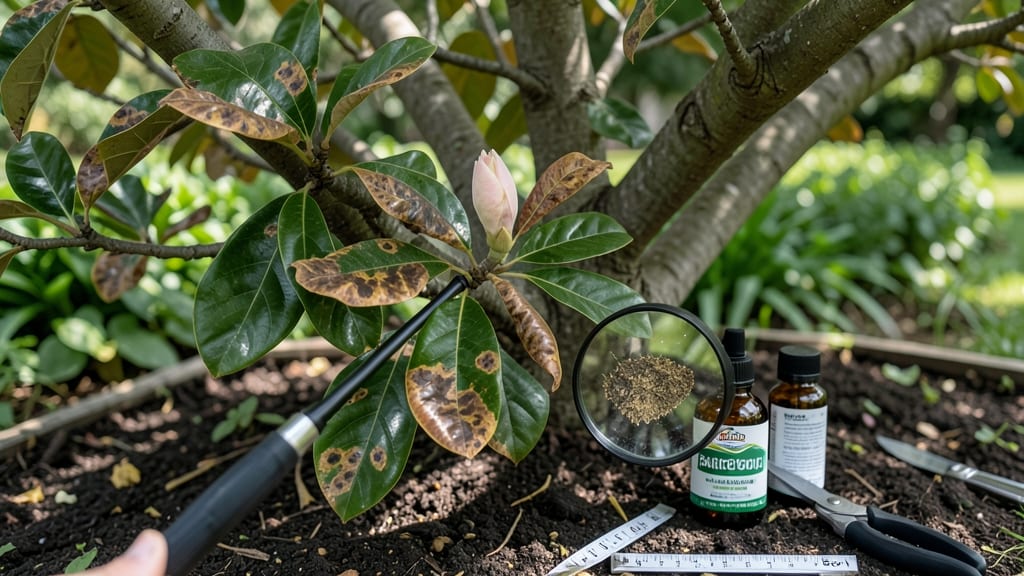
Magnolia trees leaf disease turns those glossy, dark-green leaves into sad, spotted messes—and I’ve seen it ruin a whole tree in just one season. 🌿 The first sign?
Tiny yellow or brown spots that spread like ink in water, or that white, powdery coating that looks like someone dusted flour on your prized tree. If you catch it early, you can save your magnolia’s health—and its stunning spring blooms—before the damage gets permanent.
The culprits are usually fungi like powdery mildew or anthracnose, thriving when summer humidity hangs thick in the air or when rain soaks the leaves for days. Weakened trees—from poor drainage, overwatering, or too much shade—are just asking for trouble.
The good news? Most of these diseases respond to a few simple, organic fixes if you act fast. No need for harsh chemicals unless the problem’s already out of control.
By the time you finish this, you’ll spot the early warning signs before they become a full-blown crisis. Prune infected branches, apply the right fungicide (neem oil works wonders), and adjust your watering habits to keep those leaves lush and disease-free.
Your magnolia will thank you with bold, healthy foliage and those iconic fragrant blooms for years to come.
Works for both young saplings and mature trees—just adjust the treatment scale. The key is acting before the fungus spreads, so don’t wait until half your tree looks like it’s been attacked. Let’s get those leaves back to their best.
Why it happens
Magnolia trees are stunning landscape stars, but their glossy leaves can quickly turn into a sad, spotted mess when fungal pathogens or environmental stressors take hold. Understanding why these issues arise is the first step to protecting your tree.
Below, we break down the science behind the most common culprits—from microscopic invaders to everyday gardening oversights.
🍄 Fungal Infections: The Silent Invaders
Fungi are the #1 reason magnolia leaves develop unsightly spots, discoloration, or premature drop. These organisms thrive in warm, humid conditions and exploit weak spots in your tree’s defenses. Here’s how they strike:
- Pathogen Entry Points: Fungal spores land on leaves through wind, rain, or even garden tools. Once they find a moist, nutrient-rich surface (like damaged or stressed leaves), they germinate and penetrate the leaf tissue.
- Favorable Conditions: Fungi love high humidity (above 75%) and stagnant water on leaves or soil. Overhead watering or dense foliage that doesn’t dry quickly creates the perfect breeding ground. 🌡️ Pro tip: Morning watering (before 10 AM) reduces fungal spores’ survival rate.
- Common Magnolia Fungal Foes:
- Phyllosticta leaf spot: Causes small, dark spots with yellow halos—often seen in spring.
- Anthracnose: Leads to large, sunken lesions and leaf blight, especially after wet springs.
- Powdery mildew: Forms white, powdery patches on leaves, weakening photosynthesis.
🌡️ Environmental Stressors: When Conditions Go Wrong
Magnolias are resilient, but extreme or inconsistent conditions can weaken their immune response, making them vulnerable to diseases. Here’s what throws them off:
| Stressor | How It Weakens the Tree | Actionable Fix |
|---|---|---|
| 💦 Overwatering or Poor Drainage | Soggy roots starve leaves of oxygen, causing root rot and fungal growth. Yellowing leaves or wilting are red flags. | Test soil moisture with your finger—water only when top 2" are dry. Amend clay soil with compost or sand. |
| ☀️ Too Much Sun or Heat Stress | Scorched leaves (brown edges) reduce the tree’s ability to fight off pathogens. Magnolias prefer morning sun + afternoon shade. | Prune nearby trees or install shade cloth (30–50%) during peak summer heat. |
| ❄️ Late-Freeze Damage | New leaves emerging after a late frost can develop blackened or distorted growth, inviting fungal infections. | Use frost cloths on young trees or plant in microclimates sheltered from cold winds. |
| 🌬️ Poor Air Circulation | Tightly packed branches trap moisture, creating fungal hotspots. Look for clumped leaves with white powder (mildew). | Prune to open the canopy and space trees 10–15 feet apart. |
🐛 Pests and Secondary Damage: The Domino Effect
Some pests don’t directly cause leaf diseases, but their damage creates entry points for fungi. For example:
- Scale insects or spider mites suck sap, weakening leaves and making them susceptible to sooty mold (a black fungal growth on sticky honeydew).
- Japanese beetles chew large holes in leaves, exposing tissue to fungal spores. 🔥 Pro tip: Handpick beetles early in the day when they’re sluggish.
- Canker diseases (like Nectria) enter through pruning wounds or bark damage, then spread to leaves via the tree’s vascular system.
Key takeaway: Most leaf diseases in magnolias are opportunistic—they exploit stress or damage. By addressing these root causes, you’re not just treating symptoms; you’re fortifying your tree’s natural defenses. 🛡️
Quick Fixes for Fading Magnolia Foliage
Reviving your magnolia’s health starts with pinpointing the root cause—and acting fast. Below, we’ve mapped out practical, step-by-step solutions for the most common leaf diseases, from fungal infections to environmental stress.
Whether your tree is battling powdery mildew, anthracnose, or bacterial blight, these fixes will help you restore those glossy leaves and keep future outbreaks at bay.
Fungi like powdery mildew or anthracnose thrive in damp, shaded conditions. Here’s how to starve them out and rebuild your tree’s defenses:
🔥 Step 1: Prune the Problem Areas
- 👨🍳 Remove infected leaves and branches—cut 6 inches below the last sign of disease to prevent spread.
- ⏰ Best time to prune: Early morning (when humidity is lower) or on dry days.
- 🔪 Sterilize tools between cuts with 70% rubbing alcohol or a 10% bleach solution (1 part bleach to 9 parts water).
🍳 Step 2: Apply Fungicidal Treatments
Use copper-based fungicides (like copper sulfate) or neem oil spray for organic control.
Follow these ratios: | Disease | Treatment | Frequency | |-------------------|----------------------------------------|-----------------------------| | Powdery Mildew | 1 tbsp baking soda + 1 tsp dish soap + 1 gallon water | Every 7–10 days until cured | | Anthracnose | Copper fungicide (e.g., Bonide Copper Fungicide) | At bud break, then every 2 weeks | | Leaf Spot | Neem oil spray (2.5% solution) | Weekly until new growth appears |
✨ Pro Tip: For severe cases, repeat treatments every 7–14 days until new, healthy leaves emerge.
🌡️ Step 3: Improve Airflow and Light
- 💡 Thin out dense branches to allow sunlight and air circulation.
- 🎯 Space plants at least 6–10 feet apart to reduce humidity buildup.
- 🌞 Consider relocating young magnolias to sunnier spots (they tolerate partial shade but need 4+ hours of direct sun).
Bacterial leaf spot (Xanthomonas campestris) causes black, oily spots and requires aggressive action:
🔥 Step 1: Prune and Dispose Properly
- 🗑️ Remove infected leaves immediately—do not compost them (bacteria can survive).
- 🚫 Burn or trash severely infected branches (if possible).
🍳 Step 2: Use Copper Bactericides
- 💊 Spray with copper hydroxide (e.g., Kocide 3336) every 7–10 days during wet seasons.
- 🌿 Add a 1% hydrogen peroxide solution (3.5% food-grade H₂O₂ + 96.5% water) as a natural antibacterial rinse (test on a small branch first).
🌡️ Step 3: Prevent Future Outbreaks
- 💡 Avoid overhead watering—use drip irrigation or water at the base of the tree.
- 🎯 Sterilize pruners after each cut to prevent cross-contamination.
- 🌱 Plant resistant varieties** like Magnolia grandiflora (Southern magnolia), which tolerates humidity better.
If your magnolia’s leaves are yellowing, wilting, or dropping due to drought, poor soil, or pests, these fixes will revitalize its health:
💡 Step 1: Water Deeply and Consistently
- 🌧️ Water 1–1.5 inches per week (more in extreme heat).
- ⏰ Best time: Early morning (reduces fungal risks).
- 🌱 Use mulch (2–3 inches of wood chips or pine straw) to retain moisture and regulate soil temp.
🍳 Step 2: Test and Amend the Soil Magnolias prefer slightly acidic soil (pH 4.5–6.0).
If your soil is too alkaline or compacted: - 📊 Test your soil (use a home test kit or send a sample to a local extension office). - 🌿 Add organic matter: - Peat moss or compost (for acidity) - Sulfur granules (if pH is above 6.5) - Avoid fresh manure (can burn roots).
🌡️ Step 3: Fertilize Smartly
- 💊 Use a balanced, slow-release fertilizer (e.g., 10-10-10) in early spring.
- 🚫 Avoid high-nitrogen fertilizers (they encourage leafy growth over flowers).
- 🎯 For micronutrients, apply iron chelate if leaves show yellowing between veins (a sign of chlorosis).
Once your magnolia is healthy, maintain these habits to prevent future outbreaks:
| Prevention Tip | How to Do It |
|---|---|
| 🌿 Early detection | Inspect leaves weekly for spots, powdery residue, or discoloration. |
| 🍂 Clean up fallen leaves | Rake and remove debris in fall/winter (fungi overwinter here). |
| 💡 Prune for airflow | Thin out branches every 2–3 years to improve circulation. |
| 🌧️ Water wisely | Avoid late-day watering (keeps foliage dry overnight). |
| 🌱 Choose disease-resistant varieties | Opt for ‘Little Gem’ or ‘Ann’ magnolias if fungal diseases are common in your area. |
💡 Final Reminder: Act fast—the sooner you treat leaf diseases, the less damage they’ll cause. With proper pruning, fungicides, and soil care, your magnolia will bounce back with lush, disease-free foliage in no time! 🌸
Frequently asked questions
What are the first signs of fungal infections on magnolia leaves?
Look for tiny yellow or brown spots that spread quickly, or white powdery patches (powdery mildew). Anthracnose causes sunken, dark lesions, while bacterial leaf spot shows up as black, oily marks. Check both upper and lower leaf surfaces—fungi often start on the undersides.
Can I use household items to treat magnolia leaf diseases?
Mix 1 tablespoon baking soda + 1 teaspoon dish soap + 1 gallon water for powdery mildew, or spray neem oil (2.5% solution) for leaf spots. Hydrogen peroxide (1%) also works as a natural antibacterial rinse. Always test on a small branch first.
Why does my magnolia get diseases more in summer?
Summer's high humidity and frequent rain create perfect fungal breeding conditions. Overhead watering keeps leaves wet overnight, while dense foliage traps moisture. Prune for airflow, water at the base in the morning, and avoid planting magnolias in overly shaded spots.
Will pruning help if my magnolia already has severe leaf disease?
Yes, but act fast! Remove infected branches 6 inches below the last visible spot and sterilize tools between cuts. For severe cases, prune in dry weather and follow up with copper fungicide. Never prune when leaves are wet—this spreads spores.
How do I know if my magnolia's leaf problems are from disease or pests?
Diseases cause spots, powdery coatings, or yellowing between veins, while pests leave holes, sticky residue (honeydew), or visible bugs. Check leaf undersides for mites or beetles. If you see both symptoms, treat pests first—they often invite fungal infections.