
Pruning
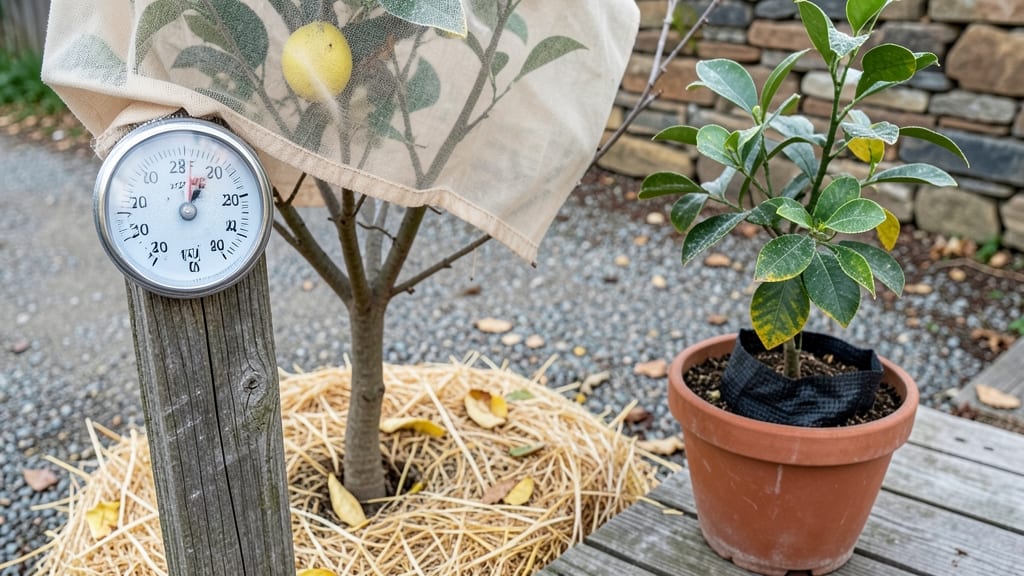
Understanding lemon tree low temperature limits is key to survival: these trees can handle brief chills down to 25–30°F (-4 to -1°C), but extended cold below 28°F (-2°C) causes irreversible damage or death. Cold-resistant varieties like 'Meyer' or 'Ponkan' endure short freezes better, while most citrus require winter safeguards like frost covers or indoor relocation.
Lemon trees face cold stress differently depending on which part is exposed. 🌱 Roots begin freezing at 20°F (-7°C), while leaves show burn damage above 28°F (-2°C)—the critical threshold. Interestingly, ripening fruit becomes more vulnerable as temperatures drop, while dormant trees can tolerate slightly colder snaps.
I've seen 'Eureka' lemons survive 25°F (-4°C) for a few hours, but their leaves turned black within days. The key is acting before the first frost hits.
For potted lemon trees, move them indoors when nighttime temps dip below 40°F (4°C). If outdoors, wrap the pot in bubble wrap and cover the plant with frost cloth secured with bricks. 🌡️ Native soil provides natural insulation, but mulching with straw adds an extra 5°F (3°C) of protection.
After a freeze, check for mushy stems or blackened leaves—these are signs the tree won't recover, and you'll need to prune them back to healthy growth.
💡 In This Article
- How Cold Affects Lemon Tree Roots, Leaves, and Fruit
- Winterizing Lemon Trees: Step-by-Step Protection Methods
How cold affects lemon tree roots, leaves, and fruit
The first signs of cold stress appear in lemon tree leaves when temperatures drop to 28°F (-2°C). At this threshold, ice crystals form within leaf cells, rupturing their delicate membranes—a process called "frost cavitation."
This causes brown, papery patches that spread rapidly, especially on younger leaves. 🌿 The tree’s vascular system struggles to deliver water to damaged areas, leading to wilting even before the frost fully lifts. Interestingly, older leaves often survive slightly better because their thicker waxy coating provides minor insulation.
Roots experience a different kind of cold shock, freezing solid at 20°F (-7°C). Unlike leaves, roots can’t recover once frozen—they turn black and mushy, cutting off the tree’s water and nutrient supply.
The soil’s moisture content plays a critical role: wet soil conducts cold faster, while dry soil insulates better. That’s why mulching with 4-6 inches of straw adds a protective 5°F (3°C) buffer. Potted trees are especially vulnerable because container soil freezes more quickly than ground soil.
Fruit sensitivity depends on ripeness—unripe lemons can handle 25°F (-4°C) for short periods, but ripe fruit develops soft, watery spots at 30°F (-1°C).
The skin’s natural oils break down, causing the flesh to turn mushy within 24 hours. 🍋 This is why harvest lemons just before the first frost if you want them to stay firm.
Even dormant trees aren’t immune: buds and flowers freeze at 28°F (-2°C), meaning next year’s crop could be lost if winter protection isn’t applied early.
Recovery signs appear within 7-10 days after a frost. Healthy new growth at the tree’s base indicates the roots survived, while green shoots from dormant buds suggest the canopy can regenerate.
However, if more than 30% of leaves turn black, the tree’s energy reserves are depleted, and pruning back to live wood becomes essential. Cold-hardy varieties like 'Meyer' often bounce back faster because their genetics allow for quicker cell repair.
Microclimates matter more than you’d think. A south-facing wall can raise temperatures by 5-10°F (3-6°C) near the tree, while a north exposure drops effective cold tolerance by 3°F (2°C).
This is why urban lemon trees in microclimates like Los Angeles often survive winters without protection, while rural trees in the same zone need blankets. 🌡️ Even a 10-foot-tall fence creates a windbreak that adds 2-3°F (1-2°C) of warmth, making all the difference during light freezes.
What most gardeners overlook is how wind speed accelerates cold damage. A 10 mph breeze can make 30°F (-1°C) feel like 20°F (-7°C) to the tree, because wind removes the thin layer of warm air clinging to leaves.
That’s why frost cloth works so well—it traps this insulating air layer, buying the tree critical extra time. For outdoor trees, wrapping the trunk with burlap or tree wrap prevents sunscald (daytime thawing that damages bark) during winter.