
Diseases
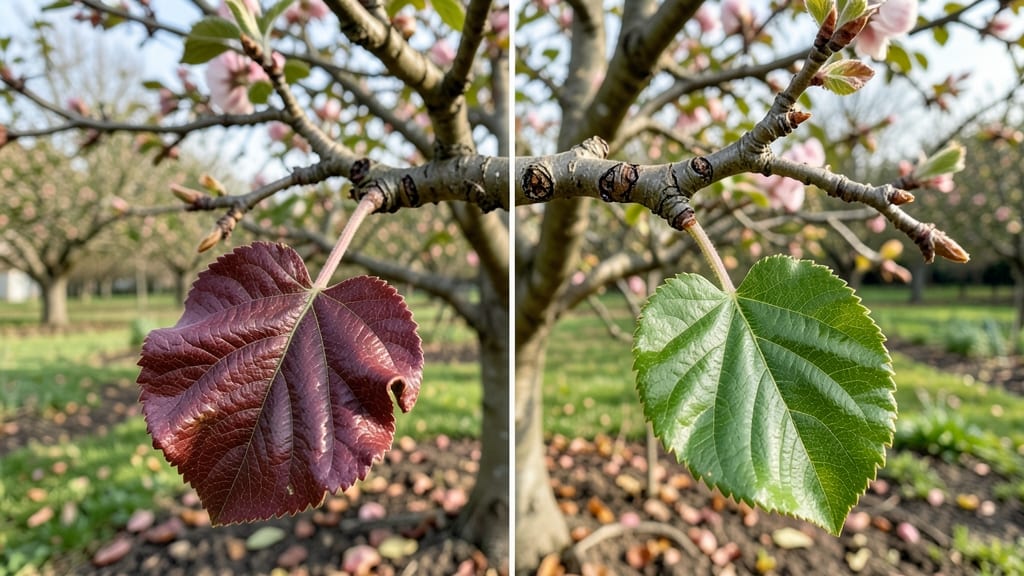
Your apple tree’s curled leaves could mean leaf curl disease—spotting it early means saving your harvest. 🍏 I’ve battled this fungal foe for years, and the difference between losing branches and keeping a thriving tree comes down to knowing the right steps.
The moment you see those tiny, puckered leaves in spring, you’ve got a race against the fungus Venturia inaequalis to stop it from ruining next year’s fruit.
The disease starts as tiny olive-green spots that swell into curled, yellowing leaves by summer. Prune infected branches immediately—don’t wait—and sterilize your tools with rubbing alcohol to avoid spreading spores.
Organic options like copper fungicide or neem oil work best when applied at bud swell and again after petal fall, but timing is everything. Miss those windows, and you’ll be fighting a losing battle.
By next spring, your tree could be back to lush, disease-free growth—no more weak branches or dropped fruit. The key is consistent prevention: thin the canopy for airflow, water at the base (never overhead), and keep fallen leaves cleaned up.
Even my worst-hit trees made a full recovery after one focused season of these steps.
This works for home orchards, backyard trees, and even container-grown apples. The only real failure is doing nothing—so grab those pruners and let’s turn this around before the fungus wins.
The Hidden Triggers Behind Leaf Curl
Leaf curl in apple trees isn’t just a random act of nature—it’s a sign of stress caused by specific pathogens, environmental factors, or even poor tree health. Understanding these triggers is the first step to prevention and treatment.
Below, we break down the real reasons your apple tree’s leaves might be curling, twisting, or developing unsightly bumps.
Most cases of leaf curl are triggered by fungal or viral infections, which exploit weak spots in your tree’s defenses. Here’s how they strike:
#### **🍄 Apple Leaf Curl Fungus (Taphrina deformans) - How it spreads: This fungus thrives in cool, wet springs (ideal conditions: 50–60°F with high humidity). Spores release from infected leaves, buds, or fallen debris, landing on new growth. - Why it works: The fungus infects young leaves and buds before they fully expand, causing them to thicken, curl, and turn reddish-purple. It doesn’t kill the tree but weakens it over time, reducing fruit yield and vigor. - Actionable insight: Remove and destroy infected leaves in fall/winter to break the cycle. Avoid overhead watering to keep foliage dry. #### 🦠 Viruses (e.g., Apple Mosaic Virus, Apple Chlorotic Leaf Spot Virus) - How it spreads: Viruses hitchhike on aphids, mites, or contaminated pruning tools. Once inside the tree, they disrupt cell function, leading to stunted growth, mottled leaves, and curling. - Why it’s sneaky: Unlike fungi, viruses persist in the tree’s system and can’t be cured. Infected trees may show mild symptoms for years before declining rapidly. - Actionable insight: Inspect new plants for symptoms before planting. Use reflective mulch to deter aphids and sterilize tools with rubbing alcohol between cuts.Not all leaf curl is caused by pathogens—sometimes, it’s your tree’s way of screaming for help due to harsh conditions. Here’s what’s pushing it over the edge:
#### ❄️ Late-Freeze Damage - How it happens: Apple trees bloom early in spring, but a sudden freeze (below 28°F) can damage tender new leaves and buds. The tree may attempt to recover by curling or thickening the affected areas. - Why it’s dangerous: Frozen tissue can’t photosynthesize, starving the tree of energy. Secondary infections (like leaf curl fungus) then move in. - Actionable insight: Plant cold-hardy varieties (e.g., ‘McIntosh,’ ‘Granny Smith’) and use frost cloth during late-winter blooms. #### 💦 Overwatering or Poor Drainage - How it happens: Soggy roots (from overwatering or clay soil) suffocate the tree, leading to oxygen deprivation. The leaves curl upward in a desperate bid for air. - Why it’s a silent killer: Root rot sets in, cutting off nutrients. Curling leaves are often a late-stage warning. - Actionable insight: Test soil moisture—water only when the top 2 inches are dry. Amend heavy soil with compost to improve drainage. #### ☀️ Heat or Drought Stress - How it happens: Intense heat or prolonged drought forces leaves to reduce surface area (via curling) to conserve moisture. This is common in sandy or well-drained soils where water evaporates quickly. - Why it’s a double whammy: Stressed trees drop fruit and become vulnerable to pests like spider mites, which also cause curling. - Actionable insight: Mulch heavily (3–4 inches of organic mulch) to retain moisture. Use drip irrigation to deliver water directly to roots.A tree that’s nutrient-deficient, overcrowded, or improperly pruned has no fight left against leaf curl. Here’s how to spot the red flags:
#### 🍃 Nutrient Deficiencies (Especially Zinc or Nitrogen) - How it happens: Apple trees need balanced nutrients to grow strong leaves. A deficiency in zinc or nitrogen leads to stunted, curled, or yellowed leaves (a condition called “little leaf”). - Why it’s fixable: Unlike pathogens, deficiencies respond to soil amendments. For example: - Zinc deficiency: Apply zinc sulfate (1–2 tbsp per gallon of water) as a foliar spray. - Nitrogen deficiency: Use compost or blood meal in early spring. - Actionable insight: Test your soil (via a local extension office) before fertilizing. Overdoing it can burn roots! #### 🪓 Poor Pruning Practices - How it happens: Over-pruning, cutting at the wrong time, or leaving stubs creates entry points for pathogens. It also disrupts the tree’s energy flow, leading to weak, curled new growth. - Why it’s a long-term issue: Chronic poor pruning reduces fruit production and invites diseases like leaf curl. - Actionable insight: Prune in late winter/early spring (before buds swell). Use clean, sharp tools and make cuts at a 45-degree angle just outside the branch collar. #### 🌿 Overcrowding or Competition - How it happens: If your apple tree is too close to other trees, shrubs, or buildings, it competes for sunlight, water, and nutrients. The result? Weak, curled leaves as the tree stretches for survival. - Why it’s a space issue: Trees need 12–15 feet of space to thrive. Crowding stresses the root system, making it easier for diseases to take hold. - Actionable insight:** Thin out nearby plants or transplant competitors. If the tree is already mature, mulch widely to reduce competition.Pro Tip: 💡 Keep a disease diary to track when leaf curl appears. Note weather patterns, pruning dates, and soil conditions—this helps you pinpoint the exact trigger next season!
Fixing Leaf Curl in Apple Trees
Leaf curl in apple trees can feel like a daunting challenge, but with the right approach, you can restore your tree’s health—and even prevent future outbreaks.
Below, we’ll break down practical, organic solutions tailored to each cause, from quick fixes to long-term strategies. Let’s get your apple tree back to thriving!
---
Fungal leaf curl thrives in damp conditions, but you can starve it out with these steps:
#### 🔪 Step 1: Remove Infected Leaves & Branches - When: Early spring or fall (before spores spread). - How: Snip off all curled, spotted, or distorted leaves with clean pruners.
Dispose of them in the trash (not compost)—fungi can survive in yard waste! - Pro Tip: 💡 Sterilize your pruners with rubbing alcohol between cuts to avoid spreading spores.
#### 🌿 Step 2: Apply Organic Fungicides Use copper-based sprays or neem oil (a natural fungicide) to smother fungal growth: - Mix: 1 tbsp neem oil + 1 tsp mild soap + 1 quart water.
Spray every 2–3 weeks during wet seasons. - Alternative: Baking soda spray (1 tsp baking soda + 1 quart water + a drop of oil) works for mild cases.
#### 🌡️ Step 3: Improve Airflow & Drainage Fungi love humidity! Thin out dense branches and mulch around the base (but keep mulch 6+ inches from the trunk) to reduce moisture buildup.
---
Viral infections (like Apple Mosaic Virus) have no cure, but you can contain and prevent spread:
#### ⚠️ Step 1: Remove & Destroy the Tree (If Severe) - If your tree is heavily infected, dig it up and burn or trash it (viruses can’t spread without a host). - Warning: 🚨 Do not compost infected plant material—viruses can survive!
#### 🌱 Step 2: Plant Resistant Varieties If you’re replanting, choose disease-resistant apple varieties like: - Liberty - Enterprise - Akane
#### 🛡️ Step 3: Sterilize Tools & Soil - Clean pruners with bleach (1 part bleach to 10 parts water). - Avoid planting new trees in the same spot—viruses linger in soil for years.
---
Yellowing, curling leaves from nutrient imbalances respond well to targeted fertilizing:
#### 📊 Step 1: Test Your Soil Use a DIY soil test kit (or send a sample to a lab) to check for: - Low zinc (causes "little leaf" curl) - Magnesium deficiency (interveinal chlorosis)
#### 💪 Step 2: Apply the Right Fertilizer - For zinc: Sprinkle zinc sulfate (1 tbsp per gallon of water) and spray on leaves. - For magnesium: Use Epsom salt (1 tbsp per gallon) as a foliar spray. - Pro Tip: 🌱 Avoid over-fertilizing—too much nitrogen can worsen fungal issues!
#### 🍎 Step 3: Use Organic Amendments Mix compost or worm castings into the soil (6–12 inches deep) to boost overall nutrient availability.
---
Once you’ve treated your tree, prevent recurrence with these habits:
✅ 🌧️ Water in the Morning – Wet leaves dry faster, reducing fungal growth. ✅ 🍂 Clean Up Fallen Leaves – Rake and remove leaf litter where spores hide. ✅ 🐝 Encourage Beneficial Insects – Ladybugs and lacewings eat pests that stress trees. ✅ 🌿 Mulch Properly – Use wood chips or straw, not thick layers that trap moisture. ✅ 📅 Prune at the Right Time – Trim in late winter/early spring (before buds swell).
--- Final Thought: 🎯 With consistent care, your apple tree can bounce back—and stay healthy for years. Start with the fixes above, then focus on prevention to keep those crisp, disease-free apples coming!
Frequently asked questions
What do leaf curl symptoms look like on apple trees?
Leaf curl starts with tiny, puckered leaves that appear thickened and reddish-purple. Early signs include olive-green spots on new growth that swell into curled, distorted foliage. By summer, infected leaves may yellow and drop prematurely, leaving branches looking sparse.
Is leaf curl contagious between apple trees?
Yes, fungal leaf curl spreads through spores released from infected leaves, buds, or fallen debris. Wind, rain, and tools can carry spores to healthy trees. Always sterilize pruners with rubbing alcohol and remove infected plant material immediately to prevent spread.
Can I still harvest fruit from a tree with leaf curl?
You can, but the quality may suffer. While leaf curl doesn't directly infect fruit, severely infected trees produce smaller, lower-quality apples. Focus on treating the tree first—healthy foliage leads to better harvests in future seasons.
How often should I apply fungicide for leaf curl prevention?
Apply organic fungicides like neem oil or copper spray every 2–3 weeks during wet springs. Start at bud swell and repeat after petal fall for maximum protection. Consistency is key—missing applications leaves your tree vulnerable to reinfection.
Will pruning alone cure leaf curl?
No, pruning alone won't cure fungal leaf curl, but it's a critical first step. Remove all infected branches and leaves, then combine with fungicide treatments and improved airflow. Without chemical or organic controls, the fungus will persist in the environment.