
Pruning
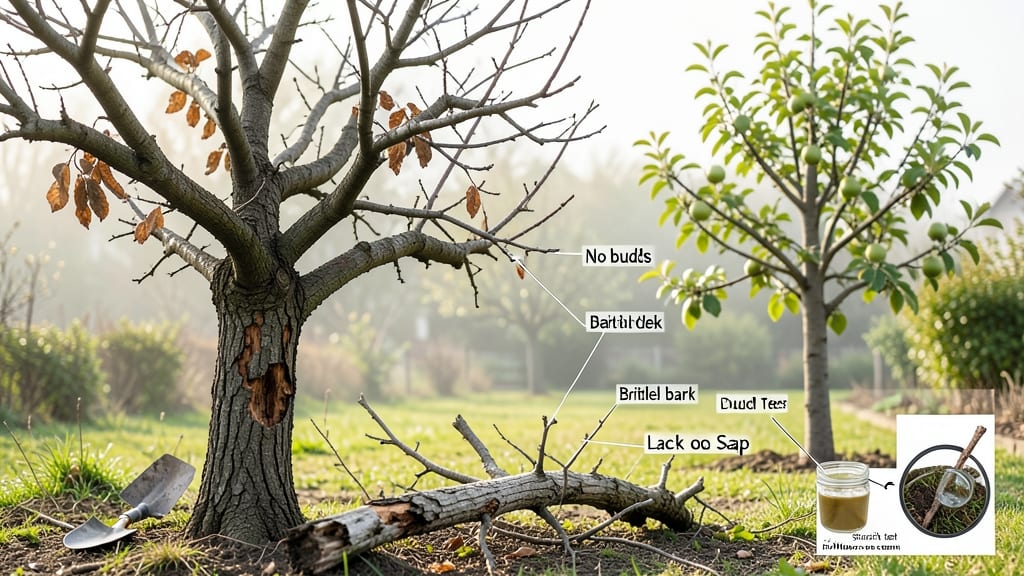
You can determine if your apple tree is dead by checking for no new growth in spring, completely brown or brittle branches, or missing leaves after budding season. Confirm by looking for peeling bark, hollow trunks, or fungal growths before deciding to prune or remove it.
Apple trees often fool us into thinking they're dormant when they're actually dead.
The key is timing—healthy trees should show fresh green shoots by late April or early May, depending on your climate zone. 🌱 If you see only bare branches or a few stubborn leaves from last year, that's a red flag.
I've seen many gardeners mistake fungal infections for dormancy, so always check the bark for unusual textures or discoloration. Even if the tree looks lifeless, roots might still hold onto moisture, so don't rush to dig them up without proper testing.
What throws people off most is the confusion between deadwood and disease. A tree with sapwood that's still moist when cut is alive, while dry, crumbly wood means it's beyond saving. I recommend using a pocket knife to scrape a small section of bark—if green layers appear beneath, there's hope.
For older trees, the trunk's hollowness or excessive cracks can be the final clues that confirm what your eyes already suspected.
💡 In This Article
- 5 Critical Signs Your Apple Tree Is Actually Dead
- How to Test for Life in a Suspected Dead Apple Tree
5 Critical signs your apple tree is actually dead
The first clue lies in the branches. Dead apple tree limbs become brittle and snap easily when bent—healthy branches bend slightly without breaking. Run your fingers along the bark: if it crumbles like dry paper or falls away in sheets, that’s a clear sign of death.
The texture should be rough and dry, not smooth or slightly damp as in dormant trees. 🌳 Even in winter, healthy trees retain some moisture in their cambium layer, the thin green tissue just beneath the bark.
Leaf absence after budding season is another key indicator. Apple trees typically burst into leaf by late spring, but if you see only bare branches or just a few yellowed leaves from last year, the tree may be dead.
Compare this to a dormant tree, which might have tight buds ready to bloom—press one gently to check for moisture inside. Fungal growths like black spots or powdery white patches on branches also signal decay, as these prevent the tree from absorbing nutrients.
Seasonal timing matters greatly. In USDA zones 5-7, apple trees should show new growth by early May. If your tree remains completely bare past this point, it’s likely dead.
Exceptions exist for young trees or those recovering from stress, but persistent lack of growth over multiple years confirms the issue. Pay attention to the trunk’s condition too—a hollow center or excessive cracks wider than 1/2 inch indicate structural failure from rot.
Root health plays a hidden but crucial role. While above-ground signs are obvious, roots can sometimes sustain life even when the canopy looks dead. Dig carefully near the base—healthy roots should be white or light tan, while dead roots turn dark brown or black and crumble easily.
If you find only a few live roots clustered near the trunk, the tree’s survival is unlikely without intervention.
Don’t confuse deadwood with disease. Some apple trees suffer from fire blight or apple scab**, showing blackened branches but still retaining some life. The key difference: dead trees have no green tissue under the bark when scraped, while diseased trees may have patches of green cambium.
This distinction helps determine whether pruning can save the tree or if removal is necessary.
Consider the tree’s age and history. Older apple trees (over 20 years) naturally decline, but sudden dieback—especially after extreme weather—suggests death.
If your tree lost all leaves during a drought but hasn’t recovered after two growing seasons, it’s likely beyond saving. 🌟 The combination of these visual cues provides a clear diagnosis, but always cross-check with professional tools like a moisture meter for confirmation.