
Pruning
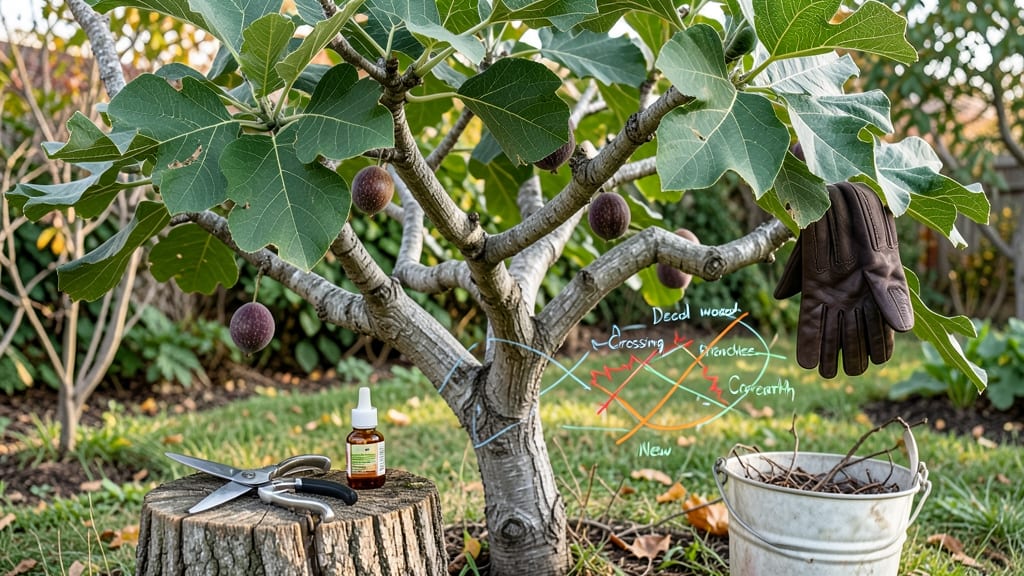
Trimming your fig tree in fall isn’t just about shaping—it’s about setting up next year’s harvest. 🌿 The dormant season is the perfect time to prune, and doing it right means fewer dead branches, more fruit, and a stronger tree come spring.
I’ve learned the hard way that cutting at the wrong time or in the wrong way can stress the tree or even invite disease. The key is working after the leaves fall but before hard frost, when the tree’s energy is stored but still accessible.
You’ll need sharp pruning shears, gloves, and a clear day—fig sap can be messy! Focus on removing dead wood, crossing branches, and any growth that’s too close to the trunk. These cuts encourage airflow and sunlight to reach the center, which is crucial for fruit production.
What you’ll end up with is a tree that’s easier to manage, produces more figs, and looks healthier overall. The cuts you make now will determine how many branches burst with new growth in spring, so take your time and make clean cuts just outside the branch collar.
It’s satisfying to see how much more productive the tree becomes after proper pruning. This method works for both container and in-ground fig trees, whether you’re dealing with a young tree or an established one. Just remember: figs are forgiving, but precision matters. Here’s exactly how to do it right!
📚 In This Guide
- What you need
- Instructions
- Tips and common mistakes
- Wrapping up and next steps
What you need
- ○ Pruning shears: Bypass pruners (sharp, 6-8 inch blades) for small branches (¼"–¾" diameter). Anvil pruners (for thicker cuts) are optional but handy for stubborn branches.
- ● Loppers: Bypass loppers (18–24 inch handles) for branches ¾"–2" in diameter. Look for ratcheting or bypass types for cleaner cuts.
- ● Pruning saw: Curved-tooth handsaw (for branches >2" thick). A folding saw adds convenience.
- ● Gloves: Heavy-duty gardening gloves (leather or reinforced) to protect against thorns and sap.
- ● Disinfectant: 70% isopropyl alcohol or bleach solution (1 part bleach to 9 parts water) to sterilize tools between cuts and prevent disease.
- ○ Pruning sealant: Optional (e.g., tree wound paint) for large cuts (>3" diameter) to reduce sap loss.
- ● Weather check: Trim on a dry, cool day (avoid frost or rain). Ideal temps: 50–70°F.
- ● Safety glasses: Protect your eyes from debris (thorns, sap, or sawdust).
- ● Long sleeves/pants: Wear lightweight, long-sleeved clothing to shield against thorns and sun exposure.
- ● Ladder or step stool: Sturdy, non-slip for reaching higher branches (if needed). Never stand on the tree!
- ● Cleanup supplies: Garden bag or bucket for debris, plus twigs or mulch to compost or dispose of.
Step-by-step instructions for trimming a fig tree in fall
Fall is the perfect time to shape your fig tree for next year’s harvest—here’s how to do it right.
✂️ Step 1: Remove Dead or Damaged Branches First
Start by scanning the tree for branches that are brown, brittle, or showing signs of disease. These are your top priority—they won’t recover and only drain energy from healthy growth. Use clean, sharp pruners to cut back to the nearest healthy bud or branch collar (the swollen area where the branch meets the trunk).
I always work from the bottom up to avoid dropping debris on fresh cuts. If you’re unsure whether a branch is dead, scratch the bark with your fingernail—green underneath means it’s still alive. Never leave dead wood on the tree, even if it looks small. It can harbor pests and diseases over winter.
✂️ Step 2: Thin Out Crowded or Crossing Branches
Next, focus on branches that are rubbing against each other or growing inward toward the center of the tree. These create weak points where bark can tear, inviting infections. Cut these branches back to their origin point at the trunk or a larger branch. Always make your cuts at a 45-degree angle, about ¼ inch above an outward-facing bud to encourage healthy regrowth.
You’ll know you’re thinning correctly when sunlight can now reach the center of the tree. Figs need good air circulation, so don’t be shy about removing up to 25% of the canopy if it’s particularly dense. This isn’t about drastic cuts—just opening up the tree’s structure for better fruit production next season.
✂️ Step 3: Shape the Tree for Balance and Airflow
Now it’s time to shape the tree’s overall form. Figs naturally grow with a slightly open, vase-like shape, so aim to maintain that structure. Look for branches that are growing too upright—these are prime candidates for pruning to encourage a more horizontal growth habit. Cut back the tips of these branches by about ⅓ of their length to stimulate bushier growth.
Pay special attention to water sprouts—those fast-growing, vertical shoots that pop up along the trunk or branches. These steal energy from fruit production, so remove them completely at the base. If you’re unsure which cuts to make, imagine the tree as a sculpture: you want to highlight its natural beauty while keeping it functional.
✂️ Step 4: Clean Up and Protect the Tree
After making all your cuts, take a step back and inspect the tree one last time. Remove any small stubs left behind—these can rot and become entry points for pests. Use your pruners to clean up any ragged edges, leaving smooth cuts that heal faster.
Finally, gather all the pruned branches and dispose of them properly. Don’t compost them if they show signs of disease—burn them or put them in the trash instead. Once the ground is clear, apply a 2-3 inch layer of mulch around the base of the tree (but keep it 6 inches away from the trunk) to protect the roots from freezing temperatures and retain moisture.
Tips & tricks for perfect fall fig tree trimming
These small details make all the difference when shaping your fig tree for next year’s bounty.
Tool Prep: Sharpen your pruners before you start—dull blades tear bark and create jagged cuts that heal poorly. I test mine on a scrap piece of wood first; if it doesn’t cut cleanly, take 5 minutes to sharpen with a file. Clean blades also prevent spreading disease between cuts. For thicker branches (over ½ inch), use loppers instead of regular pruners to avoid straining your hands.
Branch Identification: In Step 1, when checking for dead branches, look for another telltale sign besides color: healthy branches should have a slight spring when you bend them gently. Dead branches will snap like dry twigs. I also check for "compartmentalization"—figs naturally isolate damage, so if you see a small dead section on a larger branch, don’t panic unless it’s spreading. The tree will often seal it off naturally.
Angle and Bud Placement: The 45-degree angle in Step 2 isn’t just for looks—it helps water run off the cut and prevents rot. That ¼-inch above an outward-facing bud is crucial too. If you can’t find a bud, make your cut parallel to the branch collar (that swollen area) instead. I mark potential cuts with a piece of chalk first to visualize where I’ll cut before making the actual incision.
Seasonal Timing: While fall is ideal, you can actually trim fig trees anytime except when they’re fruiting. If you miss fall, early spring (before buds swell) is your next best window. Just avoid trimming after a hard frost—wait until temperatures stay above freezing for a few days first. I always check the local frost calendar before scheduling my pruning day to avoid stressing the tree.
Pro Tips for Trim A Fig Tree In The Fall
- These small details make all the difference when shaping your fig tree for next year’s bounty.
- Tool Prep: Sharpen your pruners before you start—dull blades tear bark and create jagged cuts that heal poorly.
- Branch Identification: In Step 1, when checking for dead branches, look for another telltale sign besides color: healthy branches should have a slight spring when you bend them gently.
Frequently asked questions
Got questions about trimming your fig tree in the fall? You’re not alone! Here are some of the most common concerns—and straightforward answers—to help you prune with confidence.
When is the exact best time to trim a fig tree in fall?
Trim your fig tree after the first hard frost (when leaves have dropped but before winter’s worst chill sets in). This is typically late October to early November in most climates. Dormant pruning (after leaf drop) reduces stress and promotes stronger spring growth. Avoid trimming too early—figs need time to harden off!
Can I trim a fig tree in fall if it’s young or newly planted?
Yes! Light shaping is fine for young fig trees, but focus on removing dead, diseased, or crossing branches. Avoid heavy pruning—wait until the tree is at least 2–3 years old for major cuts. Newly planted figs benefit from minimal trimming to establish roots first.
What if I accidentally trim too much? Will my fig tree survive?
Fig trees are resilient, but never remove more than 20–30% of the canopy in one season. If you over-prune, the tree may struggle to produce fruit next year. Focus on open-center shaping—cut back to the outer bud on remaining branches to encourage outward growth. Your fig will bounce back!
Do I need to sterilize my pruners between cuts?
Figs are prone to bacterial and fungal diseases like fig rust. Wipe pruners with rubbing alcohol (70% or higher) or a 10% bleach solution between cuts. Clean tools prevent spreading pathogens to healthy branches. Pro tip: Carry a small spray bottle of disinfectant while pruning!
Should I seal pruning wounds on a fig tree?
No—fig trees do not need wound dressing (like pruning paste). Sealing cuts can trap moisture and invite rot. Instead, make clean cuts at a 45-degree angle just outside the branch collar (the swollen base where the branch meets the trunk). Let the tree’s natural healing process work its magic!
What if my fig tree doesn’t have any fruit this year?
Fall pruning won’t directly cause fruit loss, but heavy cuts can delay fruiting by 1–2 years. If your tree is young (<3 years old) or stressed, it may prioritize regrowth over fruit. Focus on balanced pruning—remove only deadwood and shape gently. Patience pays off!
Wrapping up and next steps
Trimming your fig tree in the fall is a game-changer—it sets the stage for healthier growth, better fruit production, and a tidier canopy next spring. 🌿 By focusing on dormant-season cuts, you’re not just pruning; you’re investing in your tree’s future.
With the right tools, timing, and technique, you’ll feel like a pro in no time!
Ready to take the next step? Mark your calendar for early fall (just after leaf drop) and grab your pruners—your fig tree is waiting for its makeover! For extra confidence, review our FAQs or watch a quick video tutorial before diving in.