
Size
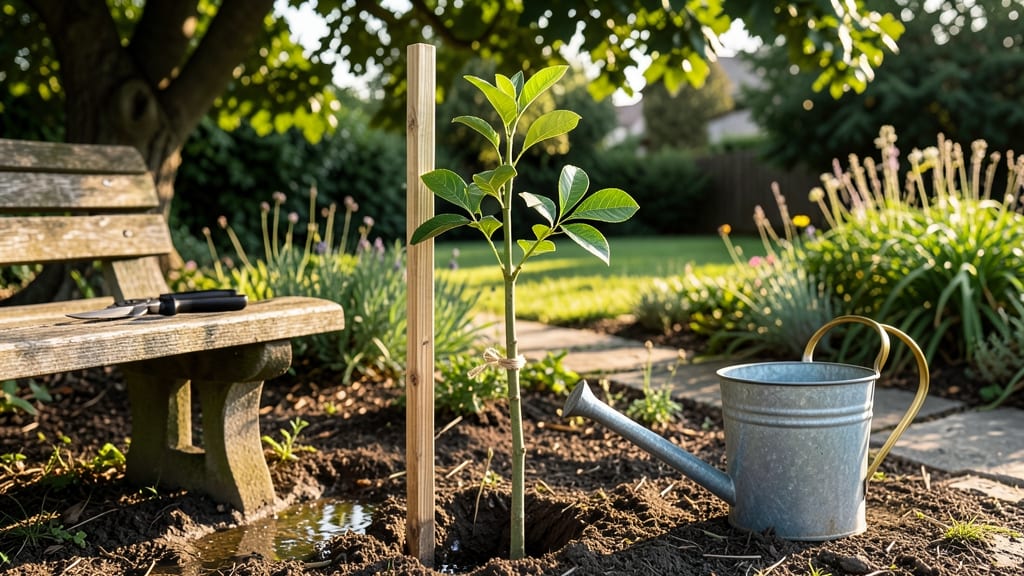
How to make a tree grow straight starts the moment you plant it—perfect alignment begins with proper depth and support. 🌳 I’ve watched saplings twist into gnarled messes because of shallow planting or overzealous staking, but the right technique keeps them growing straight from day one. The secret isn’t harsh pruning later—it’s setting them up right from the start with simple adjustments that make all the difference.
Most people overlook the planting depth, burying the root flare too deep, which strangles growth. Use a level to check the hole’s depth—it should match the root ball’s height—then water thoroughly before staking.
For young trees, a single 3-foot stake at a 45-degree angle, paired with flexible ties, prevents wind damage without restricting movement. The goal is to guide, not restrict: let the tree sway slightly to build strength naturally.
By the time your tree reaches 3-5 feet, you’ll see the difference—no leaning, no awkward bends, just steady upward growth. Prune only to remove crossing branches or low-hanging limbs that block sunlight, and always cut just above a bud or outward-facing branch.
The result? A tree that stands tall on its own, with minimal intervention needed as it matures.
Works for almost any species—from fast-growing willows to slow but steady oaks—just adjust stake height and pruning timing to match the tree’s natural growth rate. The key is patience: straight growth happens over years, not weeks. Here’s how to get started without the guesswork.
📚 In This Guide
- What you need
- Instructions
- Tips and common mistakes
- Wrapping up and next steps
What you need
- ● Young tree or sapling (choose fast-growing species like willow, birch, or fruit trees for best results).
- ● Sturdy stakes (2–4) – 3/4" to 1" diameter, 3–5 ft tall (adjust based on tree height).
- ● Soft tree ties – Wide, stretchy fabric or rubber ties (avoid wire!) to secure stakes without damaging bark.
- ● Garden twine or burlap strips – For extra support if needed.
- ● Pruning shears – Sharp, bypass-style (for clean cuts) or hand pruners for smaller branches.
- ● Gloves – Garden gloves (cut-resistant if pruning thorns).
- ● Watering can or hose – For consistent hydration.
- ● Plant support cage – Wire or spiral cages for extra stability (great for windy areas).
- ● Mulch (wood chips or straw) – 2–3" layer to retain moisture and protect roots.
- ○ Growth regulator spray – Optional for stubborn crooked trees (follow label instructions!).
- ● String level or measuring tape – To check alignment as the tree grows.
Step-by-step guide to pruning for perfectly straight tree growth
Here's how I've helped young trees stand tall and proud—no expensive supports needed.
🌱 Step 1: Identify the Leader and Remove Competing Stems
The first thing I look for is the central leader—the strongest, upright stem growing straight up from the trunk. This will be your tree's backbone. Use your thumb and forefinger to gently bend each competing stem (those growing at sharp angles or sideways). The one that bends easily is weaker and should go.
With clean, sharp pruning shears, cut competing stems at their base, just above a leaf node or outward-facing bud. Never leave stubs—this invites disease. I always make my cuts at a 45-degree angle to prevent water from pooling on the wound. Watch for sucker growth (those little shoots sprouting from the base)—remove them immediately, as they compete with your leader.
✂️ Step 2: Thin Out Crowded Branches for Airflow
Next, focus on the lower third of the tree where branches are thickest. I remove about 20-30% of the smallest, crossing, or inward-growing branches to create space. These branches steal energy from your leader and block sunlight from reaching the trunk. Use your hand as a guide—if you can't fit it between two branches, one needs to go.
Make your cuts just outside the branch collar (the swollen area where the branch meets the trunk). This ensures the tree can heal properly. For larger branches, I wait until late winter or early spring when the tree is dormant. You'll know you've done it right when you can see light filtering through the canopy and the trunk appears unobstructed.
☀️ Step 3: Train the Leader with Strategic Pruning
If your leader is bending toward the light, it's time to guide it upright. I tie a soft tree tie (never wire or anything that can cut into the bark) around the leader and a sturdy stake, angling the tie at a 30-degree upward slope. This gives the stem gentle support while encouraging it to grow straighter. Check ties every 4-6 weeks—they should never be tight enough to restrict growth.
For trees that lean, I prune more leaves on the heavier side to reduce weight. This shifts the tree's balance gradually. You'll see the trunk start to straighten within 2-3 growing seasons if you're consistent. Avoid pruning when the tree is stressed (like during drought or extreme heat)—wait for cooler weather when the tree can heal faster.
🌿 Step 4: Maintain Balance Through Seasonal Check-Ins
Every spring and fall, I inspect the tree for new growth. If the leader starts to bend again, I shorten the top branches by about 10-15% to encourage the stem below to thicken and take over. This is called crown thinning, and it keeps the tree's weight evenly distributed. Use your fingers to feel for weak or rubbery branches—these are candidates for removal.
I also watch for water sprouts (fast-growing, vertical shoots) that pop up along the trunk. These are energy vampires—remove them as soon as they appear. Over time, your tree will develop a strong, straight trunk with a balanced canopy. The key is patience: a well-pruned tree can take 3-5 years to fully straighten, but the results are worth it.
⏰ Step 5: Know When to Stop Pruning for Best Results
Once your tree reaches 6-8 feet tall, I shift focus to maintenance pruning rather than corrective work. At this stage, I only remove dead, diseased, or crossing branches—never more than 25% of the canopy in a single year. Over-pruning weakens the tree and stresses the leader, undoing all your hard work.
I also avoid pruning oak, maple, or walnut trees in late spring—these species are prone to bleeding sap, which can stress the tree. For these, I stick to dormant season pruning (late winter/early spring). You'll know you've succeeded when your tree stands tall, unobstructed, and full of energy—ready to thrive for decades.
Tips & tricks for perfectly straight tree growth
A few strategic adjustments can transform a crooked sapling into a proud, straight tree—here's what I've learned after years of trial and error.
Tool Selection Matters: Never use dull pruning shears—they crush stems instead of making clean cuts. I invest in bypass pruners with sharp, stainless steel blades that glide through branches without tearing. For larger branches, a hand saw with a curved blade works best. Always clean your tools with rubbing alcohol between cuts to prevent disease spread. This small step makes all the difference in how cleanly your cuts heal.
Seasonal Timing is Critical: The instructions mention dormant season pruning for larger branches, but I also recommend avoiding pruning during extreme weather. Early spring (just before buds swell) is ideal for most trees—this timing gives them time to heal before summer stress. For fruit trees, I wait until after harvest when the tree has stored energy for recovery. You'll notice faster healing and stronger new growth when you time it right.
Visual Cues for Perfect Cuts: When making your 45-degree cuts, imagine the branch collar as a natural bandage—the cut should follow its contours. For the lower third thinning in Step 2, look for branches that cross others or grow inward—they'll create weak points where wind can break the tree. I always make test cuts on smaller branches first to practice my angle before tackling larger ones. The goal is to leave the tree looking like it was pruned by nature, not a human.
Tie Technique for Leaning Trees: The 30-degree upward slope for tree ties is perfect, but I've found that adding a small piece of foam or rubber between the tie and bark prevents chafing. Check ties every 4-6 weeks as instructed, but also watch for signs of growth—if the leader is still bending, you may need to adjust the angle slightly upward. Remember that ties should guide, not restrict—your tree should have room to grow without feeling constricted.
Pro Tips for Make A Tree Grow Straight
- A few strategic adjustments can transform a crooked sapling into a proud, straight tree—here's what I've learned afte...
- Tool Selection Matters: Never use dull pruning shears—they crush stems instead of making clean cuts. I invest in bypa...
- Seasonal Timing is Critical: The instructions mention dormant season pruning for larger branches, but I also recommen...
Frequently asked questions
Got questions about growing straight trees? You’re not alone! Here are answers to the most common concerns—whether you’re a beginner or a seasoned gardener.
How young should a tree be to start pruning for straight growth?
Start pruning when your tree is just a sapling (around 2–3 feet tall). Early intervention ensures the trunk develops strong, upright habits. Avoid heavy pruning on very young seedlings—focus on shaping as it grows. Think of it like guiding a toddler’s first steps: gentle support prevents bad habits!
What if my tree is already leaning? Can I fix it later?
Yes, but act fast! For young trees (<5 years), use staking or cabling to gently coax it upright. Older trees may need structural pruning to redistribute weight, but expect slower results. If the lean is severe, consult an arborist—some species (like willows) naturally grow crooked and may never straighten.
How long does it take to see straight-growth results?
Patience is key! With consistent pruning (every 6–12 months), you’ll see noticeable improvements in 1–2 years. Fast-growing trees (like poplars) respond quicker, while slower species (like oaks) take longer. Monitor growth direction annually—adjust techniques as needed.
What are the risks of pruning too much or too little?
Too much pruning weakens the tree, invites disease, and can stunt growth. Too little? Crooked growth or weak branch structure. Aim for no more than 25% of the canopy at a time. Always use sterilized tools and prune during the dormant season (late winter/early spring) for safety.
Are there tree species that naturally grow straight?
Some top picks for minimal pruning include:
- Japanese maples (naturally elegant)
- Lombardy poplars (tall and upright)
- Sugar maples (strong, vertical growth)
- Columnar fruit trees (like ‘Columnar Apple’)
Wrapping up and next steps
Growing a straight tree is all about patience, consistency, and the right techniques—whether it’s through strategic pruning, proper staking, or selecting the right species. With these methods, you’ll guide your tree toward a strong, upright structure that’s both beautiful and resilient. 🌱
Now that you’re armed with the knowledge, start small: pick one young tree and apply these tricks today! Over time, your efforts will pay off with a perfectly aligned tree that stands tall and proud. Happy gardening! 🌳✨