
How To
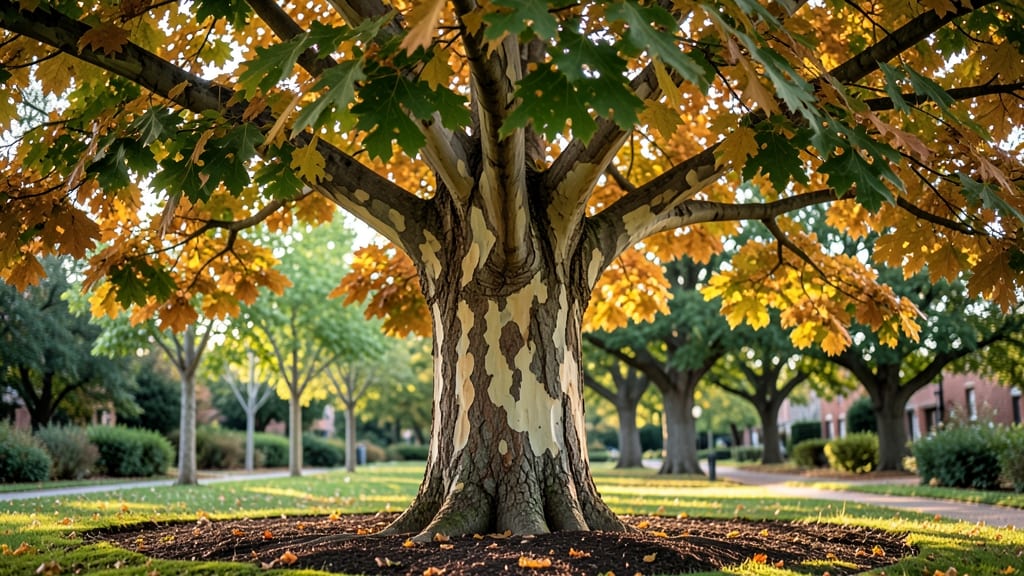
A sycamore tree can grow to 70 to 100 feet tall at maturity 🌳 — that’s taller than a five-story building in many landscapes. If you’ve ever admired their striking, mottled bark and wondered just how massive these giants can become, you’re not alone.
These fast-growing trees are a favorite for homeowners and landscapers alike, but their height isn’t just about time—it’s about where you plant them.
In warmer climates like the Deep South, sycamores can hit their full height potential, while in cooler regions like USDA Zone 6a, they may stay slightly shorter.
Beyond location, soil type and sunlight play a huge role. Well-drained, nutrient-rich soil paired with full sun gives sycamores the boost they need to reach their towering heights. But even in less-than-ideal conditions, they’re hardy enough to thrive.
Ready to plant one? I’ll break down how to maximize growth, the best varieties for height, and whether a sycamore is the right fit for your space—whether it’s a backyard or a sprawling estate.


Sycamore tree height by region: average mature sizes across the u.s.
Sycamore trees (Platanus occidentalis) are nature’s skyscrapers, capable of reaching stunning heights that make them stand out in any landscape. Their mature size isn’t just a matter of genetics—it’s heavily influenced by climate, soil quality, and regional growing conditions.
In the warm, humid climates of the Southeast, sycamores can easily surpass 100 feet, while in cooler northern states, they may max out around 60-80 feet. Understanding these regional differences helps you set realistic expectations for your own sycamore planting project.
The Southern U.S., particularly states like Florida, Georgia, and Louisiana, provides the perfect environment for sycamores to thrive and reach their maximum potential. With longer growing seasons and warmer winters, these trees grow faster and taller than anywhere else in the country.
Meanwhile, in USDA Zones 4-5, such as Michigan, Wisconsin, and New York, sycamores grow more slowly due to shorter frost-free periods and colder winters, often capping their height at 60-70 feet.
| Region | Average Mature Height | Key Growth Factors | USDA Zones |
|---|---|---|---|
| Southeast (FL, GA, LA) | 80-100 ft | Long growing season, warm winters, high humidity | 8a-10a |
| Mid-Atlantic (NC, SC, VA) | 70-90 ft | Moderate climate, occasional frost | 7a-8b |
| Midwest (IL, IN, OH) | 60-80 ft | Cooler summers, shorter growing season | 5b-6b |
| Northeast (NY, PA, NJ) | 50-70 ft | Cold winters, late spring planting | 4a-6a |
| Southwest (TX, OK, AR) | 75-95 ft | Hot summers, mild winters, drought tolerance | 7b-9a |
If you’re planting a sycamore in the Southeast or Southwest, you can expect rapid vertical growth, especially during the first 10-15 years of its life. In these regions, sycamores often grow 3-5 feet per year when conditions are ideal.
For example, a sycamore in Florida or Texas might reach 50 feet in just 20 years, while one in New York or Michigan may take 30-40 years to achieve the same height due to slower growth rates.
Another critical factor is latitude and frost patterns. Sycamores planted in USDA Zone 8 or higher experience minimal winter damage, allowing them to focus energy on height growth rather than recovering from frost.
In contrast, trees in Zones 4-6 may suffer winter dieback or slower spring growth, which can limit their ultimate height. Even in cooler climates, however, sycamores are remarkably resilient and can still reach impressive sizes with proper care.
Urban planting also plays a role in sycamore height. Trees grown in cities with limited space, such as Chicago or Boston, often face root competition and pollution stress, which can reduce their height by 10-20% compared to rural counterparts.
If you’re planting a sycamore in an urban setting, choose a wide, open area with well-draining soil to maximize its growth potential. Avoid planting near sidewalks or buildings, as restricted root zones can stunt vertical development.
One of the most fascinating aspects of sycamore growth is how soil moisture and drainage interact with regional climate. In wet, swampy areas of the Southeast, sycamores thrive and grow taller because they have constant access to water.
However, in drier regions like Arizona or Nevada, sycamores still grow well but may not reach their full height potential unless given supplemental irrigation during drought years. Always plant sycamores in well-draining soil to prevent root rot, which can severely limit height growth.
For home gardeners, the height of a sycamore is often a deciding factor in whether to plant one. While mature sycamores can dwarf even the tallest homes, younger trees are manageable in large yards.
In their first 5 years, sycamores grow 5-10 feet tall, making them a great shade tree option for new landscapes. If you’re concerned about space, consider pruning young trees to encourage a wider, bushier canopy rather than a single tall trunk.
Soil and environmental factors that determine sycamore tree height
A sycamore tree’s height isn’t just about genetics—it’s heavily influenced by the soil composition and environmental conditions where it’s planted. In ideal settings, sycamores can reach 70-100 feet, but poor soil or urban stress can cut that growth by 30-50%.
Understanding these factors will help you maximize your sycamore’s potential or manage its size if space is limited.
The soil type plays a critical role in determining how tall your sycamore will grow. Sycamores thrive in well-draining loamy soil but can adapt to clay or sandy soils, though their growth rate will slow.
For example, a sycamore in rich loam may grow 2-3 feet per year, while one in compacted clay might only add 1 foot annually. Always test your soil’s drainage before planting.
✅ Pros of Ideal Growing Conditions
- 🌱 Loamy soil → Faster growth (3+ ft/year)
- 💧 Moisture retention → Supports root expansion
- ☀️ Full sun exposure → Maximizes photosynthesis
- 🌳 Rural spacing → Unrestricted canopy growth
❌ Cons of Poor Conditions
- 🚫 Compacted clay → Stunted roots (1-2 ft/year)
- 💦 Waterlogged soil → Root rot risk
- 🏙️ Urban pollution → Slower growth (20-30% reduction)
- ✂️ Over-pruning → Weakened structure
Moisture levels are another key factor. Sycamores need consistent moisture during their first 3-5 years to establish deep roots. In drought-prone areas, their height can be 20-30% shorter than in regions with regular rainfall.
Mulching around the base helps retain moisture, while drip irrigation ensures even water distribution for urban plantings.
Urban vs. rural planting makes a surprising difference. In rural areas, sycamores often reach their maximum height due to unrestricted space and cleaner air. However, in cities, pollution and limited root space can reduce their height by 15-25%.
If planting in an urban setting, choose a larger-than-average planting hole (3x the root ball size) to compensate.
Avoid these common mistakes that stunt growth: planting in low-lying areas where water pools, using synthetic fertilizers too early (wait until year 2), or over-pruning young branches. Instead, focus on organic matter in the soil and minimal pruning until the tree is at least 10 feet tall.
By optimizing your sycamore’s soil and environment, you can encourage it to reach its full 70-100 foot potential. Even in challenging conditions, proper care will ensure it grows taller than most neighborhood trees—just give it the right foundation to thrive! 🌳