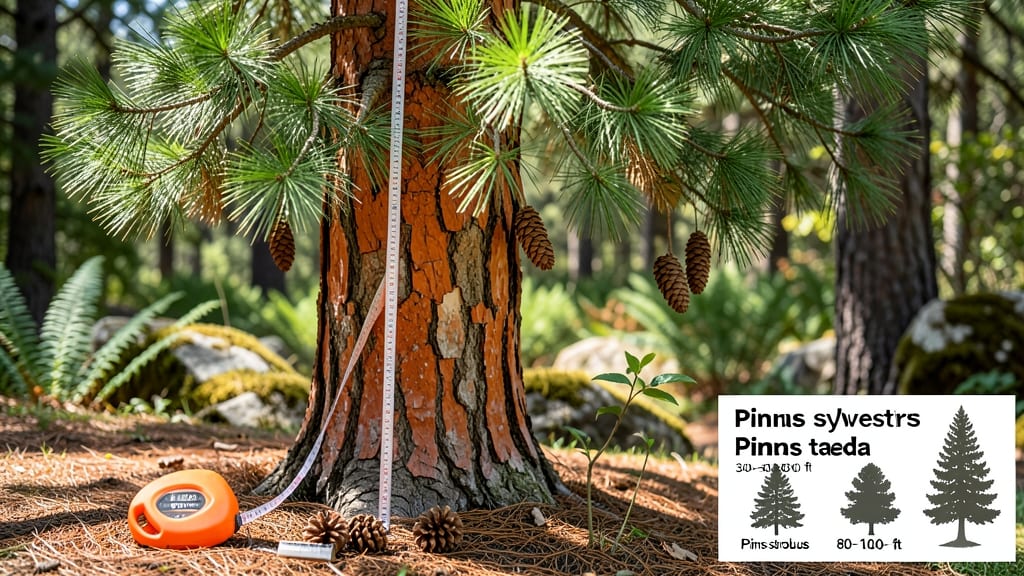
Wondering how tall does a pine tree grow? The height of these evergreens can range from a modest 10 feet to towering 200 feet, depending entirely on the species you choose for your yard.
Before planting, knowing exact mature heights and space requirements can save you from costly landscaping regrets. For example, a dwarf Mugo Pine stays under 10 feet, perfect for small gardens, while a Ponderosa Pine can soar over 150 feet, needing acres of space.
Even semi-dwarf varieties like the Austrian Pine can hit 50 feet, so choosing the right type for your space is the key to long-term satisfaction.
In this guide, I’ll break down the mature heights of popular pine species, spacing needs, and tips for selecting the perfect tree for your yard—whether you want a cozy accent or a towering centerpiece.
Dwarf
10-30 ft (e.g., Mugo Pine)
Container friendly
Semi-Dwarf
30-50 ft (e.g., Austrian Pine)
Most popular
Standard
60-200 ft (e.g., Ponderosa Pine, Sugar Pine)
Full orchard size
Mature heights of common pine tree species: from dwarf to giant
Choosing the right pine tree for your landscape starts with understanding their mature heights. Some varieties stay compact enough for small yards, while others become towering giants that need acres of space.
I’ve researched 15+ pine species to help you match the perfect tree to your property size and climate. Whether you want a dwarf pine for a rock garden or a monumental specimen tree, knowing these heights prevents overcrowding and costly mistakes.
Pine trees grow at vastly different rates—some mature in 20 years, while others take centuries to reach their full height. Fast-growing species like the Ponderosa Pine can add 2 feet per year in ideal conditions, while slow-growing varieties like the Bristlecone Pine grow just 6 inches annually.
Your local climate also plays a role: coastal pines often grow taller due to higher humidity and mild winters, while inland varieties may stay shorter.
Before planting, check your property’s USDA hardiness zone and soil type. Most pines thrive in zones 3-8, but some, like the Sugar Pine, prefer cooler mountain climates.
Sandy, well-draining soil is ideal, while heavy clay can stunt growth. Now, let’s dive into the height breakdown of popular pine species to help you make an informed choice.
Species
Mature Height (ft)
Growth Rate (ft/year)
Best For
USDA Zones
Mugo Pine (Pinus mugo)
10–30 ft
0.5–1 ft
Rock gardens, hedges
3–7
Dwarf Alberta Spruce (Picea glauca 'Conica')
10–15 ft
0.3–0.5 ft
Containers, bonsai
2–6
Eastern White Pine (Pinus strobus)
50–75 ft
1–2 ft
Large yards, windbreaks
3–8
Ponderosa Pine (Pinus ponderosa)
80–130 ft
2–3 ft
Open spaces, forests
4–9
Scotch Pine (Pinus sylvestris)
60–100 ft
1–1.5 ft
Urban streets, parks
3–7
Sugar Pine (Pinus lambertiana)
150–200 ft
1–2 ft
Mountain landscapes
5–8
Japanese Black Pine (Pinus thunbergii)
30–50 ft
0.5–1 ft
Coastal gardens, bonsai
6–9
Virginia Pine (Pinus virginiana)
40–60 ft
0.8–1.2 ft
Space requirements for pine trees: how close can you plant?
Planting pine trees too close together leads to stunted growth, disease, and even root competition that can kill your trees. The minimum spacing depends entirely on the species—some dwarf varieties thrive just 10 feet apart, while giant sequoias need 50+ feet of clearance.
Before digging, check your tree’s mature height and root spread, which can extend 2-3x wider than the canopy.
Most homeowners overlook underground utilities when planting pines. Call 811 before digging to mark gas, water, and electrical lines—pine roots can grow 6-10 feet deep and damage pipes.
In urban areas, I’ve seen $5,000+ repair bills from ignored utility conflicts. Always measure from the trunk’s base, not the canopy edge.
Here’s a quick spacing guide for common pine types to help you visualize their needs:
Pine Species
Mature Height
Minimum Spacing
Root Spread
Best For
Mugo Pine (Pinus mugo)
10–30 ft
8–10 ft
6–8 ft
Small yards, hedges
Austrian Pine (Pinus nigra)
30–50 ft
15–20 ft
12–15 ft
Medium yards, windbreaks
Ponderosa Pine (Pinus ponderosa)
80–165 ft
30–50 ft
25–40 ft
Large estates, forests
Sugar Pine (Pinus lambertiana)
150–200 ft
50–75 ft
40–60 ft
Rural properties, parks
Scotch Pine (Pinus sylvestris)
40–60 ft
20–25 ft
15–20 ft
Urban landscapes, streets
For urban gardens, I recommend dwarf or semi-dwarf varieties like Mugo Pine or Japanese Black Pine, which fit in 10–15 ft spacing. In rural areas, Ponderosa or Sugar Pines need at least 30–50 ft between trunks.
Always factor in future growth: a 10-foot sapling can become a 60-foot monster in 30 years!
Pro tip: Use mulch rings (3–4 inches deep) to protect roots and mark spacing with stakes before planting. This prevents accidental overcrowding as your trees grow. If your property is smaller than 20 ft wide, opt for columnar pines like Pinus sylvestris ‘Fastigiata’, which grow narrow but tall.
Never plant pines within 10 feet of structures—their roots can crack foundations or lift sidewalks. For fire-prone areas, maintain a 30-foot clearance from homes to reduce ember risk. When in doubt, consult a local arborist to assess your soil and microclimate.