
How To
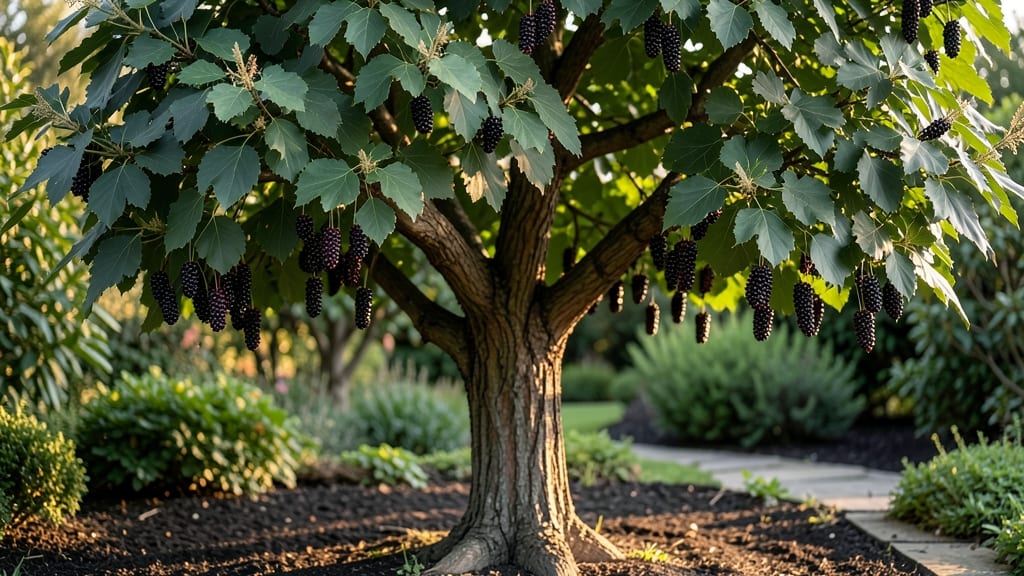
A mulberry tree grows to how tall does a mulberry tree grow heights between 20 and 60 feet—towering over your backyard like a living skyscraper if left unchecked.
If you're dreaming of a mulberry tree in your backyard but worried about space, you're not alone—these fast-growing giants can quickly outpace your garden's boundaries.
But here’s the good news: not all mulberry trees reach the same height. Some varieties stay compact, while others shoot up like rockets, and pruning can make all the difference.
In this guide, you’ll discover the height ranges for common species, how to control growth, and even space-saving alternatives so you can enjoy mulberries without sacrificing your yard.


Mulberry tree height by variety: which species stay small?
Choosing the right mulberry tree variety is critical if you're working with limited space. While some mulberries can tower over 60 feet, others remain compact enough for suburban backyards or even large containers.
The key difference lies in the species—white mulberries (Morus alba) typically stay smaller than their black mulberry (Morus nigra) cousins, but growth habits vary widely even within these categories.
Understanding these height variations helps you select the perfect tree for your landscape. Whether you're aiming for a 10-foot ornamental specimen or a 40-foot shade producer, each variety offers distinct benefits.
Let's break down the mature heights, growth rates, and spacing requirements for the most popular mulberry types to help you make an informed decision.
🌱
| Variety | Mature Height | Growth Rate | Ideal Spacing | Best For |
|---|---|---|---|---|
| White Mulberry (Morus alba) | 20-40 ft | Moderate (3-5 ft/year) | 20-30 ft from structures | Large yards, shade, fruit production |
| Illinois Everbearing Mulberry | 15-25 ft | Fast (5-7 ft/year) | 15-20 ft from structures | Small yards, fruit production |
| Dwarf White Mulberry | 10-15 ft | Slow (2-3 ft/year) | 10-12 ft from structures | Containers, small spaces |
| Black Mulberry (Morus nigra) | 40-60 ft | Fast (6-8 ft/year) | 30-40 ft from structures | Large estates, shade trees |
| Red Mulberry (Morus rubra) | 30-50 ft | Moderate (4-6 ft/year) | 25-35 ft from structures | Wildlife gardens, native landscapes |
The white mulberry (Morus alba) stands out as the most versatile option for home gardeners. While it can reach 40 feet in ideal conditions, many cultivars—like the Illinois Everbearing Mulberry—top out around 20 feet, making them perfect for suburban properties.
This variety also produces abundant fruit and thrives in USDA Zones 4-9, giving it broad adaptability.
For those with truly limited space, the dwarf white mulberry is a game-changer. These compact trees mature between 10-15 feet and grow at a leisurely pace of just 2-3 feet per year.
This makes them ideal for container growing or planting near patios and decks. Just ensure you use a large container (30+ gallons) with proper drainage to accommodate their root systems.
If you're drawn to the rich, dark berries of black mulberries (Morus nigra), be prepared for a commitment to space. These trees can easily surpass 50 feet and require 30-40 feet of clearance from structures.
However, their slow growth in early years (often 3-5 feet per year initially) gives you time to establish boundaries before rapid growth begins.
Red mulberries (Morus rubra) strike a middle ground with heights between 30-50 feet. Native to North America, they're excellent for wildlife gardens and offer faster growth than white mulberries but still require 25 feet of spacing.
Their vibrant red fruit adds visual interest, but be aware that birds may devour them before you can harvest.
When planning your mulberry tree's location, always consider its mature height and canopy spread. A 40-foot tree with a 25-foot spread needs ample room to avoid shading out other plants or damaging structures.
For small gardens, opt for the dwarf varieties or consider espalier training to keep the tree contained against a fence or wall.
🌳
One often-overlooked factor is the growth rate during the first few years. While some mulberries grow 6-8 feet annually once established, their early growth is often slower. This gives you time to prune strategically and shape the tree before it reaches its full potential.
For example, a white mulberry sapling might only grow 3-5 feet in its first year, giving you control over its eventual height.
For urban gardeners or those with tight spaces, consider planting your mulberry tree near a south-facing wall or fence. The reflected heat can stimulate growth, while the structure provides natural support for espalier training.
This technique involves pruning the tree to grow flat against a surface, reducing its footprint by up to 70% while maintaining fruit production.
Remember that mulberry trees are deciduous, meaning they lose their leaves annually. This affects their winter height perception—a
How to control mulberry tree height: pruning & training techniques
Mulberry trees grow with remarkable speed, often reaching 20-60 feet if left unchecked. The key to managing their height lies in strategic pruning and training techniques that encourage controlled growth while maintaining fruit production.
Without proper care, these trees can quickly become unruly, shading out other plants and overwhelming your landscape. The good news? With the right approach, you can keep them at a manageable height without sacrificing those delicious berries.
Timing is everything when it comes to pruning mulberry trees. Late winter or early spring is the ideal time to prune, just before new growth begins. This allows you to shape the tree while it's dormant, reducing stress and promoting healthier regrowth.
For young trees, focus on establishing a strong structure, while mature trees benefit from regular maintenance to control height and improve air circulation. Understanding these techniques will help you avoid common mistakes that lead to excessive growth.
Determine your desired height—10-15 ft for dwarf varieties or 15-20 ft for standard trees. Sketch a rough outline of your tree's structure to visualize the final shape.
Use clean, sharp pruners to remove 1/3 of the tree's height in one session. Focus on vertical branches to encourage a bushier, more compact form.
Install a support stake or trellis to guide growth. Gently tie branches to the structure using soft ties to prevent damage as they grow.
Remove suckers and water sprouts regularly to redirect energy to fruit production. Thin out crossing branches to improve airflow and reduce disease risk.
Lightly trim new growth in summer to maintain shape. Avoid heavy pruning, as it can stimulate excessive regrowth before winter.
Apply a balanced 10-10-10 fertilizer in early spring to support controlled growth. Over-fertilizing can lead to vigorous but unmanageable height increases.
One of the biggest mistakes gardeners make is pruning at the wrong time. Avoid cutting back mulberry trees in late summer or fall, as this can stimulate new growth that won’t harden off before winter, leaving branches vulnerable to frost damage.
Another common error is removing too many branches at once, which can shock the tree and lead to weak regrowth. Instead, prune gradually over 2-3 years to achieve your desired height without stressing the tree.
For fruit production, focus on pruning to create an open, airy canopy. This allows sunlight to penetrate the tree, improving berry quality and yield. Remove dead or diseased branches first, then thin out overcrowded areas to encourage larger, healthier fruit clusters.
Mulberry trees are self-pollinating, so maintaining a strong structure ensures consistent harvests year after year.
If you're working with a young mulberry tree, consider using espalier training to grow it against a fence or wall. This method keeps the tree compact and manageable while maximizing fruit production in a small space.
Start training early—within the first 2-3 yearsfruit-bearing mulberry tree that fits perfectly in your garden, no matter how limited the space.
Remember, controlling the height of a mulberry tree is a long-term commitment. Regular pruning and training will pay off with a healthier, more productive tree that stays within your garden’s boundaries.
Start with small adjustments and gradually refine your approach to achieve the perfect balance between size and fruit yield.