
How To
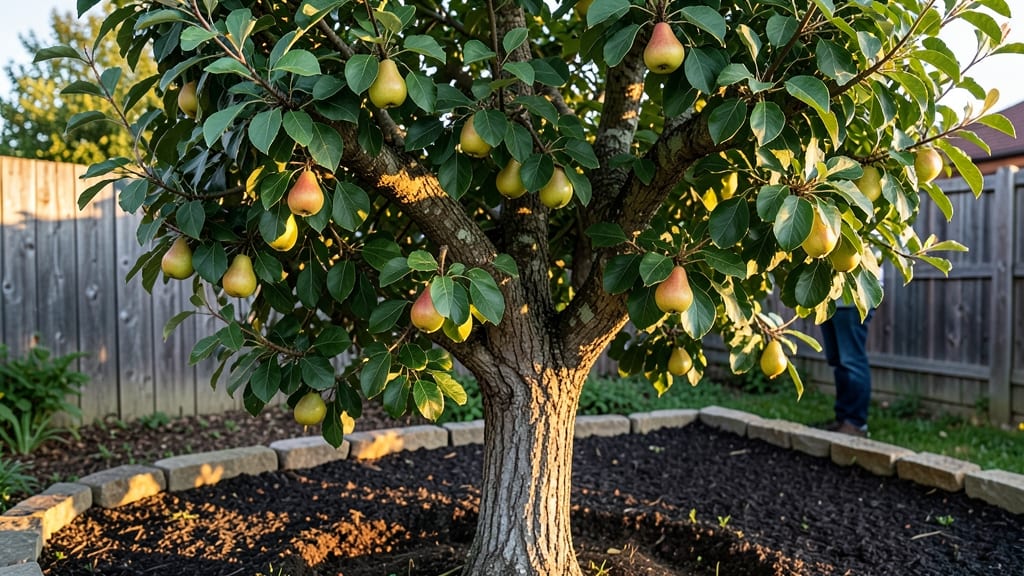
How tall can a pear tree grow? It can range anywhere from 8 feet to towering 50 feet—depending on the variety, pruning, and your garden’s space.
Dreaming of a backyard pear tree but wondering if it’ll outgrow your space? The right choice makes all the difference: dwarf varieties stay compact, while standard types reach the height of a two-story house.
Before you plant, here’s how to pick the perfect size for your yard—and how to keep it there.
Standard pear trees like 'Bartlett' or 'Anjou' can easily hit 30 to 50 feet if left unchecked, while dwarf varieties like 'Hooded Delicious' max out at 8 to 12 feet.
Semi-dwarfs offer a middle ground, typically 12 to 18 feet tall. The key? Understanding your space and pruning habits early.
In this guide, I’ll break down the heights of popular varieties, share pruning secrets to control growth, and highlight the best compact options for small yards. No more guessing—just the facts you need to plant with confidence.


Pear tree height by variety: from dwarf to standard sizes
Choosing the right pear tree variety is crucial if you're working with limited space. A standard Bartlett pear tree can soar to 40-50 feet, while a dwarf Asian pear stays under 10 feet.
The difference comes down to rootstock and grafting techniques, which control growth patterns. Understanding these variations helps you pick the perfect tree for your garden layout or container setup.
Most gardeners assume all pear trees grow tall, but dwarf rootstocks change the game entirely. These rootstocks are bred to restrict height while maintaining fruit production. For example, the 'Hooded Delicious' pear tree on dwarf rootstock stays at 8-12 feet, ideal for small backyards or urban patios.
Meanwhile, the same variety on standard rootstock could reach 30+ feet.
Here’s the key: rootstock determines height, not the fruit variety itself. A 'Seckel' pear grafted onto a semi-dwarf rootstock will grow to 12-18 feet, while the same pear on a standard rootstock could hit 25 feet.
This flexibility lets you customize your tree’s size based on your space and care preferences.
Before planting, visualize your tree’s mature size. A 20-foot standard pear tree needs 15-20 feet of clearance all around for proper airflow and sunlight. In contrast, a 10-foot dwarf fits neatly into a 5x5-foot space. Always check the rootstock type when selecting your tree—it’s the secret to controlling height.
If you’re growing pears in containers, prioritize dwarf varieties like 'Seckel' or 'Hooded Delicious'. These stay under 10 feet and thrive in 15-gallon pots with proper drainage.
Just remember: container-grown trees need regular pruning to manage height and encourage fruit production. Without pruning, even dwarf trees can outgrow their pots quickly.
How to control pear tree height: pruning and grafting tips
Want to keep your pear tree at a manageable height without sacrificing fruit production? The key lies in strategic pruning and grafting techniques.
Whether you're dealing with a standard variety reaching for the sky or a dwarf that needs shaping, understanding the right timing and methods will help you maintain your tree's ideal size. Let's dive into the best practices to control growth naturally.
First, know that pruning isn't just about cutting branches—it's about encouraging healthy growth patterns. For pear trees, the best time to prune is late winter or early spring, just before new growth begins.
This timing allows you to remove dead or diseased wood while shaping the tree for the upcoming season. Avoid heavy pruning in fall, as it can stimulate new growth that won't harden off before winter.
Here’s a step-by-step guide to managing your pear tree’s height effectively:
- 1 Identify the right branches: Focus on removing suckers (shoots growing from the base) and water sprouts (vertical shoots). These compete with fruit-bearing branches for energy.
- 2 Thin the canopy: Remove 1/3 of the oldest branches to improve airflow and sunlight penetration. This reduces disease risk and encourages smaller, more manageable growth.
- 3 Head back vertical branches: Cut back overly tall branches by 1/3 to 1/2 their length to promote bushier growth. Make cuts just above a bud or lateral branch to encourage new growth in the right direction.
- 4 Use grafting for dwarfs: If you want a compact pear tree, consider grafting a dwarfing rootstock (like Quince C) onto a standard variety. This keeps the tree at 8-12 feet tall while maintaining fruit quality.
- 5 Monitor seasonal growth: After pruning, watch for new shoots in spring. Prune again in late summer to control height spikes before winter dormancy.
For grafting, timing is everything. The best time to graft a pear tree onto a dwarf rootstock is in late winter or early spring, when the tree is still dormant but just beginning to show signs of life.
Choose a healthy rootstock and a compatible scion (the part of the tree you're grafting onto it). Whip-and-tongue grafting is a popular method for pears, but whip grafting works well too. Seal the graft with grafting tape or wax to protect it from drying out.
Once your pear tree is pruned and grafted, maintain its height with regular care. Mulch around the base to retain moisture and suppress weeds, and fertilize lightly in early spring to support new growth. Avoid over-fertilizing, as this can lead to excessive sucker growth and make height control more difficult.
With consistent pruning and grafting, you can keep your pear tree at your desired height while enjoying a bountiful harvest.
Remember, pear trees are resilient, and even if you miss a pruning cycle, they’ll bounce back. The key is patience and consistency—your tree will thank you with healthier branches and better fruit production year after year. Happy pruning! 🪴