
Planting
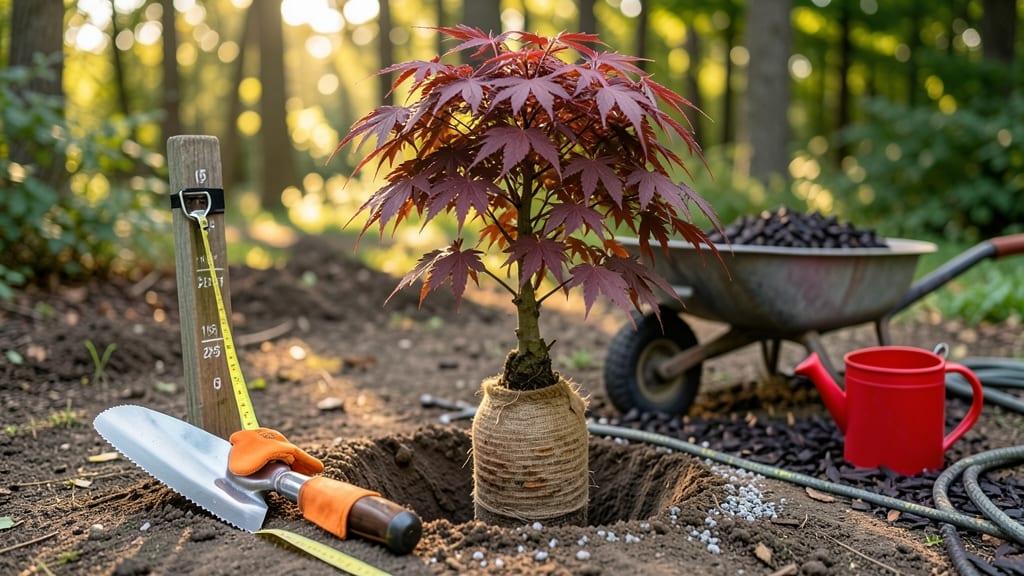
To plant a Japanese maple tree from your house, aim for at least 15 feet for small varieties and up to 40 feet for large ones—this spacing prevents root damage to foundations and sidewalks while letting the tree’s delicate branches thrive.
Picture this: your 🌳 Japanese Maple struggling to grow because its roots are crowded against your foundation, or worse, cracking your driveway as it expands. Getting the distance right isn’t just about aesthetics—it’s about long-term health for both your tree and your home.
Most gardeners overlook how quickly Japanese maple roots spread, especially in well-drained soil. A 20-foot mature tree can push roots 10 feet beyond its canopy, which is why planting too close leads to stunted growth or even structural damage.
In this guide, I’ll break down the exact spacing rules by tree size, share real-world fixes for small yards, and show you how to map out your planting zone before the first shovel hits the dirt.

Japanese maple spacing rules: minimum distance from house by tree size
Japanese maples are stunning additions to any landscape, but their spacing rules are critical for long-term health and property safety. The minimum distance from your house depends entirely on the mature height and canopy spread of your chosen cultivar.
Planting too close risks root damage to foundations, while spacing too far can leave your yard looking sparse.
Most Japanese maple varieties fall into three size categories: dwarf (10–15 feet tall), semi-dwarf (15–25 feet), and standard (25–40 feet). The root spread typically matches the canopy width, so a 20-foot-wide tree needs at least 20 feet of clear space on all sides.
This ensures roots won’t compete with your home’s foundation or disrupt underground utilities.
Here’s the golden rule: Plant your Japanese maple at least 3–5 feet away from sidewalks, driveways, or foundations—but adjust this baseline based on the cultivar’s mature dimensions.
For example, a 'Bloodgood' (standard size) needs 30–40 feet from your house, while a 'Shishigashira' (dwarf) thrives with just 10–15 feet of space.
Now, let’s break down the ideal spacing for popular Japanese maple cultivars in this comparison table. Use it as your guide to avoid common mistakes like planting under windows or near utility lines.
| Cultivar | Mature Height | Canopy Spread | Minimum Distance From House | Notes |
|---|---|---|---|---|
| 'Bloodgood' | 20–25 ft | 15–20 ft | 30–40 ft | Standard size; needs full space for dramatic foliage. |
| 'Emperor I' | 15–20 ft | 12–15 ft | 25–30 ft | Semi-dwarf; upright growth habit reduces spread. |
| 'Shishigashira' | 8–12 ft | 6–10 ft | 10–15 ft | Dwarf; perfect for small yards or containers. |
| 'Green Cascade' | 6–10 ft | 5–8 ft | 8–12 ft | Weeping habit; ideal for focal points near patios. |
| 'Viridis' | 12–15 ft | 10–12 ft | 15–20 ft | Semi-dwarf; vibrant foliage but needs airflow. |
When planning your Japanese maple’s location, prioritize airflow and sunlight. Most varieties prefer dappled shade, so avoid planting directly under large overhangs or against north-facing walls that block light entirely. A southwest exposure is ideal for balancing sun and shade, especially in hot climates.
Pro tip: Measure your yard’s available space before selecting a cultivar. If your yard is only 12 feet wide, a 'Bloodgood' is out of the question—opt for a dwarf variety like 'Shishigashira' instead. Even standard-sized trees can work in larger yards if planted near property lines rather than the house.
For urban gardens, consider container growing as an alternative. Dwarf cultivars like 'Green Cascade' thrive in large pots (20+ gallons) and can be placed 5–10 feet from walls, provided they’re moved indoors during winter in cold climates. Just ensure the container has drainage holes to prevent root rot.
Finally, remember that roots extend beyond the canopy. A tree’s root system can spread 1.5–2 times its canopy width, so always account for this when calculating spacing. For example, a 15-foot-wide canopy could have roots extending 22–30 feet—far enough to reach underground pipes or septic systems.
By following these spacing guidelines, you’ll ensure your Japanese maple grows strong, healthy, and harmonious with your home’s architecture. Happy planting! 🌳
How roots grow: why overplanting or underplanting damages your tree
Japanese maples develop shallow but expansive root systems that spread horizontally—often 2-3 times wider than their canopy. When planted too close to structures, these roots can cause sidewalk heaving or foundation cracks as they seek moisture and nutrients. The key is understanding how roots grow to avoid costly mistakes.
Overplanting (too close) restricts root expansion, leading to root-bound stress and poor nutrient uptake. Meanwhile, underplanting (too far) forces the tree to stretch its roots excessively, weakening its structure. Both scenarios compromise your tree’s health and longevity.
Soil compaction near structures is another hidden threat. Compacted soil limits oxygen flow to roots, causing them to grow in erratic patterns. This is especially critical for Japanese maples, which thrive in well-aerated, slightly acidic soil.
Mulch circles (3-4 inches deep) help mitigate compaction by improving soil structure and moisture retention.
Root zone expansion rates vary by cultivar, but most Japanese maples spread 12-18 inches annually. For example, a 'Bloodgood' maple’s roots can reach 15 feet in diameter within 5 years. This means planting too close to a patio or foundation risks long-term structural damage.
To protect both your tree and property, create a root exclusion zone using landscape fabric or gravel trenches. This directs roots away from structures while allowing them to spread naturally in the desired direction. Pair this with regular soil aeration to prevent compaction.
Remember, mulch isn’t just decorative—it regulates soil temperature, retains moisture, and prevents weed competition. A 3-foot mulch circle (kept 6 inches from the trunk) can significantly improve root health and reduce proximity-related stress.