
Blooming
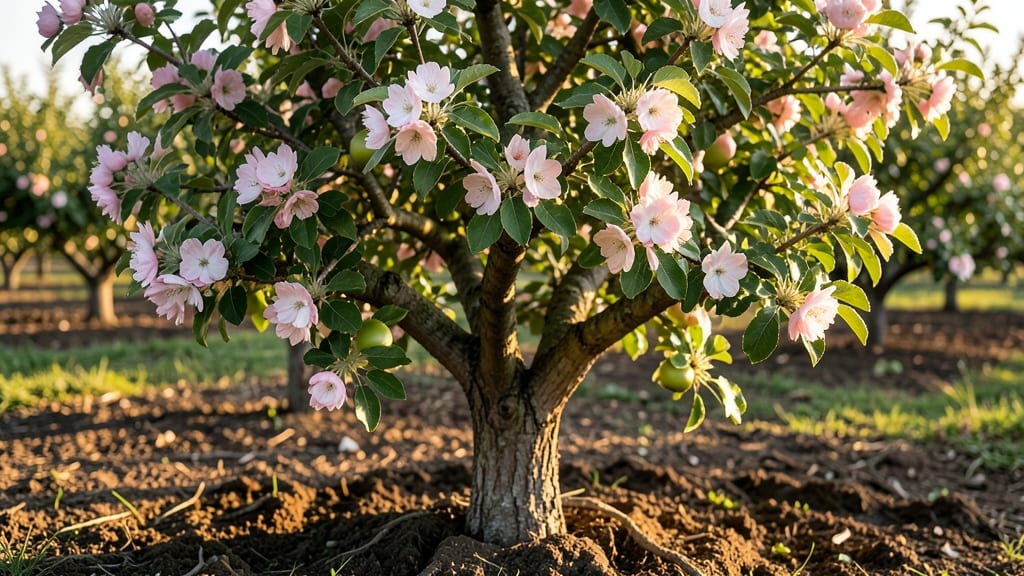
Fuji apple trees burst into bloom when days stretch past 50°F in late spring, their delicate white-pink blossoms creating a showstopper that lasts 10-14 days. 🌸 I'll never forget my first Fuji tree—how those clusters of flowers transformed my backyard into a springtime dream, even before the fruit appeared.
The timing varies by zone, but most gardeners see blooms between late April and early May, with fruit setting just weeks later.
What makes Fuji blooms special is their reliability—unlike some varieties that skip blooming, Fujis deliver consistent flowers when cared for properly. The key factors are winter chill hours (600-800), proper pruning in late winter, and avoiding early spring frost.
I've learned that even a light frost after petal fall won't ruin the season, but a hard freeze during bloom can devastate fruit production.
During bloom season, focus on watering deeply (1-2 inches per week) and monitoring for pests like codling moths. After flowers fade, thin fruit clusters to 6-8 inches apart—this ensures larger, sweeter apples.
The real magic happens when those tiny blossoms turn into glossy red-gold fruit by fall, proving that patience pays off in the most delicious way.
Works beautifully in zones 5-8, though northern gardeners may need winter protection. Here's how to extend that springtime beauty year after year with minimal effort—no green thumb required, just attention to timing and a little seasonal care.
📚 In This Guide
- What you need
- Instructions
- Tips and common mistakes
- Wrapping up and next steps
What you need
- ● Fuji apple tree (Malus domestica ‘Fuji’): 1–3 trees (for cross-pollination, plant at least two varieties like Gala or Honeycrisp)
- ● Choose a dwarf (6–8 ft) or semi-dwarf (12–15 ft) variety for easier maintenance
- ● Ensure it’s bare-root or potted (spring planting preferred)
- ● Planting site: Full sun (6+ hours/day) in a sheltered location (protection from strong winds)
- ● Well-draining soil (pH 6.0–7.0; amend with compost if needed)
- ● Shovel (round-point for digging)
- ● Garden fork (for loosening soil)
- ● Pruning shears (bypass type, sharp and sterilized)
- ● Loppers (for thicker branches, 18–24" reach)
- ● Gloves (cut-resistant, gardening-grade)
- ● Mulch (2–3 inches of wood chips or straw)
- ● Drip irrigation or hose (with soaker nozzle)
- ○ Tree stake (optional) (if planting in windy areas, 4–6 ft tall)
- ● Fertilizer: Slow-release 10-10-10 NPK or organic options like composted manure
- ● Tree guard (plastic wrap or mesh to protect from pests)
- ● Bloom-boosting spray (organic seaweed extract for vibrant flowers)
- ● Seasonal pruning kit (for thinning cuts to encourage blooms)
- ○ Bird deterrent (optional) (netting if birds love your Fuji blooms!)
How to maintain a Fuji apple tree for stunning year-round blooms
Here's how I keep my Fuji apple tree looking gorgeous with minimal pruning—no green thumb required.
🌱 Step 1: Plant in the Right Spot for Maximum Blooms
Fuji apple trees thrive in full sun—at least 6-8 hours daily. I always plant mine where it gets morning sun and afternoon shade in hot climates, which prevents leaf scorch while still encouraging blooms. The soil should drain well but retain moisture, so I mix in 2-3 inches of compost when planting to improve fertility.
Dig a hole twice as wide as the root ball but no deeper. Place the tree so the graft union (the bump near the base) sits 2-3 inches above soil level. This prevents water from pooling around the graft and rotting it. Backfill with native soil, firming gently to remove air pockets.
☀️ Step 2: Water Deeply but Infrequently
Newly planted Fuji trees need 1-2 inches of water weekly—more in extreme heat. I water deeply at the base, soaking the soil down to 12 inches deep rather than giving light surface waterings. This encourages deep root growth, which means stronger blooms the following spring.
Check moisture by sticking your finger 2 inches into the soil. If it feels dry, water again. Overwatering is the fastest way to kill an apple tree—yellow leaves or wilting are your first warning signs. Mulch around the base with 2-3 inches of wood chips to retain moisture and regulate soil temperature.
✂️ Step 3: Prune for Airflow and Light in Late Winter
Fuji apple trees bloom best when they get plenty of air circulation. I prune in late winter (just before buds swell) to remove any dead, crossing, or inward-growing branches. Use clean, sharp pruners to make cuts at a 45-degree angle, about ¼ inch above an outward-facing bud.
Don’t overdo it—remove no more than 25% of the tree’s branches in one season. Thin out crowded areas so light can reach the center. This minimal pruning keeps the tree healthy and encourages abundant blooms without stressing it. I always sterilize my tools with rubbing alcohol between cuts to prevent disease spread.
🌿 Step 4: Feed and Protect for Next Year’s Blooms
After blooms fade, feed your Fuji apple tree with a balanced fruit-tree fertilizer (10-10-10 ratio) in early spring and again in midsummer. I scatter the granules around the drip line and water them in. Avoid high-nitrogen fertilizers—they encourage leafy growth at the expense of flowers.
Watch for pests like aphids or codling moths, which can weaken the tree. A neem oil spray applied in early summer keeps pests in check without harming bees. In fall, rake up any fallen leaves or fruit to reduce disease risk over winter. A healthy tree blooms more vigorously each year with minimal effort.
Tips & tricks for perfect Fuji apple tree blooms
Here’s what I’ve learned after years of keeping my Fuji apple tree blooming beautifully—no pruning stress required.
Sunlight Strategy: That 6-8 hours of daily sun isn’t just about blooms—it’s about fruit quality too. If your tree gets afternoon shade, position it so the morning sun hits the south side (in the Northern Hemisphere) first. This gives the tree energy when it matters most. I’ve seen trees with partial shade still bloom, but they produce smaller fruit. The key is to maximize those morning rays when the sun’s angle is lower and less intense.
Pruning Precision: When you’re removing those 25% of branches in late winter, focus on branches that cross or grow inward. These are the ones that create weak spots where disease can hide. I use a small notepad to sketch my tree’s shape before pruning—it helps visualize where light will reach after cuts. And remember: the ¼-inch rule above the bud is crucial. Cut too close, and you risk damaging the bud’s growth point.
Watering Wisdom: The 2-inch soil check is your best friend, but timing matters too. Water in the morning so the tree has all day to absorb moisture before evening. I’ve ruined trees by watering at night—the dampness encourages fungal growth. And if you’re using mulch, keep it 2-3 inches thick but pull it back 6 inches from the trunk to prevent rot.
Pro Tips for Fuji Apple Tree Bloom
- Here’s what I’ve learned after years of keeping my Fuji apple tree blooming beautifully—no pruning stress required.
- Sunlight Strategy: That 6-8 hours of daily sun isn’t just about blooms—it’s about fruit quality too.
- Pruning Precision: When you’re removing those 25% of branches in late winter, focus on branches that cross or grow inward.
Frequently asked questions
Got questions about nurturing your Fuji apple tree bloom? You’re not alone! Here are some of the most common queries—and their straightforward answers—to help you enjoy year-round beauty with ease.
When is the best time to plant a Fuji apple tree for optimal blooms?
The ideal window is late fall or early winter (November–February), when the tree is dormant. This gives roots time to establish before spring blooms. For container planting, spring (March–April) works too—just water deeply and mulch to retain moisture.
How long does it take for a Fuji apple tree to bloom after planting?
Patience is key! Most Fuji apple trees take 3–5 years to produce their first blooms, depending on climate and care. Young trees focus on root growth first—prioritize sunlight (6+ hours/day) and balanced fertilizer (10-10-10) to speed up the process.
Can I grow a Fuji apple tree in a pot, or does it need a garden?
Fuji apple trees thrive in 15–25 gallon containers with drainage holes. Use well-draining soil and repot every 2–3 years. Just ensure it gets full sun and winter protection (move indoors or wrap the pot in burlap) in freezing zones (<20°F).
What should I do if my Fuji apple tree’s blooms drop early?
Early bloom drop is often caused by temperature swings, pests (like aphids), or overwatering. Check for pests, ensure consistent moisture (not soggy soil), and avoid fertilizing during bloom. If frost is the culprit, cover young trees with frost cloth at night.
Do Fuji apple trees need pruning to encourage blooms?
Minimal pruning is needed! Focus on removing dead, crossing, or crowded branches in late winter (before buds swell). Avoid heavy pruning—Fuji trees bloom on both old and new wood. A light trim (10–20% of growth) keeps the tree healthy and encourages vibrant blooms.
Wrapping up and next steps
The Fuji apple tree isn’t just a fruit-bearing superstar—it’s a year-round beauty that rewards you with minimal effort and maximal joy. From its stunning spring blooms to the vibrant colors of fall, this tree proves that nature’s best gifts come with a side of simplicity.
Whether you’re a seasoned gardener or a beginner, its low-maintenance charm makes it the perfect addition to any yard.
Ready to plant your own slice of paradise? Start by choosing the right variety for your climate, then grab your tools and get growing! 🌱 With just a little care, you’ll be enjoying blooms, fruit, and shade for years to come.