
Fertilization
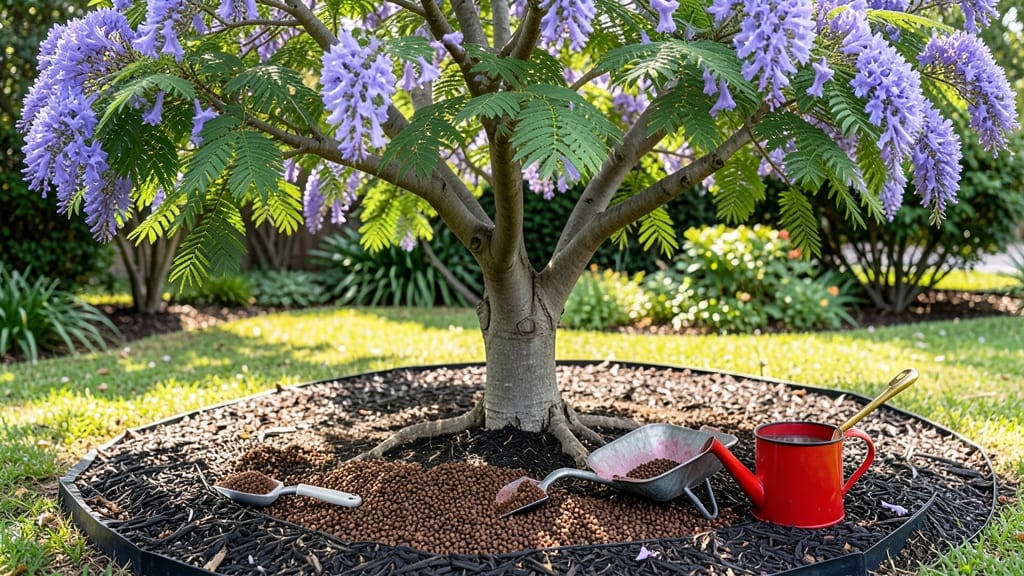
Optimal jacaranda tree fertilizer N-p-k ratios for healthy growth
Getting your jacaranda tree’s N-P-K ratios right is the secret to those showstopping purple blooms and strong, healthy growth. Unlike many trees, jacarandas thrive with a balanced but slightly phosphorus-heavy fertilizer blend.
Too much nitrogen can lead to leafy growth at the expense of flowers, while too little potassium weakens their drought resistance. Let’s break down the perfect ratios for every stage of your tree’s life.
For seedlings, focus on root development and gentle growth. A 5-10-5 ratio works best here—just enough phosphorus to encourage roots without overwhelming the young plant. Mature trees, on the other hand, need a 6-10-6 blend to support both their massive canopy and vibrant blooms.
And during the blooming season, a slight shift to 5-12-8 can give your tree the phosphorus boost it craves for those dramatic flowers.
Here’s a quick reference to help you choose the right fertilizer for your jacaranda’s current stage:
| Growth Stage | Recommended N-P-K Ratio | Key Focus | Application Frequency | Best Time to Apply |
|---|---|---|---|---|
| Seedlings (0-3 years) | 5-10-5 | Root establishment | Every 6-8 weeks | Early spring |
| Mature Trees (3-10 years) | 6-10-6 | Balanced growth & blooms | Every 6-8 weeks | Late winter/early spring |
| Blooming Phase (Spring) | 5-12-8 | Flower production | Every 4-6 weeks | Late winter to early spring |
| Established Trees (10+ years) | 4-8-8 | Maintenance & drought resistance | Every 8-10 weeks | Early spring & summer |
Adjusting for soil deficiencies is key—if your jacaranda’s leaves turn yellow (a classic nitrogen deficiency), switch to a 10-5-5 ratio temporarily. For phosphorus deficiencies (weak stems or poor blooms), a 5-15-5 blend can help.
Always test your soil first; a simple pH test kit (aim for 6.0-7.5) will save you from guessing.
Over-fertilizing is a common mistake—too much nitrogen can cause leaf burn or root damage, while excess phosphorus can harm beneficial microbes in the soil. If you notice brown leaf tips or stunted growth, flush the soil with water to leach out excess nutrients.
Always follow the label instructions and start with half the recommended dose if your tree is new to fertilization.
For organic options, composted manure or bone meal (high in phosphorus) works wonders. If you prefer synthetic fertilizers, look for slow-release granules to avoid spikes in nutrient availability. My go-to is a balanced 6-10-6 blend applied in early spring, followed by a phosphorus boost before blooming season.
Consistency is everything—stick to your chosen ratio and timing, and your jacaranda will reward you with years of stunning blooms.
Pro tip: Pair fertilization with a 2-inch layer of mulch to retain moisture and regulate soil temperature. This simple step can make your fertilizer go further and keep your tree thriving between feedings. 🌳
Best organic vs. synthetic fertilizers for jacaranda trees: pros and cons
Choosing the right fertilizer for your jacaranda tree can make the difference between vibrant purple blooms and stunted growth. Both organic and synthetic fertilizers offer unique benefits, but which one aligns best with your tree’s needs? Let’s break down the top options to help you decide.
Jacaranda trees thrive with a balanced NPK ratio of 6-10-10, but the type of fertilizer you choose affects not just growth but also soil health and environmental impact.
Organic fertilizers like compost or worm castings slowly release nutrients, while synthetic options provide quick, precise feeding. Your choice depends on your tree’s age, soil type, and long-term goals.
🌱 Organic Fertilizers are ideal for improving soil structure and providing long-term nutrition. They’re perfect for young jacaranda trees or those in poor-quality soil. On the other hand, synthetic fertilizers offer immediate nutrient availability, making them great for mature trees needing a quick boost before blooming season.
Organic Fertilizers for Jacaranda Trees
Pros
- Improves soil health over time
- Slow-release nutrients reduce burn risk
- Eco-friendly and sustainable
- Enhances root growth naturally
Cons
- Slower results (takes months to see effects)
- Requires frequent application (every 4-6 weeks)
Synthetic Fertilizers for Jacaranda Trees
Pros
- Fast nutrient delivery for quick growth
- Precise NPK ratios (e.g., 6-10-10)
- Long-lasting formulas (slow-release granules)
- Easy to measure and apply
Cons
- Risk of over-fertilization (leaf burn)
- Can harm soil microbes long-term
- Environmental runoff if overused
For young jacaranda trees, I recommend starting with organic options like well-aged compost or worm castings. These improve soil drainage—critical for jacarandas—and provide steady nutrition as roots establish. Mix 2-3 inches of compost into the topsoil in early spring and late summer to support growth.
Mature trees, especially those preparing for bloom season, benefit from a balanced synthetic fertilizer like 6-10-10 slow-release granules. Apply 1-2 pounds per 100 square feet in February and August, watering thoroughly afterward to prevent root burn.
Always follow the label’s instructions to avoid over-fertilization, which can damage roots and leaves.
If you’re unsure which to choose, consider your long-term goals. For sustainable growth and healthier soil, organic fertilizers are the way to go. For immediate results—like showstopping blooms—a synthetic boost in spring can work wonders.
Just remember: moderation is key with synthetic options to protect your tree’s health.