
Leaf Blower
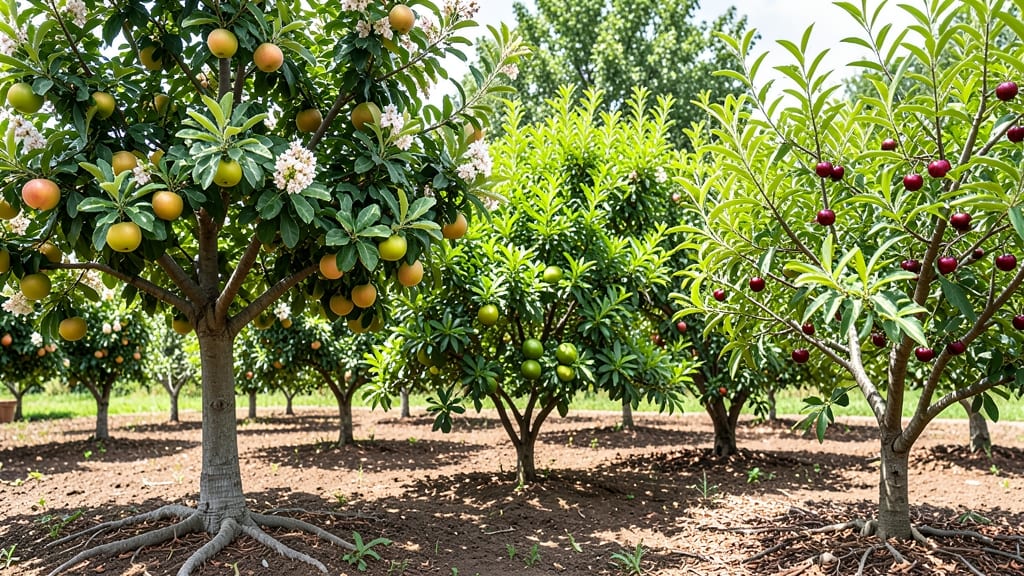
Mastering fruit tree identification by leaf saves you from guessing—and my 5-minute trick makes it foolproof. 🌿 The key lies in leaf shape, edges, and veins: apple leaves are oval with jagged edges, while pear leaves have a silvery underside.
Citrus leaves? Shiny, elliptical, and clustered. I’ve used this method to spot wild plums and even mislabeled nursery trees just by glancing at the foliage.
Start by comparing three leaf traits: shape (round, elongated, lobed), edges (smooth, serrated, toothed), and vein patterns (prominent or fine). For example, cherry leaves have smooth edges and a single central vein, while peach leaves are fuzzy and oval.
A magnifying glass helps spot subtle differences—like the tiny hairs on fig leaves—that reveal the species instantly.
Once you master these basics, you’ll recognize trees from 50 feet away. The payoff? No more buying the wrong scion wood or missing out on heirloom varieties because you misidentified them. I’ve spotted rare persimmons and even a forgotten crabapple in my neighborhood using this approach—now you can too.
For tricky cases, grab a free plant ID app like PlantNet or carry a pocket guide like "The Tree Book for Kids and Adults." Both tools let you snap a photo and compare leaves to a database. With practice, you’ll identify fruit trees faster than you can say "pruning season."
Nature’s Leaf Code Explained
Identifying fruit trees by their leaves isn’t just luck—it’s rooted in evolutionary adaptations, ecological survival strategies, and botanical engineering. Leaves develop distinct shapes, textures, and arrangements to optimize sunlight capture, water efficiency, and even defense against pests.
When you spot a leaf, you’re essentially decoding a tree’s genetic blueprint for thriving in its environment. Here’s why leaves vary so dramatically—and how those differences help you pinpoint species with confidence.
Leaves aren’t random; they’re the result of millions of years of natural selection. Trees in dry climates, like the peach or almond, often develop smaller, waxy, or serrated leaves to reduce water loss.
Meanwhile, tropical fruit trees—such as mango or papaya—sport broad, thin leaves to maximize photosynthesis in humid, sun-drenched conditions.
- Drought resistance: Leaves with deep lobes (like fig trees) or rolled edges (like citrus) minimize surface area to conserve moisture.
- Sunlight efficiency: Large, leathery leaves (e.g., avocado) thrive in shaded understories, while delicate, compound leaves (e.g., cherry) dominate sunny canopies.
- Pest deterrence: Toxic compounds in leaves (like black walnut’s juglone) or spiny edges (e.g., hawthorn) evolve to repel herbivores.
Actionable tip: 🌡️ Observe leaf thickness and edge type—thin, smooth leaves often signal tropical origins, while thick, serrated ones hint at temperate resilience.
Even within the same species, leaves can vary due to genetic mutations, grafting, or environmental stress. For example:
| Cause | Leaf Impact | Example |
|---|---|---|
| Grafting | Scion (top) leaves may differ from rootstock (bottom) leaves due to different genetic parentage. | Apple trees grafted onto crabapple rootstock can produce leaves that look like neither. |
| Juvenile vs. Mature | Young trees often have simpler, smaller leaves that develop into complex shapes as they age. | Persimmon seedlings have lobed leaves; mature trees develop smooth, oval ones. |
| Nutrient Deficiency | Yellowing (chlorosis) or stunted growth can mimic different species. | Iron-deficient peach leaves resemble plum leaves if not treated. |
Pro tip: ✨ Check the tree’s bark, fruit, or overall growth habit—these traits are far less affected by grafting or stress than leaves.
Leaves aren’t static—they transform with the seasons, sometimes making identification tricky. Here’s how:
- Spring: New leaves (flushing) may appear red, fuzzy, or curled (e.g., cherry or plum seedlings).
- Summer: Heat stress can cause leaf curling (e.g., citrus) or scorch (brown edges), mimicking disease.
- Fall: Chlorophyll breaks down, revealing true leaf color (e.g., persimmon’s fiery orange).
Key insight: 📊 Compare leaves from different seasons—a tree’s consistent vein pattern or arrangement (alternate vs. opposite) is far more reliable than temporary color changes.
Understanding these biological rules turns leaf-spotting from guesswork into a science. Next, we’ll dive into how to decode leaf shapes like a pro—no botany degree required!
Quick Fixes for Leafy Confusion
Mastering fruit tree identification by leaf doesn’t have to feel like solving a botanical puzzle—especially when you’re staring at a tangle of branches and wondering, "Is this a peach or a plum?" The good news?
With the right tools and a little practice, you can turn leaf confusion into a breeze. Below are practical, step-by-step solutions tailored to common challenges, plus prevention tips to keep your skills sharp.
Problem: Two trees have leaves that almost match—same shape, same color—but you’re not sure which is which.
Fix It:
- Compare Leaf Arrangement 🍃
- Alternate leaves (one leaf per node, staggered) often belong to peach, plum, or cherry trees.
- Opposite leaves (pairs at each node) are classic for fig, citrus, or mulberry trees.
- Pro tip: Run your fingers along a branch—if leaves grow in pairs, you’ve got a dead giveaway!
- Check the Stem & Veins 🌿
- Serrated edges (tiny saw-like teeth) = apple or pear.
- Smooth edges with prominent veins = likely a citrus (like lemon or lime).
- Bonus: Rub a leaf between your fingers—peach leaves often have a fuzzy texture, while cherry leaves are smoother.
- Look for Hidden Clues 🕵️♂️
- Fruit scars (old fruit remnants on branches) or bud shapes can reveal the species.
- Smell the leaf—some, like citrus, have a distinct aroma.
Prevent Future Mix-Ups:
- Take a leaf rubbing (place a leaf under paper and rub with a pencil) to study vein patterns.
- Snap a photo of the leaf and the fruit (if available) for later comparison.
Problem: New growth looks nothing like mature leaves, or fall foliage has faded—making ID a guess.
Fix It:
- Focus on Key Traits ✅
- Young leaves: Compare color, shape, and hairiness (e.g., avocado leaves start fuzzy).
- Old leaves: Look for size changes (e.g., fig leaves shrink as they age) or disease spots (common in apple trees).
- Use a Field Guide App 📱
- Apps like LeafSnap or PictureThis let you upload photos for instant ID—great for tricky stages.
- Check the Tree’s Habit 🌳
- Spreading branches = likely peach or apricot.
- Upright, dense canopy = probably apple or cherry.
Prevent Confusion:
- Label young trees with species tags at planting.
- Observe seasonal changes—note how leaves evolve from spring to fall.
Problem: You’re far from home, and your phone’s flashlight is the only tool you’ve got.
Fix It:
- The "Leaf Shape Cheat Sheet" 📝
- Heart-shaped = citrus or fig.
- Lance-shaped (long and narrow) = peach or plum.
- Oval with pointed tip = apple or pear.
- Ask a Local 🗣️
- Gardeners, farmers, or even park rangers often know their region’s trees. A quick "What kind of fruit tree is this?" can save hours of guesswork.
- Use the "Thumb Test" 👍
- Hold the leaf between your thumb and forefinger:
- If it feels thin and papery = citrus or cherry.
- If it’s thick and leathery = avocado or olive.
- Hold the leaf between your thumb and forefinger:
Prevent Future Trips:
- Bookmark online guides (e.g., [USDA Plant Database](https://plants.usda.gov/)) for quick lookups.
- Carry a mini magnifying glass for close-ups of veins or hairs.
- Time of Year Matters: Spring leaves are softer; fall leaves may curl or change color.
- Leaf Size Matters: Measure with a ruler—apple leaves are usually 4-8 inches long, while cherry leaves are 2-5 inches.
- Compare with Known Samples: If you have a reference leaf (e.g., from a labeled tree), overlay it with the mystery leaf.
Final Thought: The more you practice, the faster your brain will spot patterns. Start with 3-5 common trees in your area, then expand. Soon, you’ll be identifying fruit trees by leaf without even thinking about it—like a botanical pro! 🌟
Frequently asked questions
What’s the quickest way to tell if a leaf is from a citrus tree?
Citrus leaves are shiny, elliptical, and alternate in arrangement—plus, they often have a distinct citrus aroma when crushed. Look for smooth edges and prominent veins that run parallel. Compare with a known lemon or lime leaf for confirmation.
How can I distinguish between apple and pear tree leaves?
Apple leaves are oval with jagged, serrated edges and alternate arrangement, while pear leaves are pointier with a silvery underside and sharper teeth. Rub the underside—pear leaves feel slightly fuzzy, and their veins are more visible. Check the leaf base too: apple leaves often have a rounded base.
Why do some leaves look different on the same tree?
This happens due to grafting, juvenile growth, or seasonal changes. For example, young persimmon leaves may be lobed, while mature ones are smooth. Grafted trees (like apple on crabapple rootstock) can show mixed traits. Always compare multiple leaves and check the tree’s bark or fruit for clues.
Can I use a phone app to identify fruit trees by leaf?
Apps like LeafSnap or PictureThis let you upload photos for instant ID. For best results, include leaf, branch, and fruit (if available) in your photo. Avoid blurry shots—clear details (veins, edges) are key. Free alternatives like iNaturalist also work well.
What’s the best time of year to identify fruit trees by leaf?
Late spring to early summer is ideal when leaves are fully mature but before pests or disease distort them. Avoid fall (color changes) or winter (bare branches). If you must identify in winter, look for bud shapes or leaf scars—these can reveal the species even without foliage.