
Pruning
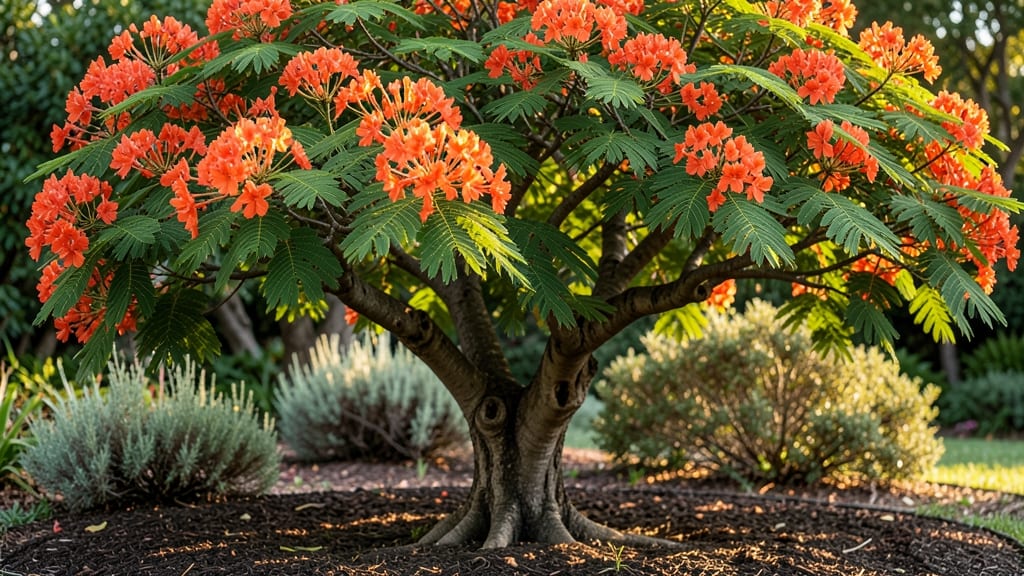
The flame tree in Florida requires careful pruning to flourish: remove dead or crossing branches whenever they appear, trim lightly after flowering in late spring, and perform major cuts in late winter before new growth starts. This approach maintains stunning blooms and keeps the tree structurally sound while avoiding damage to flowers.
Florida's subtropical climate creates unique challenges for flame trees (Delonix regia), where improper pruning can stress the tree or even trigger early leaf drop. 🌿 The late winter cuts—just before buds swell—stimulate vigorous spring growth, while summer pruning helps manage the tree's natural tendency to grow leggy in Florida's heat.
I've seen firsthand how skipping these seasonal cuts can lead to fewer blooms or weakened branches that struggle with hurricane winds.
What sets Florida flame trees apart is their sensitivity to timing—prune too early in bloom season, and you risk losing those iconic fiery flowers.
The key is working with the tree's natural rhythm: light shaping after flowering encourages more blooms next season, while winter cuts focus on removing old wood to make room for new, stronger growth. This dual approach keeps your flame tree both beautiful and resilient.
💡 In This Article
- Why Florida’s Flame Tree Needs Seasonal Pruning
- Step-by-Step Guide to Pruning Florida Flame Trees
Why Florida’s flame tree needs seasonal pruning
The flame tree (Delonix regia) responds to pruning through a process called apical dominance, where cutting back branches stimulates lateral buds to grow.
In Florida’s subtropical climate, this is especially critical because the tree’s natural growth cycle aligns with the region’s warm winters and long growing seasons.
When you prune in late winter (just before buds swell), you’re essentially resetting the tree’s growth pattern, encouraging stronger, more compact branches that can better withstand Florida’s hurricane winds. 🌿
Timing directly impacts flowering—Florida flame trees bloom on new wood, meaning cuts made after flowering (late spring) promote next year’s blooms. Heavy pruning during peak bloom (spring) removes potential flower buds, while winter cuts focus on removing old, weak wood that competes with new growth.
The tree’s phloem transport system (which moves nutrients) also plays a role: winter cuts allow stored nutrients to fuel spring regrowth, while summer pruning helps manage the tree’s tendency to grow leggy in Florida’s high humidity.
Disease prevention is another key factor. Florida’s warm, moist climate creates ideal conditions for fungal infections like anthracnose, which thrives on dense, overgrown foliage. Strategic pruning improves air circulation, reducing humidity near the trunk and branches.
I’ve noticed that trees pruned according to this schedule develop thicker bark layers over time, which helps resist storm damage—a critical adaptation for Florida’s unpredictable weather patterns. 💪
Here’s what happens if you skip these seasonal cuts: Unpruned flame trees develop weak, sprawling branches that struggle to support the weight of flowers and fruit. In Florida’s heat, this leads to leaf scorch and reduced blooming.
The tree’s natural defense mechanism—producing more flowers to compensate—eventually exhausts its energy reserves, leading to decline. Proper pruning maintains the tree’s structural integrity while preserving its signature orange-red blooms that Florida gardeners love.
Florida’s unique microclimates add another layer of complexity. Coastal areas with salt spray require more frequent pruning to prevent salt burn*, while inland regions benefit from lighter cuts to avoid overstimulating growth.
The tree’s root system, which spreads aggressively in Florida’s sandy soil, also influences pruning needs—over-pruning can stress roots already competing for nutrients in nutrient-poor soil. 🌊
What most people don’t realize is that flame trees actually bloom on new growth, so pruning too aggressively can delay flowering. The ideal approach is a balanced cut: remove up to 25% of the canopy in winter, and only 10-15% after flowering.
This balance ensures the tree maintains its vibrant display while staying healthy enough to handle Florida’s challenges. The result? A flame tree that blooms more prolifically and stands stronger through storms. ✨