
Container Gardens
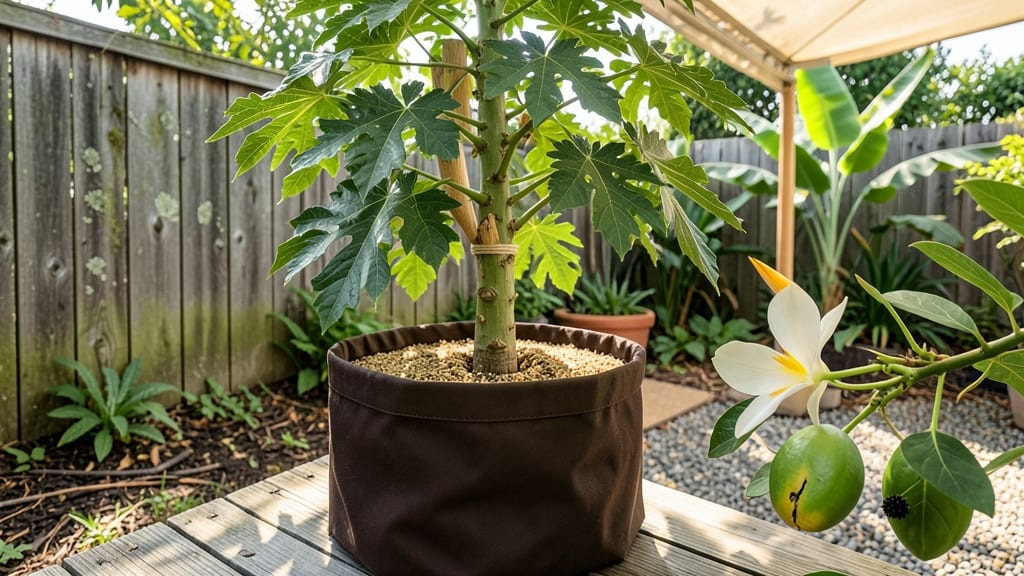
Growing papaya trees in pots is absolutely possible with the right dwarf varieties, well-draining soil mix, and spacious containers, though they'll need consistent sunlight and careful pruning to stay productive. Compact types like 'Solo' or 'SunUp' are ideal for container cultivation.
Container papaya trees actually perform best when you choose varieties specifically bred for limited spaces. 🌱 These dwarf types develop shallower root systems that fit well in large pots while still producing fruit—something full-sized varieties struggle with in confined areas.
The key is selecting a type that naturally stays under 6 feet tall, as taller varieties quickly outgrow typical patio containers and become difficult to manage.
What many beginners overlook is the minimum 20-gallon pot requirement—these tropical plants need room for their roots to spread, especially when you consider their rapid growth rate. I've found that adding perlite or coconut coir to regular potting mix prevents waterlogging, which is a common issue with container papayas.
The secret to success lies in balancing moisture control with nutrient availability—too much water leads to root rot, while insufficient moisture stresses the plant during fruiting season.
💡 In This Article
- Best Papaya Varieties for Container Gardening
- Essential Container Care Tips for Potted Papaya Trees
Best papaya varieties for container gardening
Dwarf papaya varieties like 'Solo' and 'SunUp' thrive in containers because their genetics naturally limit height to 5-6 feet while maintaining robust fruiting.
These compact types have been selectively bred to develop a more condensed growth habit, with shorter internodes (the distance between leaves) that prevent the plant from becoming top-heavy in pots. 🌿 The 'Solo' variety, for example, produces fruit along its entire stem rather than just at the top, maximizing yield in limited space—something full-sized varieties can't match in containers.
What sets these dwarf types apart is their root system development. While full-sized papayas can grow roots 3-5 feet deep in the ground, container varieties like 'SunUp' develop a more fibrous, shallower root network that spreads horizontally rather than vertically.
This adaptation allows them to utilize the available soil volume in pots more efficiently, reducing the risk of root-bound conditions that stunt growth. The trade-off is slightly smaller individual fruits, but the overall yield remains impressive for a container plant.
Size isn't the only advantage—these varieties also demonstrate remarkable heat tolerance, making them ideal for container growing in warm climates. I've observed that 'Solo' papayas maintain consistent fruiting even when temperatures fluctuate between 75-95°F, whereas full-sized varieties often experience reduced fruit set during temperature swings.
This stability comes from their ability to regulate water uptake more efficiently in confined root zones, preventing the stress that leads to fruit drop.
For those considering container papaya cultivation, it's worth noting that some dwarf varieties exhibit self-pollinating tendencies, which eliminates the need for manual pollination—a common challenge with full-sized papayas.
The 'SunUp' variety, for instance, produces both male and female flowers on the same plant, dramatically increasing the likelihood of fruit development. This self-sufficiency makes container papaya growing more accessible for beginners who might struggle with the additional complexity of cross-pollination.
One critical consideration is the fruit size difference—container varieties typically produce fruits weighing 1-2 pounds compared to 5-10 pounds for full-sized trees. However, the trade-off in size is often offset by the convenience of harvesting from patio containers and the ability to grow multiple plants in limited outdoor space.
The 'Solo' variety, for example, can produce 50-100 fruits per season in ideal conditions, making it an excellent choice for those seeking consistent harvests without the space requirements of traditional papaya cultivation.
When selecting a variety, also consider the growth rate—some dwarf types like 'Tainong' mature faster than others, reaching fruiting stage in as little as 6-8 months from transplanting.
This accelerated timeline is particularly beneficial for container growers who need to manage space constraints while still enjoying homegrown papayas within a single growing season. The faster maturation also means you can rotate crops more efficiently if you're using containers for multiple tropical plants throughout the year.