
Propagation
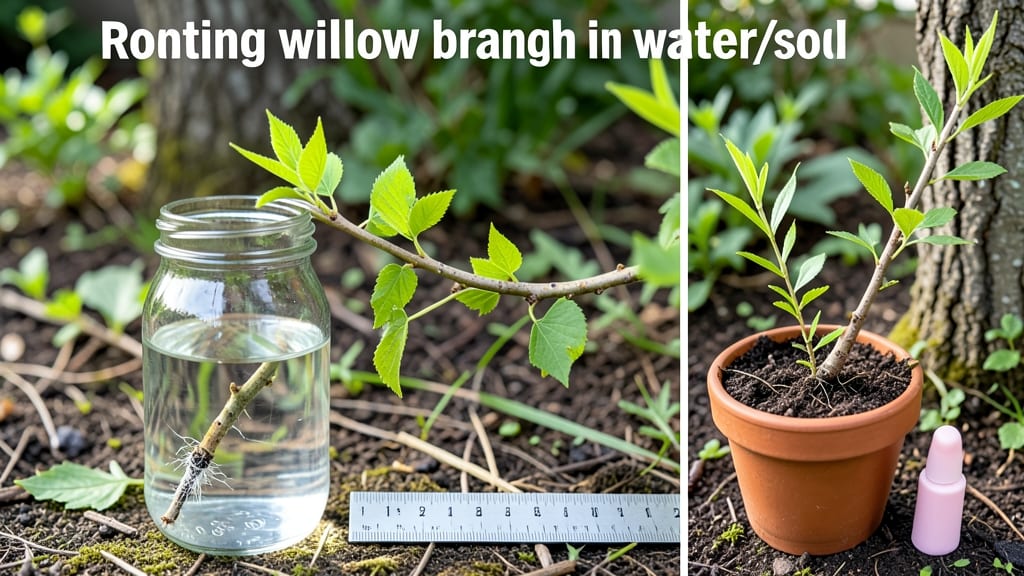
Yes, a tree branch can grow roots when you use propagation techniques—healthy cuttings placed in moist soil or water will develop new root systems given the right balance of light, humidity, and nutrients.
A tree branch grows roots through a natural process called propagation, where the plant's own hormones kick in to form new roots at the cut end. 🌱 This happens when you provide the right conditions—like keeping the cutting in a humid environment with indirect light.
The key is selecting healthy branches with growth nodes, which are the spots where roots will sprout most easily.
This method works for many tree types, including willows, maples, and fruit trees. The science behind it involves the cambium layer—a thin layer of cells just under the bark that produces new growth when stimulated.
When you create a clean cut and place it in water or soil, this layer activates to form roots within a few weeks, provided you maintain consistent moisture and warmth.
What's fascinating is how quickly some branches respond—willow cuttings, for example, can develop roots in as little as two weeks under ideal conditions. The process mimics how trees naturally reproduce through layering or sprouting from fallen branches, but propagation gives you control over where and when new growth appears.
💡 In This Article
- How Tree Branches Develop Roots Through Propagation Science
- Step-by-Step Guide to Successfully Rooting Tree Branches
How tree branches develop roots through propagation science
The rooting process begins with a hormone called auxin, which naturally occurs in plants and triggers cell division at the cut end of a branch.
When you make a clean cut just below a growth node (the small bump where leaves attach), auxin concentrations increase, signaling the cambium layer—a thin, living layer between the bark and wood—to activate.
This layer produces new cells that will form roots within 2-6 weeks, depending on the tree species and conditions.
The cambium layer acts like a biological factory, producing both roots and shoots when stimulated. For example, willow branches root quickly because their cambium responds aggressively to moisture and warmth. 🌿 In contrast, hardwood trees like maple require more time because their cambium is less active during dormancy.
Temperature also plays a role—ideal rooting occurs between 65-75°F, where enzymatic activity in the cambium peaks.
Environmental triggers like humidity and light further influence root development. High humidity (above 70%) prevents the cutting from drying out, while indirect light (like 1,000-2,000 foot-candles) provides energy for growth without scorching tender new roots.
Too much direct sunlight can cause the cutting to overheat, while too little light stunts root formation entirely. This is why propagators often use plastic bags or domes to create a mini greenhouse effect.
Another critical factor is the placement of the cut. When you submerge the branch in water or bury it in soil, the lower portion (where auxin is concentrated) receives the moisture signal it needs to start rooting.
The angle of the cut also matters—a 45-degree slant increases surface area for root emergence compared to a straight cut. Some gardeners even use rooting hormones (like IBA or NAA), which boost auxin levels by up to 30% for faster results.
What’s less obvious is how the original tree’s health affects rooting success. Branches from young, vigorous trees root more reliably because their cambium is more active. Older branches may produce fewer roots due to reduced cellular energy.
This is why professional propagators often select 1-3 year-old wood—it strikes the perfect balance between maturity and growth potential.
Think of propagation as a controlled version of how trees naturally regenerate. When a branch falls to the ground and stays moist, it can sprout roots and grow into a new plant—a process called "layering."
Propagation simply speeds this up by giving the branch the ideal conditions right from the start. 🌱 The result? A genetically identical tree with the same traits as its parent, just in a new location.