
Companion Plants
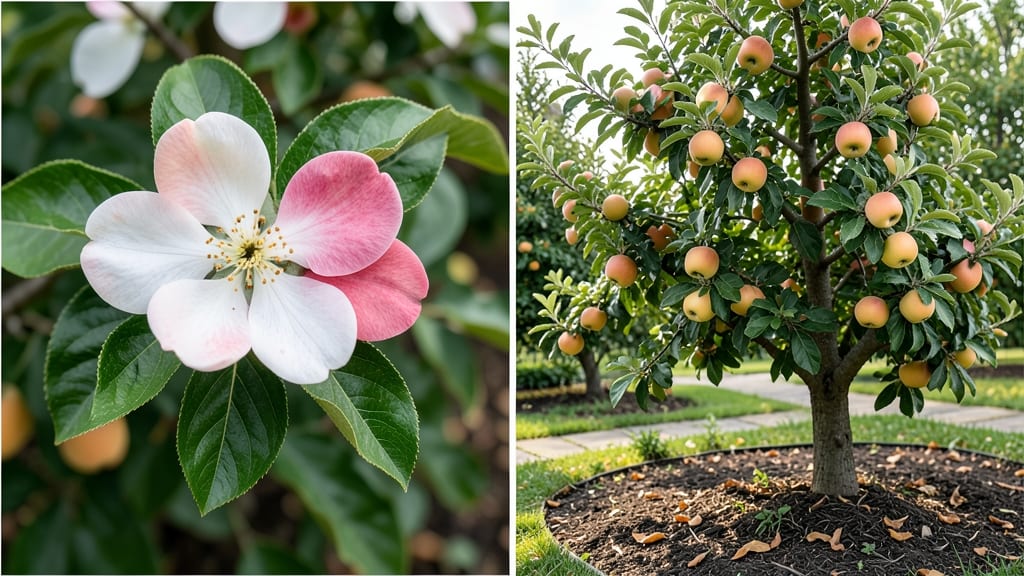
Peach trees cannot pollinate apple trees because they belong to different botanical families—Prunus for peaches and Malus for apples—meaning their flowers are structurally incompatible for cross-pollination. Even if bees transfer pollen, no viable fruit will develop.
Peach and apple trees are like two different languages when it comes to reproduction. 🌸 The Prunus family (peaches) and Malus family (apples) evolved separately, so their flower structures don't align for successful fertilization.
Even if pollen somehow transfers, the genetic mismatch means no fruit will form—it's like trying to mix oil and water. This is why orchardists always pair trees from the same family to ensure fruit production.
What's fascinating is how this plays out in nature. While bees might carry pollen between trees, the biological barriers prevent any meaningful cross-pollination. This is why you'll never see peach-apple hybrids in grocery stores—they simply don't exist.
Understanding these botanical relationships helps gardeners make smart choices when planning their orchards or backyard fruit trees.
💡 In This Article
- Botanical Differences Between Peach and Apple Trees
- Successful Cross-Pollination Strategies for Fruit Trees
Botanical differences between peach and apple trees
Peach and apple trees belong to entirely separate botanical families—Prunus for peaches and Malus for apples—which means their reproductive systems evolved independently over millions of years. This genetic divide creates fundamental differences in flower structure that prevent successful cross-pollination.
Peach flowers have five petals arranged in a wheel-like pattern, while apple flowers feature five petals but with a distinct cup-shaped base called the hypanthium. These structural differences make it impossible for pollen from one to fertilize the other.
The pollen itself also plays a crucial role in this incompatibility. Peach pollen contains proteins and enzymes that are specialized to interact with the stigma of other Prunus species, like plums or cherries.
When this pollen lands on an apple flower, the stigma recognizes it as foreign and rejects it—similar to how your immune system fights off pathogens. The chemical signals between pollen and stigma are species-specific, creating a biological lock-and-key system that only works within the same family.
Even if bees carry peach pollen to apple flowers, the genetic mismatch means no fertilization occurs. 🔬
Another key factor is the timing of flowering. While both trees bloom in spring, their exact bloom periods can differ by 1-2 weeks, further reducing any chance of accidental cross-pollination. For example, 'Elberta' peaches typically bloom in early April, while 'Honeycrisp' apples bloom slightly later in mid-April.
This temporal separation ensures nature's way of preventing hybridization between these species. The evolutionary advantage here is clear—maintaining species boundaries preserves genetic diversity within each family.
What makes this even more interesting is how these differences extend to the fruit itself. Peaches develop from a single ovary at the base of the flower, while apples form from a fused structure called the hypanthium that surrounds multiple ovaries.
This fundamental difference in fruit development means even if fertilization somehow occurred, the resulting structure would be biologically impossible to develop into a viable fruit. The entire reproductive process is hardwired to maintain these species distinctions.
For gardeners, this botanical reality translates to important planning decisions. When selecting fruit trees, you must choose varieties from the same family to ensure successful pollination.
For example, pairing a 'Red Haven' peach with a 'Contender' plum (both in Prunus) will produce fruit, while mixing them with apple trees (even from the same orchard) will yield nothing. This is why commercial orchards carefully select compatible pollinators to maximize fruit production.
The takeaway is that while peach and apple trees may look similar in their general tree form, their reproductive systems are fundamentally different—like trying to plug a square peg into a round hole.
Understanding these botanical distinctions helps gardeners make informed choices when designing their orchards or backyard fruit gardens. 🌿