
Pests
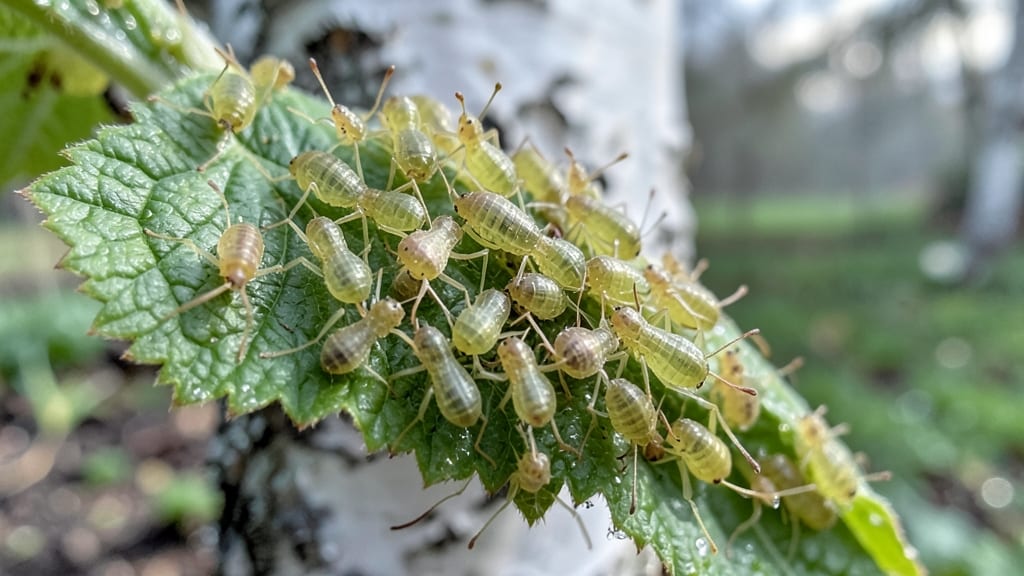
Birch trees aphids turn your golden foliage into sticky, blackened messes—unless you act fast. I’ve watched entire canopies defoliate in weeks, but a single natural spray can stop the damage before it starts.
The key is acting at the first sign of those tiny green clusters, when the tree still has a fighting chance.
These sap-sucking pests thrive when birch trees are stressed—drought, poor soil, or overcrowding makes them easy targets. My go-to spray mixes 1 tablespoon neem oil, 1 teaspoon insecticidal soap, and 1 quart water, applied when aphids are most active (early morning or late evening).
Reapply every 5–7 days until they’re gone—usually within two weeks.
What you’ll notice after treatment is new growth emerging clean and green, with no more sticky residue on leaves or branches. The tree recovers faster than you’d expect, and next season’s buds stay aphid-free if you monitor for early signs like curled leaves or ants (their protectors).
For severe cases, a second spray with horticultural oil (like dormant oil) in late winter can smother overwintering eggs before they hatch. The best part? No harsh chemicals, just a foolproof method that works even on mature trees. Let’s get your birch back to its golden glory.
Root Causes Of Sap-Sucking Outbreaks
Birch trees are a magnet for birch aphids (like Euceraphis betulae or Monellia costalis) because these tiny pests thrive in specific conditions. Understanding the why behind their infestations helps you disrupt their lifecycle before they take over. Here’s a breakdown of the key triggers:
Birch aphids are sap-feeders, meaning they pierce bark and leaves to drink the sugary sap. Trees with high sap pressure (often young or stressed birches) are prime targets because:
- Fast growth = more sap: Rapidly growing birches produce excess nutrients, attracting aphids like a buffet. Pro tip: Mature trees with slower growth are less appealing.
- Root stress = easy access: Compacted soil, drought, or poor drainage force trees to work harder, weakening their defenses. Aphids detect these signals through volatile organic compounds (VOCs) emitted by stressed foliage.
- Fungal infections open doors: Birch trees with birch leaf blight or canker diseases create entry points for aphids. The pests exploit these wounds to feed and reproduce.
Actionable fix: Improve soil aeration with organic matter (like compost) and water deeply during dry spells to reduce stress signals.
Aphids rarely dominate healthy ecosystems because nature’s pest control—ladybugs, lacewings, parasitic wasps, and birds—keeps them in check. When these predators vanish, aphid populations explode. Common disruptions include:
- Pesticide overuse: Broad-spectrum insecticides kill aphid predators faster than the pests themselves. For example, neonicotinoids may wipe out 70% of beneficial insects in a season.
- Monoculture landscapes: Planting only birches (or other aphid-loved trees like willows) removes habitat diversity, starving predator species of alternative prey.
- Urbanization & habitat loss: Lawns and pavement eliminate ground cover where lacewing larvae and ladybug pupae hide. Without shelter, these allies can’t thrive.
Actionable fix: Plant companion species like dill, yarrow, or marigolds to attract predators. Avoid systemic pesticides—opt for targeted sprays (like horticultural oil) timed for aphid outbreaks.
Aphids are cold-sensitive, but climate shifts have extended their breeding seasons. Here’s how temperature plays a role:
| Factor | Effect on Aphids | Why It Matters |
|---|---|---|
| Mild winters (<40°F) | Surviving eggs hatch earlier | Aphids get a 2–4 week head start on feeding before predators emerge. |
| Early spring warmth | Accelerated reproduction cycles | One generation can become 10x larger in 30 days if temperatures stay above 60°F. |
| Heatwaves (>90°F) | Stimulates honeydew production | Excess honeydew attracts sooty mold, which blocks sunlight and weakens the tree. |
Actionable fix: Monitor degree-day models (a tool gardeners use to predict pest outbreaks) in your region. Apply kaolin clay or neem oil as a preventive barrier in early spring.
Too much nitrogen—common in fast-release fertilizers—supercharges sap production, making birch trees aphid magnets. Here’s the science:
- Nitrogen = sugar rush: Excess N promotes leafy (but weak) growth, increasing sap volume by up to 30%.
- pH imbalance: Fertilizers can acidify soil, making trees more susceptible to aphid-borne viruses like Birch Yellows Virus.
- Root burn = stress signal: Over-fertilized roots emit ethylene gas, a distress call that aphids detect from 10 feet away.
Actionable fix: Switch to slow-release organic fertilizers (like composted manure) and test soil pH annually. Aim for a 6.0–7.0 range—aphids dislike slightly alkaline conditions.
Quick Fixes for Sap-Sucking Tree Invaders
If your birch trees are looking like they’ve been hit by a sticky, green storm, don’t panic—there’s hope! Birch tree aphids may be tiny, but they’re easy to outsmart with the right approach.
Below, we’ve broken down the most effective solutions based on the root cause of your infestation. From quick fixes to long-term prevention, these methods will help you reclaim your trees without harsh chemicals.
If you catch the problem early, you can often stop it before it spreads. Aphids thrive in clusters, so the key is to disrupt their party fast.
🍳 Blast Them Away with Water
A strong blast of water can knock aphids off trees and wash away their honeydew (that sticky residue that attracts mold and ants).
- How to do it: Use a garden hose with a nozzle on a high-pressure setting (but not so strong it damages tender leaves). Spray the undersides of leaves where aphids love to hide.
- Best time: Early morning or late afternoon to avoid shocking the tree.
- Frequency: Repeat every 3–4 days until the infestation clears.
Pro tip: 💡 Add a few drops of dish soap (like Dawn) to the water—it weakens their protective shell without harming the tree.
👨🍳 Introduce Beneficial Bugs
Aphids have natural predators that can do the heavy lifting for you. Ladybugs, lacewings, and parasitic wasps are aphid-eating machines!
- How to do it: Purchase beneficial insect eggs or larvae from garden centers and release them near the infested areas.
- Best time: Early spring or late summer when aphids are most active.
- Bonus: Plant neighboring flowers like dill, fennel, or yarrow to attract and retain these helpful bugs.
If aphids have already taken over, you’ll need a more aggressive (but still gentle) approach.
🔪 Natural Sprays That Pack a Punch
Skip the chemical pesticides and go for plant-based or homemade remedies that aphids can’t resist.
- Neem Oil Spray 🌿
- Mix 1 tbsp neem oil + 1 tsp mild soap + 1 quart water in a spray bottle.
- Shake well and spray directly on aphids (they’ll dry out and die within 24 hours).
- Reapply: Every 5–7 days until gone.
- Garlic or Chili Pepper Spray 🌶️
- Blend 1 garlic bulb or 1 chili pepper + 1 quart water, strain, and add 1 tsp soap.
- Spray on leaves (aphids hate the smell and will leave).
- Reapply: Every 3–4 days.
Pro tip: 🌡️ For maximum effectiveness, apply sprays in the evening when aphids are most active and the sun isn’t burning off the solution.
🔪 Prune and Remove Bad Leaves
Severely infested leaves won’t recover, so cut them off to stop the spread.
- How to do it: Use sterilized pruners to trim heavily affected leaves and branches. Dispose of them in a sealed bag (not your compost!).
- When to prune: On a dry, sunny day to help wounds heal faster.
- Extra step: After pruning, spray the tree with water or neem oil to deter any lingering aphids.
The best defense is a strong, healthy tree that aphids don’t want to invade. Here’s how to stay ahead:
🌱 Strengthen Your Tree’s Defenses
Aphids target weak trees, so give your birch the nutrients it needs to fight back.
- Fertilize properly: Use a balanced, slow-release fertilizer in early spring. Avoid over-fertilizing with nitrogen—it attracts more aphids!
- Water deeply but less often: Aphids love stressed trees. Water at the base of the tree (not the leaves) to encourage deep root growth.
- Mulch correctly: Apply 2–3 inches of organic mulch (like wood chips) around the base, but keep it 6 inches away from the trunk to prevent rot.
🎯 Disrupt Their Habitat
Aphids need shelter and easy access to sap. Make their life miserable with these tweaks:
- Encourage airflow: Thin out dense branches to reduce humidity (aphids love damp, shaded spots).
- Remove ant trails: Ants farm aphids for honeydew. Use diatomaceous earth or borax bait stations to keep ants away.
- Plant companion plants: Aphids dislike herbs like rosemary, thyme, and mint. Plant them nearby as a natural repellent.
Pro tip: ✨ Reflective mulch (like aluminum foil or silver plastic) can confuse aphids—try wrapping it around the tree trunk to deter them!
With these targeted solutions, your birch trees will be aphid-free in no time. Start with early intervention, then move to stronger methods if needed, and finish with prevention to keep future infestations at bay. Happy gardening! 🌳💚
Frequently asked questions
How do I know if my birch tree has aphids?
Look for tiny green, yellow, or black clusters on new growth or leaf undersides. You’ll also spot sticky honeydew residue (black sooty mold) on lower branches. Curled leaves or ants marching up the trunk are red flags—ants protect aphids for their honeydew.
Can I use dish soap to kill birch tree aphids?
Yes! Mix 1 tablespoon mild dish soap (like Dawn) with 1 quart water in a spray bottle. The soap breaks their protective coating. Test on a small leaf first—some trees are sensitive. Spray in early morning or evening for best results.
Why do aphids keep coming back after treatment?
They’re likely returning because of stressed trees or ant protection. First, check for ants—they "farm" aphids. Use diatomaceous earth around the base. Second, ensure your tree isn’t over-fertilized (especially with nitrogen). Finally, repeat treatments every 5-7 days until new growth appears clean.
Is neem oil safe for all birch tree varieties?
Generally yes, but avoid applying when temperatures exceed 90°F or to drought-stressed trees. Neem oil works best on young leaves. For paper birch varieties, dilute to 1 tablespoon per gallon to prevent leaf burn. Always shake well before spraying—neem oil separates.
How long does it take to see results from natural sprays?
With consistent application, you’ll notice a reduction in 3-5 days, but complete elimination takes 2-3 weeks. The key is persistence—aphids reproduce rapidly. Combine sprays with water blasts and beneficial insects for faster results. Monitor for new growth appearing clean.