
Pruning
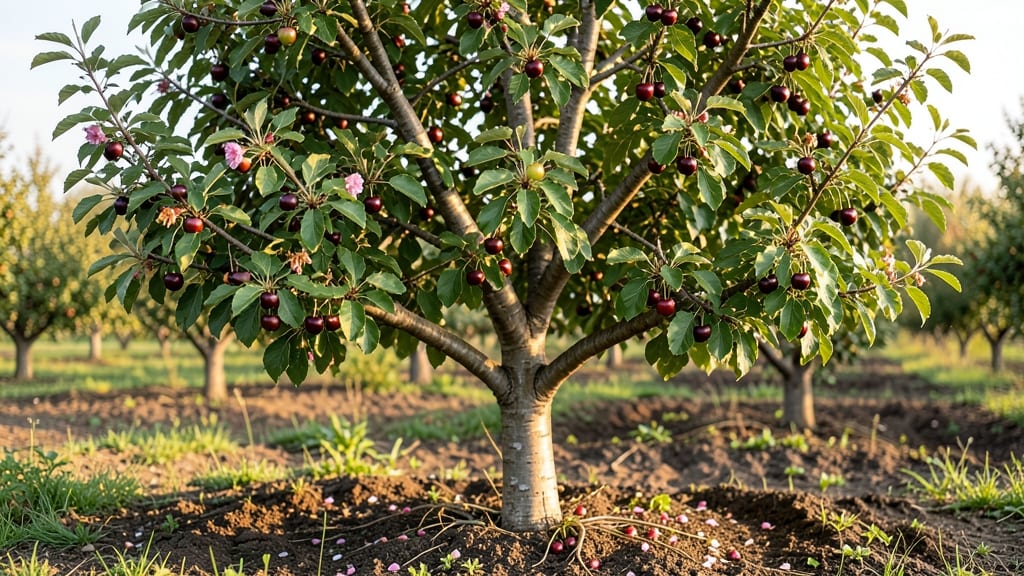
A Bing cherry tree’s mature height can reach 15-25 feet—but that doesn’t mean you need a sprawling orchard to grow one. 🍒 If you’re eyeing a backyard cherry harvest but worried about space, you’re not alone.
Many gardeners assume these trees require acres, but dwarf and columnar varieties stay under 10 feet while still delivering sweet, juicy fruit.
This guide breaks down how to choose the right Bing cherry tree for your space, whether you’ve got a postage-stamp patio or a modest backyard.
We’ll cover the fastest-growing compact varieties, how pruning can keep even standard trees manageable, and why some gardeners swear by semi-dwarf rootstock for the perfect balance of size and productivity.
You’ll learn which varieties mature in just 3-5 years instead of a decade, how to prune for a neater, fruit-focused shape, and when to trim to avoid overgrowth. No more sacrificing your dream of fresh Bing cherries—just smart strategies to fit them into your garden, no matter how small.
Let’s dive into the heights, growth hacks, and pruning secrets that’ll keep your Bing cherry tree thriving without taking over your yard.

Bing cherry tree height variations: dwarf vs standard vs columnar options
Choosing the right Bing cherry tree height can transform your garden from a dream to a reality—even in tight spaces. Standard Bing cherry trees can reach 15-25 feet tall, making them perfect for rural orchards but impractical for urban backyards.
The good news? Dwarf and columnar varieties offer space-saving solutions without sacrificing fruit quality or yield. Let’s break down your options to find the best fit for your garden’s layout and goals.
Your garden’s size and layout will dictate which Bing cherry variety thrives best. Urban gardeners with limited space often opt for dwarf or columnar types, while commercial orchards prioritize standard varieties for higher yields.
Even in small backyards, strategic pruning can keep standard trees manageable. Understanding these height variations helps you plan for sunlight access, fruit harvesting, and long-term maintenance with ease.
Dwarf Bing cherry trees are the ultimate space-savers, typically reaching just 6-10 feet tall at maturity. These varieties grow on dwarfing rootstock like Gisela 5 or Colt, which restricts their height while encouraging a bushier form.
Ideal for containers or small backyards, they produce fruit just like their taller counterparts but with less maintenance. If you’re growing in USDA Zones 5-8, dwarf varieties thrive with proper pruning and sunlight.
Columnar Bing cherries offer a narrow, upright growth habit, making them perfect for tight spaces or alleyways. These trees grow 8-12 feet tall but remain only 2-3 feet wide, fitting neatly into urban gardens or along fences.
Their vertical structure also makes harvesting easier, as fruit ripens uniformly along the trunk. For small-space gardening, columnar types are a game-changer—just ensure they get full sun exposure to maximize fruit production.
Standard Bing cherry trees are the traditional choice for large properties, reaching 15-25 feet tall and requiring ample space. While they demand more room, their higher yield potential and classic form make them a favorite for commercial orchards or rural homesteads.
If you’re working with a large backyard or orchard, standard varieties offer the most fruit per tree—but they’ll need regular pruning to maintain health and shape.
Pruning plays a critical role in managing Bing cherry tree height, regardless of variety. Winter pruning (dormant season) helps control size by removing water sprouts and crossing branches, while summer pruning encourages bushier growth.
For dwarf or columnar types, light pruning is often sufficient to maintain their compact form. Even standard trees can be kept smaller with annual structural pruning, though they’ll still require more space long-term.
When selecting a Bing cherry tree, consider your harvesting needs and garden layout. Dwarf and columnar types are ideal for easy picking and minimal maintenance, while standard trees offer larger yields for those with space to spare.
For urban gardens, a dwarf or columnar variety planted near a south-facing wall can maximize sunlight and fruit production. Always check the rootstock type when shopping, as it directly impacts mature height.
If you’re unsure which variety to choose, start with a dwarf Bing cherry on Gisela 5 rootstock—it’s a low-maintenance option that fits almost any garden. For commercial growers, standard varieties on Mahaleb rootstock provide the best balance of yield and hardiness.
Columnar types are a unique middle ground, offering the height
How to prune Bing cherry trees for height control: step-by-step guide
Controlling the height of your Bing cherry tree starts with understanding its natural growth pattern—standard varieties can reach 15-25 feet if left unchecked. But with strategic pruning, you can maintain a compact shape while ensuring abundant fruit production.
The key is timing, technique, and consistency, whether you're shaping a young tree or managing an established one.
Pruning Bing cherries isn't just about height—it's about air circulation, light penetration, and fruit quality. Poor pruning can lead to crowded branches, disease, and reduced harvests. That's why I recommend a two-season approach: winter pruning for structural control and summer pruning for maintenance.
Let's break it down into clear, actionable steps to keep your tree at your ideal height.
-
1
Winter Pruning (Dormant Season)
Best time: Late winter (just before buds swell)
Remove dead, diseased, or crossing branches first. Use clean, sharp pruners to make cuts at a 45-degree angle just above a bud or branch collar. Aim to reduce height by no more than 25% per year to avoid stress. -
2
Summer Pruning (Growing Season)
Best time: June-July (after harvest)
Focus on water sprouts (vertical shoots) and suckers at the base. Thin out overlapping branches to improve air flow. Limit cuts to light shaping—avoid heavy pruning that could reduce next year's fruit. -
3
Structural Shaping
Year-round maintenance
Train the tree with a central leader (one main trunk) or open vase shape (3-4 main branches). Remove low-hanging branches to create clearance. Use tips pruning on young trees to encourage bushier growth. -
4
Removing Water Sprouts
Year-round (especially spring)
These fast-growing vertical shoots steal energy from fruit production. Cut them back to the nearest lateral branch or bud. Use rubbing alcohol to sterilize pruners between cuts to prevent disease spread. -
5
Post-Pruning Care
Immediate follow-up
Apply wound dressing only if cuts are large (>1 inch). Water deeply to help the tree recover. Avoid fertilizing immediately after pruning—wait until new growth appears in spring.
For dwarf Bing cherry varieties, you can be more aggressive with pruning since they're naturally 8-12 feet tall at maturity. Focus on maintaining an open center to prevent branch rubbing.
If your tree is already too tall, prioritize gradual reduction—never remove more than 25% of the canopy in a single season to avoid shocking the tree.
Remember, pruning Bing cherries is an ongoing process. I recommend scheduling monthly inspections during the growing season to catch and address any issues early. With consistent care, you can enjoy a manageable-height tree that produces abundant, high-quality cherries year after year.
Pro tip: Keep a pruning journal to track which techniques work best for your specific tree. Note the height reductions, fruit yield, and any unexpected growth patterns. This will help you refine your approach over time.