
Size
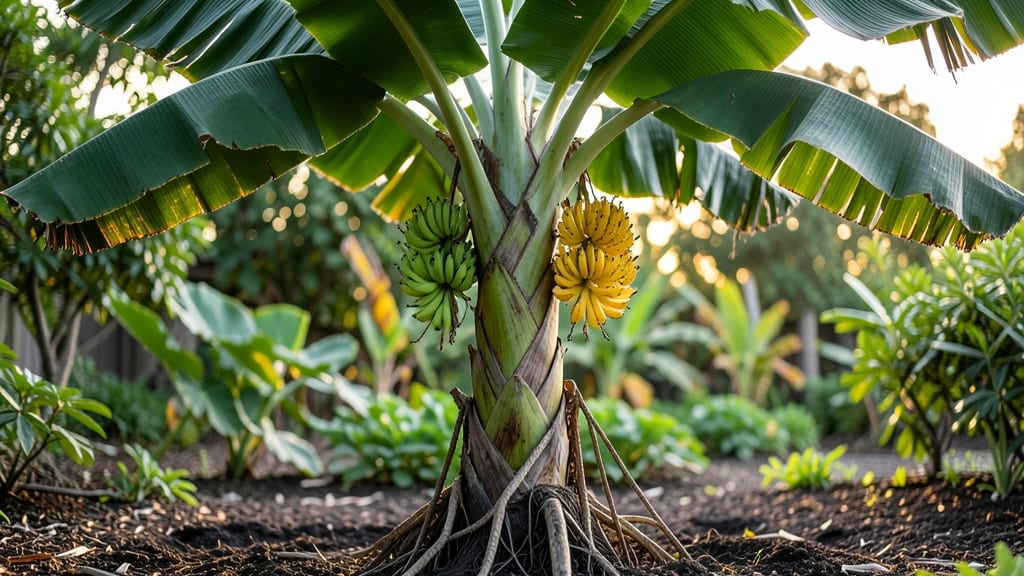
Banana trees grow to sizes that can surprise even experienced gardeners—some dwarf varieties top out at 10 feet, while giants like the Red Dacca stretch toward 25 feet or more.
If you’ve ever dreamed of growing your own bananas but wondered whether a towering jungle giant will take over your backyard, this guide reveals exactly how big banana trees get—and how to control their size.
Most home gardeners assume all banana trees are massive, but the truth is far more manageable. With the right variety and care, you can keep a banana tree 🍌 thriving in containers or small yards without sacrificing fruit production.
Below, I break down the height ranges by variety, growth rates, and practical tips to manage size—so you can plan your garden with confidence and enjoy homegrown bananas year after year.


Banana tree height by variety: from dwarf to giant species
Choosing the right banana variety is key if you want a manageable tree that still produces sweet fruit. Some varieties stay compact enough for containers, while others can grow taller than your house—literally.
The Dwarf Cavendish, for example, tops out around 10-12 feet, making it perfect for urban gardens, whereas the Red Dacca can reach 20+ feet in ideal conditions. Understanding these differences helps you plan your garden layout and avoid surprises.
Banana trees are monocarpic, meaning they produce fruit once and then die, but their height varies dramatically between varieties. Dwarf varieties like the Lady Finger stay under 12 feet, while tall varieties such as the Gros Michel can dwarf your backyard at 20-25 feet.
Even the spread matters—some varieties grow wider than they do tall, while others shoot straight up like a skyscraper.
| Variety | Mature Height (ft) | Spread (ft) | Growth Habit | Best For |
|---|---|---|---|---|
| Dwarf Cavendish | 10-12 | 6-8 | Compact, upright | Containers, small gardens |
| Lady Finger | 10-12 | 5-7 | Slender, fast-growing | Urban patios, balconies |
| Red Dacca | 20-25 | 10-12 | Tall, spreading | Large gardens, tropical climates |
| Gros Michel | 20-25 | 8-10 | Massive, robust | Commercial farms, rural areas |
| Bluggoe | 15-18 | 8-10 | Semi-dwarf, sturdy | Home gardens, cold-hardy zones |
| Ice Cream | 12-15 | 6-8 | Medium, bushy | Small farms, homesteads |
| Horn | 18-22 | 10-12 | Tall, spreading | Tropical landscapes |
| Saba | 15-18 | 8-10 | Medium, bushy | Home gardens, culinary use |
| Blue Java | 18-22 | 10-12 | Tall, upright | Large properties, tropical climates |
| Rajapuri | 12-15 | 6-8 | Compact, fast-growing | Small spaces, containers |
If you're growing bananas in containers, stick to dwarf varieties like the Lady Finger or Rajapuri, which thrive in 15-20 gallon pots. These varieties won’t outgrow their space and can still produce fruit if given proper care.
For in-ground planting, even semi-dwarf varieties like Bluggoe or Saba can handle the space, but ensure they have 6+ feet of clearance from structures or power lines.
One common misconception is that all banana trees grow into jungle giants. In reality, 90% of home gardeners grow dwarf or semi-dwarf varieties that stay under 15 feet. The key is selecting the right variety for your space.
For example, the Ice Cream banana stays around 12-15 feet but produces large, sweet fruit—ideal for small homesteads. Meanwhile, the Horn banana can reach 22 feet, making it better suited for rural or tropical settings.
Climate also plays a role in height. In warmer zones (USDA 10-11), banana trees grow faster and taller, while in cooler climates (USDA 9-10), varieties like Bluggoe may stay shorter due to slower growth.
Always check your local frost dates—some varieties, like the Dwarf Cavendish, can tolerate brief cold snaps, while others, like the Red Dacca, need year-round warmth to reach their full height.
For urban gardeners, the Lady Finger
How fast do banana trees grow? Growth rates by stage
Banana trees are among the fastest-growing tropical plants, but their growth rate varies dramatically depending on the stage of life and growing conditions.
From a tiny seedling to a towering fruit-bearing giant, understanding these phases helps you predict how quickly your tree will reach maturity—and whether it’ll fit in your garden.
In ideal conditions, a banana tree can grow 3-6 feet per year during its peak growth phase. However, this speed depends heavily on factors like climate, soil quality, and care.
Let’s break down exactly how fast banana trees grow at each stage, so you can set realistic expectations for your own backyard banana patch.
- Seedling Stage (0-6 months): 0.5-2 ft/year – Slow initial growth from seed or pup. Focus on protecting young leaves from wind and pests.
- Vegetative Growth (6-18 months): 3-6 ft/year – Rapid stem elongation. Provide full sun and balanced fertilizer to support this explosive growth phase.
- Pseudostem Maturation (18-30 months): 2-4 ft/year – Stem thickens and prepares for flowering. Monitor for nutrient deficiencies like potassium or magnesium.
- Flowering & Fruit Development (2-3 years): 1-3 ft/year – Growth slows as energy shifts to fruit production. Prune lower leaves to improve air circulation.
- Mature Stage (3+ years): 0-1 ft/year – Minimal height gain, but continuous leaf production. Harvest fruit and remove old pseudostems to encourage new growth.
One of the biggest misconceptions about banana trees is that they grow continuously upward like traditional trees. In reality, they produce a single pseudostem that dies after fruiting, and new growth emerges from the base.
This means your tree’s final height is determined by the variety you choose and how well you care for it.
To estimate a banana tree’s final size early on, observe the growth rate of the first pseudostem. If it grows 6+ feet in its first year, it’s likely a fast-growing variety like the Red Dacca.
Slower growth (3-4 feet/year) suggests a dwarf or semi-dwarf type. Always account for 10-20% additional height for leaf spread, which can double the tree’s overall footprint.
Climate plays a critical role in growth speed. In tropical zones (USDA 10-12), banana trees grow 2-3x faster than in cooler climates. If you’re growing in containers or Zone 9-10, expect slower growth and more careful winter protection.
Even with ideal conditions, most banana trees take 2-3 years to reach fruiting size—patience is key!
With the right care, you can coax your banana tree to grow faster or keep it manageable. Start by choosing a dwarf variety for small spaces, and always provide well-draining soil and consistent moisture.
Watch those growth spurts—your banana tree might surprise you with how quickly it transforms from a tiny sapling to a lush, fruiting giant! 🌱