
Light Requirements
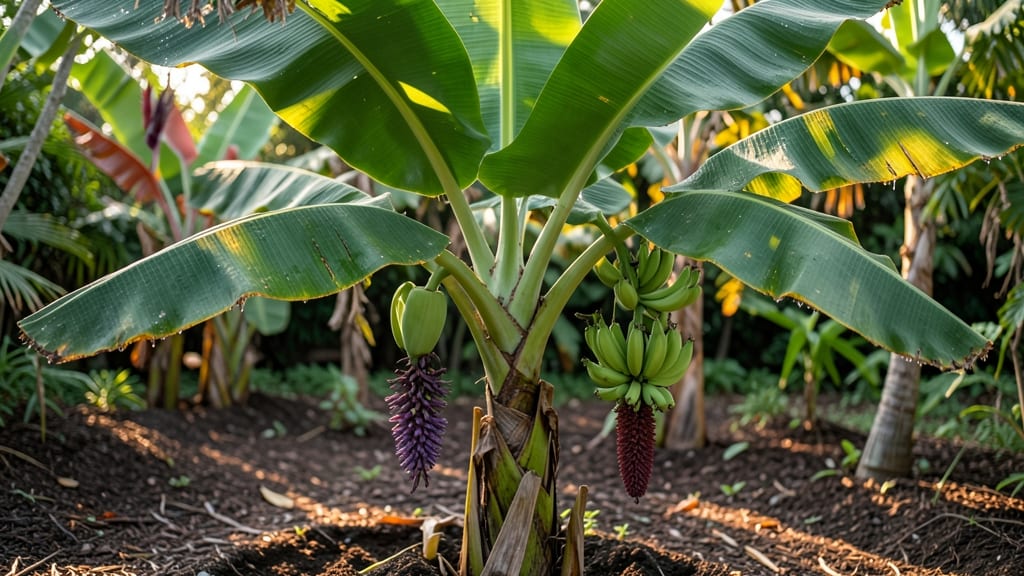
Growing banana trees in full sun is like giving them a tropical vacation year-round—just don’t let them bake. 🌿 The right sunlight exposure transforms these plants from delicate houseguests into bold, fruit-bearing giants that thrive in the brightest spots of your yard or patio.
Bananas crave 6-8 hours of direct sun daily, but they’ll handle more if you keep soil moist and mulch heavily. The key is gradual acclimation—move potted trees outdoors slowly to avoid leaf scorch (those ugly brown patches).
Varieties like Dwarf Cavendish and Red Dacca handle full sun best, while others may need afternoon shade in scorching climates.
With proper care, you’ll see tall, lush fronds and—if you’re lucky—bunches of fruit within 1-2 years. The trade-off? Bananas drink a lot of water and need rich, well-draining soil. Neglect either, and you’ll end up with a sad, crispy plant instead of a towering tropical statement piece.
Perfect for warm climates (zones 10-11) or containers moved indoors in winter. Here’s how to keep them happy in the sun—and avoid the most common pitfalls.
📚 In This Guide
- What you need
- Instructions
- Tips and common mistakes
- Wrapping up and next steps
What you need
- ● Banana tree plant: Choose a Musa variety (e.g., 'Dwarf Cavendish' or 'Red Dacca') from a nursery or propagate from a healthy rhizome.
- ● Large container (15–20 gallons) or garden plot: Ensure 6+ feet of depth for roots and 8+ feet of width for mature growth.
- ● Well-draining soil: Mix 60% potting mix (or garden soil) with 30% compost and 10% perlite/sand to prevent root rot.
- ● Organic mulch: 3–4 inches of straw, wood chips, or pine bark to retain moisture and regulate temperature.
- ● Balanced fertilizer (10-10-10 or 6-6-6): 1 cup per tree every 4–6 weeks during growing season (spring–fall).
- ○ Support stake (optional but recommended): A 6–8 ft tall bamboo or metal stake to secure the tree as it grows.
- ● Garden trowel or shovel for planting.
- ● Watering can or hose with adjustable nozzle (banana trees love 1–2 inches of water weekly).
- ● Pruners (sterilized) for trimming dead fronds or suckers.
- ● pH test kit (ideal soil pH: 5.5–7.0).
- ○ Sunlight meter (optional) to confirm your spot gets 6+ hours of direct sun daily.
- ● Slow-release fertilizer pellets for convenience.
- ● Drip irrigation system for consistent moisture.
- ● Frost cloth (if in cooler climates—banana trees hate frost!).
- ● Compost tea for a nutrient boost.
Step-by-step guide for planting banana trees in full sun
Here's how I transform sun-drenched spaces into lush banana tree havens—no tropical climate required.
☀️ Step 1: Select the Perfect Sunny Spot
Banana trees thrive in full sun—at least 6-8 hours of direct sunlight daily. I always scout locations where morning sun warms the ground before intense afternoon rays hit. South-facing walls or open patios work best in most climates.
Watch for microclimates: A spot near pavement might get too hot, while a shaded corner will leave your tree struggling. The ideal location has bright, unfiltered light but also some afternoon shade if temperatures exceed 90°F. You'll know you've picked right when new leaves unfurl bright green and upright rather than yellowed or wilted.
🪴 Step 2: Prepare the Planting Site
Banana trees need rich, well-draining soil with a slightly acidic to neutral pH (5.5-7.0). I dig a hole twice as wide as the root ball but only as deep—planting too deep suffocates the crown. Mix the excavated soil with 3 inches of compost and a handful of slow-release fertilizer (10-10-10 works well).
For containers, use a large pot (15+ gallons) with drainage holes and fill with a blend of 60% potting mix, 30% perlite, and 10% coconut coir. The goal is soil that drains quickly but retains moisture—banana roots rot faster than they grow in soggy conditions. Tap the pot gently after filling to eliminate air pockets.
🌱 Step 3: Plant with Care
Remove the banana tree from its container and loosen any circling roots with your fingers. Position it so the top of the root ball sits level with the soil surface—never bury the crown. Backfill with your prepared mix, pressing lightly to eliminate gaps but avoiding compaction.
Water deeply immediately after planting to settle the soil and eliminate air pockets. You'll see the soil surface sink slightly as it absorbs moisture—top off with more mix if needed. Mulch around the base with 2-3 inches of organic mulch (like pine needles or shredded bark) to retain moisture and regulate temperature. Keep mulch 6 inches away from the trunk to prevent rot.
💧 Step 4: Water and Feed for Growth
Banana trees need consistent moisture—water when the top 2 inches of soil feel dry. I use a soaker hose for deep, even watering that doesn't disturb the roots. In containers, water every 2-3 days in hot weather, checking moisture by sticking your finger into the soil. Overwatering is the #1 killer—yellow leaves or mushy stems signal root rot.
Fertilize every 4-6 weeks during growing season with a balanced liquid fertilizer (like fish emulsion). You'll notice new leaves emerging larger and darker green within weeks—this is your sign the plant is thriving. In winter, reduce feeding to once every 2-3 months as growth slows.
✂️ Step 5: Prune and Protect
Remove dead or yellowing leaves at the base to redirect energy to new growth. I also prune any pseudostems (the "trunk") that split or show signs of disease—use sterilized pruners and seal cuts with pruning paste. Never cut more than one-third of the plant at once, or you'll shock it.
In freezing climates, protect young trees with burlap wraps or move potted plants to a garage or shed before temperatures drop below 32°F. Mature trees handle light frosts better, but new growth is always the most vulnerable. You'll know your tree is happy when it produces large, upright leaves and—with patience—eventual banana bunches.
Tips & tricks for perfect banana tree full sun planting
Here's what nobody tells you about growing banana trees that'll actually thrive in your sunny spot.
Sunlight Strategy: Those 6-8 hours of direct sunlight are non-negotiable, but timing matters just as much. I've found that morning sun (before 10 AM) is gentler on young trees than harsh afternoon rays. In areas where temps exceed 90°F, provide afternoon shade with a sheer curtain or nearby structure—banana leaves can scorch just like human skin. Watch for leaves that develop brown edges or crispy tips; this is your tree's SOS signal.
Soil Science: The slightly acidic to neutral pH (5.5-7.0) requirement is often misunderstood. Test your soil before planting—most garden centers sell affordable pH test kits. If your soil is too alkaline, mix in sulfur or peat moss to adjust. For containers, that 60-30-10 blend of potting mix, perlite, and coconut coir creates the perfect drainage while retaining moisture. Pro tip: Add a handful of worm castings to the mix for natural nutrients that banana trees love.
Watering Wisdom: The top 2 inches dry rule works, but I've learned the hard way that banana trees hate soggy roots. In containers, I use the "finger test" method—stick your finger 2 inches deep. If it feels dry, water thoroughly until it runs out the drainage holes. For in-ground plants, use a soaker hose placed at the drip line (not the trunk) to deliver water directly to the roots where they need it most. Yellow leaves? That's often overwatering, not underwatering.
Frost Protection: When temperatures threaten to drop below 32°F, I've developed a two-part defense system. First, wrap young trees in burlap secured with twine—it's breathable but adds insulation. For potted trees, move them to an unheated garage or shed where temps stay above freezing. The key is protecting the new growth at the top of the pseudostem, which is most vulnerable. Mature trees can handle light frosts, but their new leaves will always be the first to suffer.
Pro Tips for Banana Tree Full Sun
- Here's what nobody tells you about growing banana trees that'll actually thrive in your sunny spot.
- Sunlight Strategy: Those 6-8 hours of direct sunlight are non-negotiable, but timing matters just as much.
- Soil Science: The slightly acidic to neutral pH (5.5-7.0) requirement is often misunderstood.
Frequently asked questions
about growing banana trees in full sun—because even tropical giants need a little clarity!How much full sun does a banana tree really need?
A banana tree thrives in 6–8 hours of direct sunlight daily. In hotter climates (Zones 10–11), it can handle more sun, while cooler regions may need partial shade in peak afternoon heat. Watch for yellowing leaves—a sign it’s getting too much or too little light!
How long does it take for a banana tree to bear fruit in full sun?
With ideal conditions (full sun, warm soil, and patience!), a banana tree can produce fruit in 1–2 years from planting. Dwarf varieties may fruit faster (9–12 months), while larger types take longer. Pro tip: Fertilize with potassium-rich feed to speed up fruiting!
Can I grow a banana tree in full sun indoors?
Indoors? Not ideal—banana trees need bright, indirect light (like a south-facing window) and humidity. A sunny balcony or greenhouse works better. If indoors, supplement with a grow light 12–14 hours daily to mimic full sun.
Why are my banana tree leaves turning brown in full sun?
Brown edges or crispy leaves usually mean sunburn or underwatering. Try these fixes:
- Morning sun only in extreme heat (afternoon shade helps).
- Water deeply 1–2x weekly (check soil—it should stay moist but not soggy).
- Mulch to retain moisture and protect roots.
What’s a good full-sun alternative if banana trees are too tricky?
If banana trees seem high-maintenance, try these sun-loving tropicals:
All three handle full sun better than bananas in cooler climates.
Wrapping up and next steps
Growing a banana tree in full sun is a rewarding journey that brings lush, tropical beauty to your space—whether in a sun-drenched yard or a cozy container.
With the right soil, watering routine, and a little patience, you’ll enjoy vibrant foliage, edible fruit, and even a touch of exotic charm. 🌿✨
Ready to take the next step? Start by monitoring your tree’s progress and adjusting care as needed—pruning, fertilizing, or protecting it from pests. Soon, you’ll be harvesting your own sun-kissed bananas or simply admiring your thriving tropical centerpiece!