
Pruning
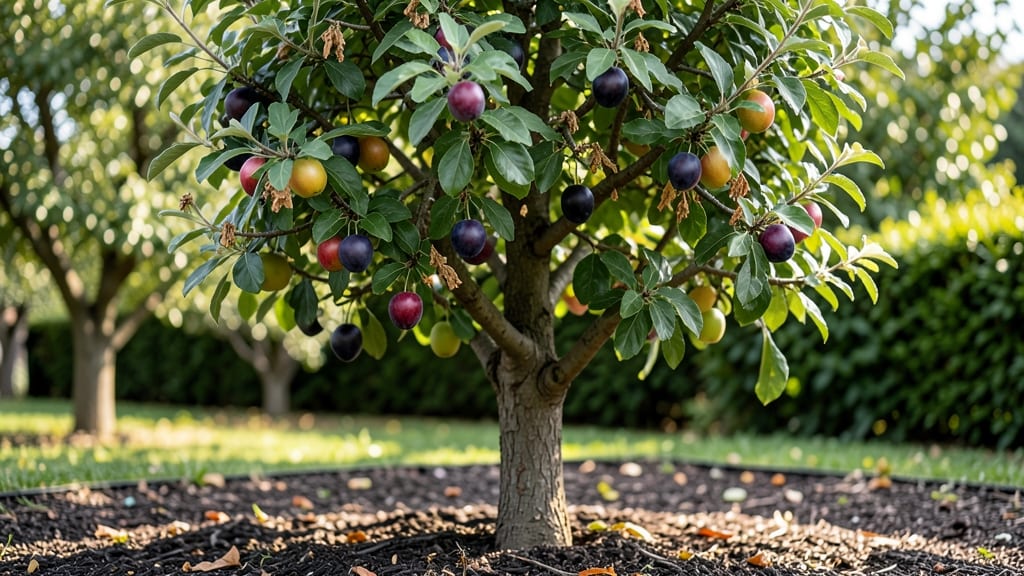
Plum trees bear fruit 2-4 years after planting, but the exact timing depends entirely on the variety you choose—early bloomers like Santa Rosa ripen in late June, while late-season varieties like Methley can wait until September.
I planted my first tree thinking I’d have fruit within a year, only to learn patience is the real harvest. 🌿 The first few years focus on establishing strong branches, not fruit production, so don’t rush it—those early blooms often fall victim to frost if the tree isn’t mature enough to support them.
Climate plays a bigger role than most gardeners realize. Southern varieties like Black Beauty thrive in zones 6-9 and fruit reliably, while northern varieties like Stanley need chilling hours (300-600) to set fruit.
My tree in zone 7 struggled its first year until I added a windbreak—cold snaps in spring can still damage blossoms.
The key is matching your tree to your last frost date: plant early varieties 2 weeks before your average last frost, and late varieties after the danger of frost has passed.
You’ll know fruiting season is approaching when you see those pink blossoms in early spring—each one holds the promise of fruit. The tree’s energy shifts from leaf growth to flower development, and by late spring, you’ll spot tiny plums forming.
Proper pruning in late winter (before buds swell) encourages stronger branches that hold heavier fruit loads, while consistent watering—1-2 inches per week—keeps the tree from dropping blossoms.
My tree now produces enough plums to share with neighbors, all because I learned to work with its natural rhythm, not against it.
Here’s the secret most guides skip: thinning fruit in early summer (when plums are golf-ball sized) prevents overburdening branches and ensures larger, sweeter fruit. It’s brutal to remove half your harvest, but your tree—and your future harvests—will thank you.
Whether you’re growing European plums, Japanese varieties, or hybrids, the same principles apply: patience, climate awareness, and a little pruning magic turn a bare branch into a fruit-laden treasure by summer’s end.
📚 In This Guide
- What you need
- Instructions
- Tips and common mistakes
- Wrapping up and next steps
What you need
- ● Plum Tree Variety: Choose a variety suited to your climate (e.g., Stanley, Santa Rosa, or Methley for cold regions; Black Diamond for heat tolerance). Purchase from a reputable nursery.
- ● Well-Draining Soil: 50% topsoil, 30% compost, and 20% sand or perlite (for improved aeration). Test soil pH (ideal: 6.0–6.5).
- ● Fertilizer: Balanced 10-10-10 fertilizer (spring planting).
- ● Slow-release organic fertilizer (e.g., 5-5-5) for established trees (apply in early spring and post-harvest).
- ● Watering Supplies: Drip irrigation system or soaker hose (for consistent moisture).
- ● Water storage (5+ gallons per tree during dry spells).
- ● Pruning Tools: Bypass pruners (for clean cuts on branches ½-inch thick).
- ● Loppers (for branches ½–2 inches thick).
- ● Pruning saw (for thick branches 2+ inches).
- ● Disinfectant (70% isopropyl alcohol or bleach solution to sterilize tools).
- ● Planting Supplies: Shovel or trowel (for digging).
- ● Garden gloves (to protect hands).
- ● Mulch (2–4 inches of wood chips or straw to retain moisture).
- ○ Support Structures (Optional): Stakes and ties (for young trees in windy areas).
- ● Tree guard (to protect from pests like deer or rabbits).
- ● Climate & Location: Plum trees thrive in USDA Zones 4–9 (check your zone here). Choose a spot with 6+ hours of sunlight daily and protection from strong winds.
- ● Pollination Partners: Most plum varieties are self-pollinating, but planting 2+ trees ensures better fruit set.
- ● Patience: Dwarf varieties may bear fruit in 2–3 years; standard trees take 4–6 years.
Understanding plum tree fruit production by variety and season
Plum trees follow predictable cycles—here’s how to track their growth phases and anticipate fruit.
🌱 Step 1: Identify Your Plum Tree’s Variety and Chill Requirements
Not all plum trees bear fruit at the same time. First, check your tree’s chill hours—the number of hours below 45°F it needs annually to set buds. Japanese plums often require 200-500 hours, while European varieties may need 500-1,000 hours. If your region falls short, your tree may bloom but drop fruit later.
Next, note whether your plum is early-season (like 'Santa Rosa' plums), mid-season (such as 'Stanley'), or late-season (like 'Methley'). Early varieties ripen in June-July, mid-season in July-August, and late-season plums extend into September. This timing affects when you’ll see fruit—and when to prune for next year’s harvest.
☀️ Step 2: Track Spring Blooms and Pollination
Fruit development begins in late winter to early spring, when your plum tree breaks dormancy. Watch for pink or white blossoms—these appear 2-4 weeks before leaves unfurl, depending on variety. A single tree may produce thousands of flowers, but only 1-5% will develop into fruit unless pollinated by bees or another compatible variety.
If you have only one plum tree, consider planting a second nearby for cross-pollination. Some varieties, like 'Larry Ann' or 'Methley', are self-fertile, but even these produce 30% more fruit with a pollinator. Note the bloom date—this marks your first critical checkpoint for fruit set.
🌿 Step 3: Monitor Fruit Set and Thin for Quality
About 4-6 weeks after blooming, small plum-sized fruits will appear. This is when thinning becomes essential. Leave 4-6 inches between fruits on the branch—overcrowding leads to small, poor-quality plums. Use sterilized pruning shears to remove excess fruit at the stem junction, not mid-fruit.
Watch for June drop, a natural process where the tree sheds 50-70% of immature fruit to conserve energy. Don’t panic—this is normal. Healthy fruit will stay firm and double in size within 4-6 weeks. If most fruit falls off, your tree may need more sunlight, balanced fertilizer, or consistent watering.
⏰ Step 4: Assess Ripening Stages by Variety
Ripening times vary by type. Early plums like 'Santa Rosa' turn deep purple-red and yield slightly when gently squeezed in late June to early July. Mid-season varieties like 'Stanley' ripen 2-3 weeks later, while late-season plums like 'Methley' may hold until September. Harvest when the fruit detaches easily from the stem—waiting too long risks birds or pests.
Taste-test a few plums for sweetness. Underripe fruit is tart and firm; overripe plums are soft and mealy. Store unripe plums at room temperature for 1-2 days to finish ripening, or refrigerate for up to 2 weeks to extend shelf life. This is your final cue that the tree’s cycle has completed successfully.
🔄 Step 5: Prepare for Next Year’s Fruit Set
After harvest, prune lightly to improve airflow and sunlight penetration for next year’s blooms. Remove dead, diseased, or crossing branches in late winter, just before buds swell. Apply a balanced fertilizer (10-10-10) in early spring to replenish nutrients. Mulch the base with 2-3 inches of organic matter to retain moisture and protect roots.
Keep a growth journal noting bloom dates, fruit set, and ripening times. Over 3-5 years, you’ll refine your care routine to maximize yield. The key is patience—plum trees often take 3-5 years from planting to full production, but once established, they reward you with decades of fruit.
Tips & tricks for perfect plum tree fruit production
Timing and variety are everything when it comes to plum trees—here's how to maximize your harvest.
Variety Matters: Japanese plums like 'Santa Rosa' ripen in June-July, while European varieties such as 'Methley' extend into September. Knowing your tree's category helps you anticipate fruit readiness and adjust care routines accordingly. For example, early-season varieties need more aggressive thinning to prevent overcrowding, while late-season plums benefit from extended ripening periods.
Chill Hours Are Critical: The 200-500 hours below 45°F that Japanese plums require can't be substituted—this is non-negotiable for proper bud formation. If your region falls short, consider planting varieties with lower chill requirements or using artificial chill treatments during winter dormancy. This temperature threshold triggers the tree's hormonal response that leads to fruit set.
Bloom Timing is Your First Checkpoint: Those pink or white blossoms appearing 2-4 weeks before leaves unfurl signal the start of fruit development. Mark this date in your garden journal—it becomes your reference point for all subsequent growth stages. If blooms appear but fruit doesn't set, check for pollination issues or environmental stressors during this critical window.
Thinning Strategy for Quality: The 4-6 inch spacing between fruits during thinning might seem excessive, but it's essential for developing properly sized plums. Use this rule of thumb: if you can fit your thumb between two fruits, you're on track. This spacing allows each fruit to receive adequate sunlight and nutrients, preventing the tree from producing small, underdeveloped plums.
Pro Tips for When Does Plum Tree Bear Fruit
- Timing and variety are everything when it comes to plum trees—here's how to maximize your harvest.
- Variety Matters: Japanese plums like 'Santa Rosa' ripen in June-July, while European varieties such as 'Methley' exte...
- Chill Hours Are Critical: The 200-500 hours below 45°F that Japanese plums require can't be substituted—this is non-n...
Frequently asked questions
about when plum trees bear fruit—because patience is key, but curiosity shouldn’t wait!How long does it take for a plum tree to bear fruit after planting?
A newly planted plum tree typically takes 3–5 years to bear fruit, depending on the variety and growing conditions. Dwarf varieties may fruit sooner (2–3 years), while standard trees can take longer. Patience pays off—healthy care speeds up the process!
Can I speed up fruiting on my plum tree?
Yes! Ensure your tree gets full sun (6+ hours/day), well-draining soil, and regular watering. Prune properly to encourage strong branches, and use balanced fertilizer (like 10-10-10) in early spring. Pro tip: Grafting a fruiting branch onto a young tree can also jumpstart production!
Why isn’t my plum tree producing fruit yet?
Common reasons include young age, poor pollination, or improper care. Check for:
- Cross-pollination needs (some plums need another variety nearby).
- Sufficient sunlight and nutrients.
- Disease/pest damage (like brown rot or aphids).
What’s the best time of year to harvest plums?
Plums ripen in late spring to early summer, usually June–July in most U.S. zones. Harvest when fruit is firm but yields slightly to gentle pressure and has deep color. Test tip: A ripe plum should smell sweet near the stem!
Do plum trees fruit every year, or do they have off-years?
Plum trees typically fruit annually, but heavy crops one year can reduce the next (a natural energy reset!). Stress (drought, extreme temps) or pests may also cause lighter yields. Solution: Consistent care keeps them productive!
Wrapping up and next steps
Now that you know when plum trees bear fruit—from early spring blooms to late summer harvests—you’re ready to nurture your own thriving orchard! 🌱 Whether you’re growing European, Japanese, or American varieties, patience and care will reward you with delicious fruit.
Start by selecting the right variety for your climate, then prune strategically and monitor growth phases to maximize yields.
Your next step? Plant a plum tree today! With the right knowledge, you’ll enjoy fresh plums in no time—plus, you’ll be growing a beautiful, low-maintenance tree for years to come. Happy gardening! 🍑✨