
Pests and Diseases
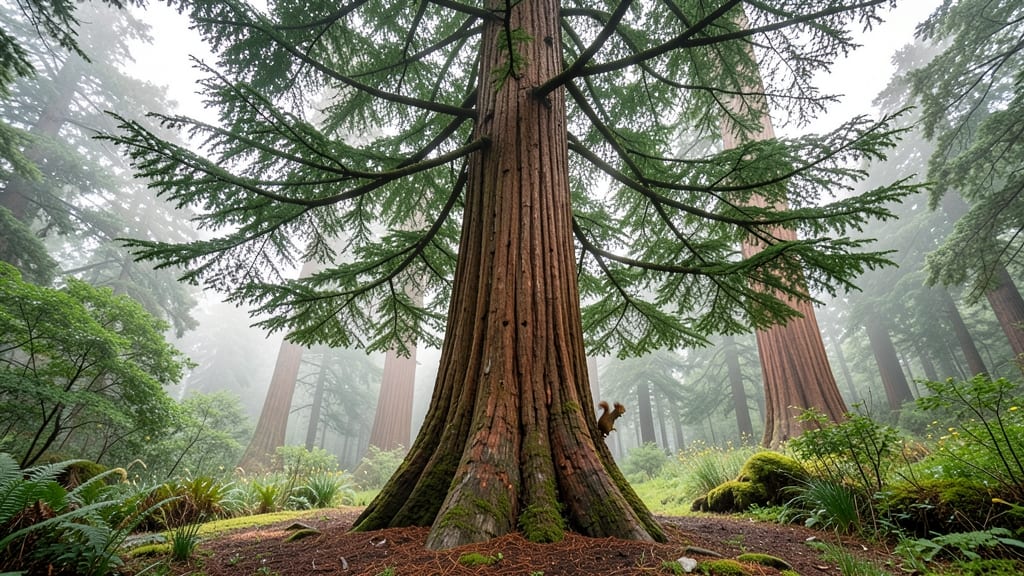
The tallest type of tree in the world is the coastal redwood (Sequoia sempervirens), which can grow over 379 feet tall, with the tallest recorded specimen reaching 380.1 feet in California’s Redwood National Park. These ancient giants thrive in foggy, moist coastal climates and dominate global forest height records.
The coastal redwood isn't just the world's tallest tree—it's an engineering marvel of nature. 🌲 These giants can grow 3-4 feet per year in ideal conditions, reaching their towering heights in just 600-800 years, thanks to their rapid early growth and thick fire-resistant bark.
What's truly remarkable is how they support their own weight: their shallow but expansive root systems anchor them against Pacific Northwest winds while their hollow trunks act like reinforced concrete structures.
While other massive trees like giant sequoias or eucalyptus trees compete in bulk, coastal redwoods win the height category by over 100 feet. Their dominance comes from perfecting the art of vertical growth in a climate where fog provides constant moisture and mild temperatures prevent stress.
The tallest specimens like Hyperion (380.1 feet) remain undiscovered to protect them from human interference, making their existence even more mysterious.
💡 In This Article
- How Coastal Redwoods Achieve Their Monumental Heights
- Comparing Coastal Redwoods to Other Giant Tree Species
How coastal redwoods achieve their monumental heights
Coastal redwoods (Sequoia sempervirens) reach their staggering heights through a combination of rapid early growth and specialized biological adaptations.
In their first decade, these trees can grow 3-4 feet per year, a rate that slows as they mature but still allows them to reach 200 feet in just 500 years.
Their thick, fibrous bark—up to 12 inches thick on mature trees—provides natural fire resistance, protecting them from the frequent wildfires in their native California habitat. This bark also contains tannins that deter pests, allowing the tree to focus its energy upward rather than on defense. 🌲
Their shallow but expansive root systems spread horizontally rather than deeply, anchoring them against the strong coastal winds while maximizing water absorption from the foggy, moist air.
Unlike many trees that rely on deep roots, redwoods develop a network of "sinkers" that can reach down 10-15 feet to access groundwater, but their primary strength comes from their massive, hollow trunks.
These trunks act like reinforced concrete, distributing weight evenly and preventing collapse under their own weight—some specimens have been measured with trunks over 25 feet in diameter.
The Pacific Northwest climate is the perfect storm for their growth. Coastal fog provides a near-constant moisture supply, reducing water stress, while mild winters prevent dormancy periods that slow growth in other species. The combination of high humidity, nutrient-rich soil, and minimal temperature extremes allows redwoods to grow year-round.
Even during droughts, their ability to photosynthesize efficiently in low light conditions (thanks to their dense foliage) keeps them growing taller while others stagnate. 💫
What sets them apart from other giant trees is their vertical growth strategy. While giant sequoias (Sequoiadendron giganteum) prioritize bulk and width, coastal redwoods optimize for height, evolving in an environment where upward growth offers the best competitive advantage.
Their needles, arranged in flat sprays, maximize sunlight capture without overcrowding, allowing them to grow in dense forests where light competition is fierce. This vertical specialization is why they can outpace even the fastest-growing eucalyptus species in height competitions.
Another key factor is their genetic resilience. Coastal redwoods have been growing in the same region for over 5 million years, adapting to local conditions through natural selection.
Their ability to sprout new shoots from their base (a process called "sprouting" or "layering") after damage ensures their survival and continued growth.
This regeneration capability means even if the top of a tree is damaged, the base can often recover and continue growing upward, contributing to their longevity and height records. ✨
Consider this: the tallest coastal redwood, Hyperion, grows in a remote area of Redwood National Park where the climate is even more extreme—cooler temperatures and heavier fog. This suggests that within their ideal range, these trees can grow even taller when conditions are perfect.
Their ability to thrive in such specific microclimates explains why they dominate height records while other giant trees remain shorter or wider. 🌿