
Planting
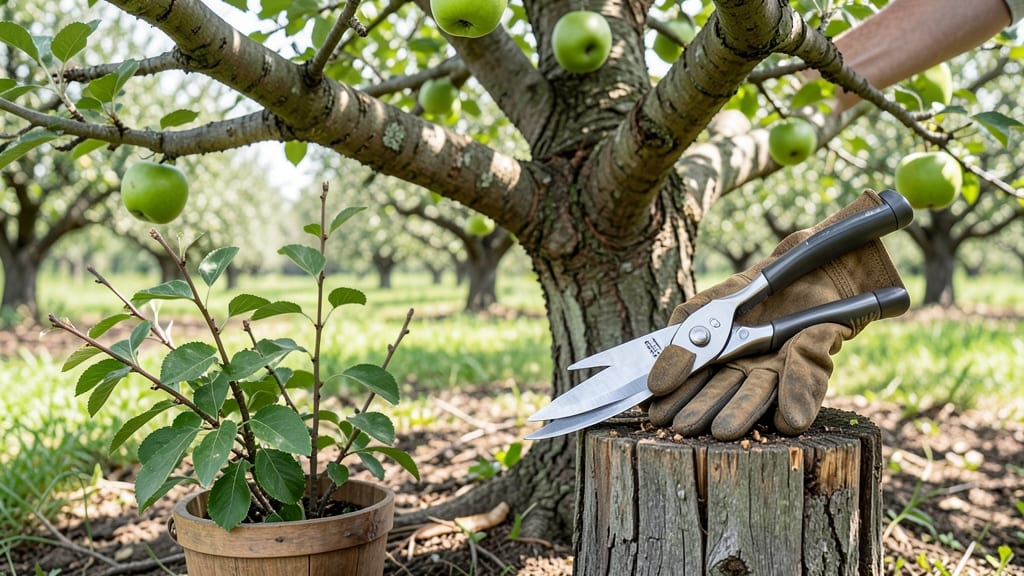
You can prune an apple tree in summer, but it requires caution to avoid stressing the tree. Heavy cuts during active growth risk disease, pests, and weakened fruit production. Instead, limit pruning to light shaping or removing dead branches mid-to-late summer after harvest, using clean, sharp tools.
Summer pruning is a delicate balance because apple trees are most vulnerable during warm months when pests thrive and wounds heal slowly. 🌳 The key is timing—wait until after harvest when the tree has recovered some energy, and focus on minimal cuts to avoid disrupting the tree's natural processes.
Sterilizing your tools between cuts prevents bacterial infections, which are especially dangerous in summer's humid conditions.
Even with precautions, summer pruning should never replace winter or early spring pruning, which allows for more extensive shaping. Think of summer maintenance as a quick trim rather than a full makeover—removing only dead, diseased, or crossing branches while preserving the tree's energy for next year's fruit production.
💡 In This Article
- Why Summer Pruning Damages Apple Trees
- Summer Pruning Safety Guide for Apple Trees
Why summer pruning damages apple trees
Apple trees enter a high-risk period during summer because their natural defenses are weakened. When you make cuts, the exposed wood creates open wounds that pests like borers and diseases such as fire blight can easily infiltrate.
The tree's sap flow is at its peak during warm months, which means excessive pruning can lead to uncontrolled bleeding, draining the tree's energy reserves that should be focused on fruit development and root growth.
The science behind this involves the tree's wound healing process. In summer, apple trees produce less callus tissue—a natural protective layer—to seal cuts compared to winter when healing is slower but more effective. Humidity levels also rise, creating a perfect environment for fungal spores to thrive on fresh pruning wounds.
For example, a 3-inch diameter cut made in July may take 6-8 weeks to properly seal, leaving it vulnerable for much of the growing season.
Another critical factor is how summer pruning disrupts the tree's fruit production cycle. Apple trees set buds for next year's harvest during late summer. Heavy pruning can remove these developing buds or stimulate excessive new growth that won't have time to mature before winter.
This is why professional arborists recommend avoiding more than 10-15% of the tree's canopy removal during summer maintenance.
Consider the case of a Honeycrisp apple tree pruned heavily in August. While it might look well-shaped, the tree would likely produce smaller fruit the following year due to reduced energy reserves and disrupted bud formation.
The tree's natural priority shifts from growth to defense when stressed by improper summer pruning, leading to weaker overall health.
Even light summer pruning affects the tree's photosynthesis efficiency. Removing branches reduces the tree's leaf surface area, which is crucial for energy production during the critical late summer growth period. Each leaf acts like a tiny solar panel, converting sunlight into energy that fuels fruit development and root expansion.
Removing too many leaves through aggressive pruning creates an energy deficit that can take years to recover from.
What most gardeners don't realize is how summer pruning affects the tree's root system. While you're making cuts above ground, the roots are working overtime to compensate for lost foliage.
This underground stress manifests as stunted growth, yellowing leaves, or even premature leaf drop if the tree can't keep up with its energy demands. The roots need 6-8 weeks of stable conditions to properly adjust after any pruning.