
Plants
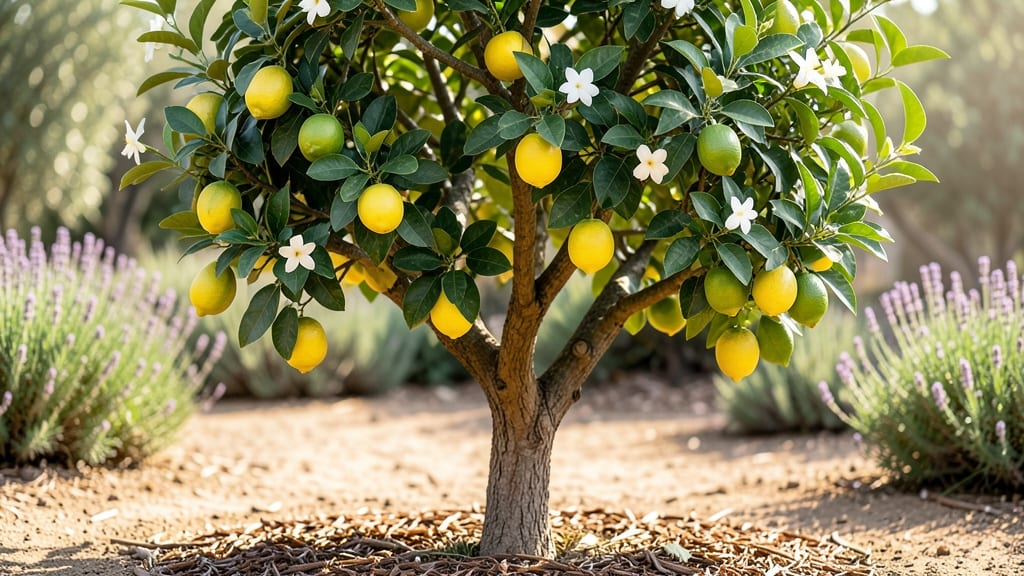
A lemon tree leaf looks like an elongated oval with smooth, serrated edges and a pointed tip, measuring about 2-4 inches long. Its top side is a vibrant, glossy green while the underside is lighter, and it releases a fresh citrus aroma when crushed.
A lemon tree leaf's distinctive shape and scent help set it apart from other citrus varieties. 🌿 The glossy, deep green upper surface reflects light beautifully, while the lighter underside often shows subtle vein patterns that create a delicate lace-like effect.
When you crush a healthy leaf, that unmistakable zesty aroma is your first clue—it's much stronger than what you'd find on a lime or orange leaf. I've used this scent test countless times to confirm I'm working with true lemon foliage, especially when comparing seedlings or grafted trees.
What's interesting is how these leaves change as the tree matures. Younger leaves start out more rounded with softer edges, gradually developing the classic serrations as they grow. This progression helps gardeners identify the plant's age and health status at a glance.
The leaf's size also provides clues—anything consistently smaller than 2 inches might indicate nutrient deficiencies or environmental stress.
💡 In This Article
- Identifying Lemon Tree Leaves by Shape, Texture, and Scent
- How to Spot Healthy vs Diseased Lemon Tree Leaves
Identifying lemon tree leaves by shape, texture, and scent
The lemon tree leaf's oval shape is its most defining feature, typically measuring between 2-4 inches long and 1-1.5 inches wide. What sets it apart from other citrus leaves is the distinct serration pattern along the edges—these jagged, saw-tooth edges create a scalloped appearance when viewed closely.
Under magnification, you'll see each serration ends in a tiny, sharp point, unlike the smoother edges of grapefruit leaves or the rounded lobes of some lime varieties. 🔥
The leaf's texture provides another key identifier: the upper surface is glossy and leathery due to a waxy cuticle that helps conserve moisture in the tree's native Mediterranean climate. This glossiness comes from microscopic wax crystals that reflect light, giving healthy leaves a slightly shiny appearance.
Meanwhile, the underside is lighter green to pale yellow-green and often shows a network of fine veins that create a delicate, almost translucent pattern when held up to light.
What truly distinguishes lemon leaves is their aromatic profile. When you crush a healthy leaf between your fingers, you'll immediately detect a fresh, citrusy scent that's more subtle than the fruit itself but unmistakably zesty.
This aroma comes from limonene and other terpenes released when leaf cells rupture—a chemical defense mechanism that also helps deter pests. Interestingly, this scent becomes more pronounced in morning sunlight, peaking between 8-10 AM when leaf temperatures are optimal for volatile oil production.
Comparing lemon leaves to their citrus cousins reveals subtle but important differences. Lime leaves, for example, tend to be slightly smaller (1.5-3 inches) with more rounded serrations, while orange leaves are broader (1.5-2.5 inches wide) with smoother edges.
The lemon's serrations are also more uniformly spaced than the irregular patterns found on grapefruit leaves. For non-citrus plants, the lemon's leaf shape is most similar to loquat or cherry laurel, but those lack the citrus aroma entirely.
One fascinating aspect is how leaf shape changes with tree maturity. Young lemon tree leaves start as rounder with softer edges, gradually developing the classic serrations as they mature over 4-6 weeks.
This progression is driven by hormonal changes in the growing tips, where auxin concentrations influence cell elongation patterns. The leaf's pointed tip also becomes more pronounced with age, creating the iconic "arrowhead" shape that's so recognizable to experienced gardeners.
For those identifying leaves in the wild, pay attention to the leaf arrangement—lemon trees typically have leaves growing in alternate patterns along the stem, with each leaf attached at a slightly different angle.
This spiral arrangement maximizes sunlight exposure, a key adaptation for citrus trees that thrive in bright, Mediterranean conditions. The combination of serrated edges, glossy texture, and citrus scent creates a visual and olfactory fingerprint that makes lemon leaves instantly recognizable once you know what to look for. ✨