
Pruning
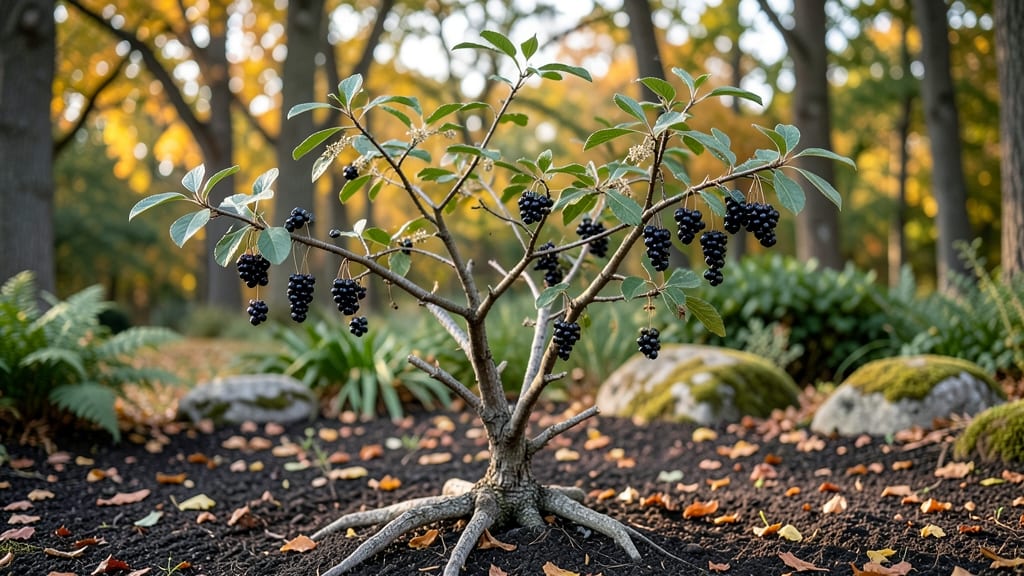
Mastering tree identification with black berries transforms your yard into a wildlife magnet and a year-round beauty spot. 🌿 I’ve spent years tracking these trees—some grow wild, others thrive in cultivated gardens—and the key is noticing leaf shape, bark texture, and berry size before they ripen.
Most black-berry trees prefer full sun and well-draining soil, though a few (like elderberry) tolerate partial shade. The berries feed birds, while the foliage adds structure to landscapes. My go-to trio? Elderberry (fragrant flowers, small clusters), Aronia (tough, disease-resistant), and Hackberry (edible but messy).
You’ll spot them by their distinctive berry clusters—some hang in tight bunches, others dangle singly. A quick leaf rub test reveals differences: smooth edges for elderberry, serrated for hackberry. Whether you’re pruning for shape or planning new plantings, these trees deliver low-maintenance beauty with high rewards. Let’s get identifying!
Natural Factors Behind Black Berries
Black berries on trees aren’t just a visual treat—they’re the result of a fascinating interplay of biology, ecology, and environmental cues. Understanding why these berries form helps gardeners and nature enthusiasts predict growth patterns, troubleshoot issues, and even encourage healthier trees.
Let’s break down the science behind those glossy, dark fruits.
Not all trees produce black berries by chance—it’s often hardwired into their DNA. Many species, like Ilex (holly), Prunus (plum or cherry), or Rhamnus (buckthorn), evolved to develop berries as a survival strategy.
These berries serve as food for wildlife, ensuring seed dispersal. The black pigment is often a result of anthocyanins, antioxidants that protect the fruit from UV damage and attract animals for consumption.
Actionable insight: If you’re identifying a tree, note whether the berries are always black or change color with ripeness. For example, Aronia melanocarpa (black chokeberry) stays deep purple-black, while Sambucus nigra (elderberry) turns from green to black as it matures.
Berries don’t appear overnight—they’re the culmination of sunlight exposure, temperature shifts, and day length. Trees like Viburnum (viburnum) or Cornus (dogwood) rely on photoperiodism, a biological response to changing daylight hours. Shorter days in late summer signal the tree to shift energy from leaves to fruit development.
💡 Pro Tip: Trees in partial shade may produce fewer or smaller berries because they lack sufficient energy from photosynthesis. If your tree isn’t fruiting well, consider pruning nearby branches to improve light penetration.
Drought stress or poor soil can stunt berry production—or even turn them pale or shriveled. Black berries thrive when trees receive consistent moisture during flowering and fruiting stages.
For example, Rubus (blackberry bushes) need 1–1.5 inches of water per week, while Ligustrum (privet) tolerates drier conditions but still benefits from occasional deep watering.
Common pitfall: Over-fertilizing with nitrogen can lead to lush foliage but fewer berries. Instead, use a balanced fertilizer (10-10-10 or 5-10-10) in early spring to support fruiting.
Many black-berried trees are self-pollinating, but some—like Crataegus (hawthorn)—need cross-pollination from bees, birds, or wind. If berries are sparse or fail to develop, check for:
- ✅ Lack of pollinators: Plant companion flowers (e.g., lavender, clover) near your tree to attract bees.
- ✅ Timing issues: Some trees (e.g., Vaccinium—blueberries) require specific temperature cues to release pollen. A late frost can ruin the season.
- ✅ Male vs. female trees: Trees like Ilex glabra (inkberry) need both genders nearby for fruit. If you’re planting, buy a male/female pair or a self-fertile cultivar.
Not all black berries are a sign of health—sometimes they’re a symptom of stress caused by pests or pathogens. For instance:
| Issue | Signs | Solution |
|---|---|---|
| 🐜 Japanese beetles | Berries may appear chewed or drop prematurely. | Handpick beetles or use neem oil sprays. |
| 🍄 Powdery mildew | White fuzzy coating on leaves/berries; berries may stay small or turn black prematurely. | Improve airflow with pruning; apply baking soda spray (1 tsp baking soda + 1 quart water + drop of soap). |
| 🐛 Scale insects | Sticky residue ("honeydew") on berries; black sooty mold grows on the residue. | Wipe infested branches with rubbing alcohol or use horticultural oil. |
🔥 Warning: If berries are unusually large but soft and rotten, it could signal fruit rot (common in Prunus species). Remove affected berries immediately to prevent spread.
Young trees (under 3–5 years) may not produce berries because they’re still growing roots and branches. Similarly, over-pruning can reduce fruiting potential by removing flowering wood. Trees like Sorbus aucuparia (mountain ash) produce berries on second-year wood, so aggressive summer pruning can eliminate next year’s crop.
Best practices:
- 🌿 Prune in late winter/early spring (before buds swell).
- 🌿 Remove only dead or crossing branches—never cut more than 25% of the canopy at once.
- 🌿 For heavy-fruiting trees (e.g., Crataegus), thin branches to improve sunlight penetration.
Quick Fixes for Black-Berried Trees
Got a mystery tree with glossy black berries and no idea how to manage it? Whether you’re dealing with invasive species, safety hazards, or just curious about pruning, here’s your step-by-step guide to solving common issues—plus tips to keep your garden thriving.
Before grabbing pruners, know your tree—because some berries are harmless (or even beneficial), while others are invasive or toxic. Use these quick checks:
- 🔍 Leaf Shape & Arrangement: Are they smooth-edged (like elderberry) or jagged (like poison ivy)? Observe how they grow—alternate (poison ivy) or opposite (Virginia creeper). - 🍇 Berry Clusters: Are they in tight bunches (like bittersweet) or scattered (like pokeweed)?
Note if they’re shiny, waxy, or fuzzy. - 🌳 Bark & Branches: Young trees with smooth bark (e.g., hawthorn) vs. rough, flaky bark (e.g., buckthorn).
Look for thorns—common in hawthorn or blackberry bushes. - 📱 App Backup: Snap photos and use apps like PictureThis or iNaturalist for instant ID.
> ⚠️ Pro Tip: If berries are bright red turning black (like bittersweet) or clustered in grape-like bunches (like Virginia creeper), they’re often invasive. Act fast!
Pruning isn’t just about cutting—it’s about controlling growth, improving health, and preventing spread. Follow these steps:
🔥 When to Prune
- 🌱 Late Winter/Early Spring (Dormant Season): Best for invasive species (e.g., bittersweet, buckthorn). Target before buds swell to avoid stressing the tree.
- 🍂 Fall (After Leaf Drop): Safe for non-invasive trees (e.g., elderberry, hawthorn).
Avoid heavy pruning in late fall—it invites disease. - ❄️ Never in Extreme Heat: Pruning in summer can shock the tree and attract pests.
🍳 Step-by-Step Pruning Guide
- 🔪 Sterilize Tools: Wipe pruners with rubbing alcohol or bleach solution (1:10 bleach:water) to prevent spreading disease.
- 🌿 Remove Dead/Diseased Branches First: Cut at the branch collar (the swollen area where the branch meets the trunk). No stubs!
- 🌳 Thin Out Crowded Branches: Aim for an open center—remove up to 25% of foliage max to avoid stress.
- 🎯 Target Invasive Spreaders: - Bittersweet/Poison Ivy: Cut below the soil line (for underground runners) and above a leaf node (to prevent regrowth). - Buckthorn: Prune aggressively in early spring—this shrub is tough but responds well to heavy cuts.
- 🌱 Encourage Fruitful Trees (Like Elderberry): - Prune after fruiting to shape the tree. - Keep branches airy to improve sunlight penetration.
> ✨ Pro Tip: For blackberry bushes, prune in late winter—cut out old canes (they’re brown and dead) and thin new ones to 6–8 per plant. Wear gloves—thorns are brutal!
Once you’ve pruned, prevent regrowth and invasion with these tactics:
| Problem | Solution | Prevention Hack |
|---|---|---|
| Underground Roots | Dig out all roots (even small ones) and solarize the soil (cover with plastic for 4–6 weeks). | Plant competitive ground covers (e.g., clover) to block sunlight. |
| Seed Spread | Collect and bag berries before they burst. Burn or trash them—do not compost. | Install bird feeders away from berry trees to deter seed dispersers. |
| Aerial Spread | Seal stumps with paint or copper tape to prevent sprouting. | Plant native species that outcompete invasives. |
| Animal Dispersal | Use fencing to block deer/mice from nibbling young shoots. | Offer alternative food sources (e.g., bird feeders) to reduce foraging. |
> 💡 Smart Move: Mulch heavily (3–4 inches) with wood chips around non-invasive trees to suppress weeds and retain moisture.
If your black-berried tree is native and beneficial (like elderberry or serviceberry), focus on encouraging growth:
- 💧 Water Deeply: 1–2 inches per week, especially in drought.
- 🌱 Fertilize Lightly: Use compost or balanced fertilizer (10-10-10) in early spring.
- 🐞 Monitor for Pests: Watch for aphids or Japanese beetles—spray with neem oil if needed.
- 🌿 Prune for Shape: Train young trees with open-center pruning to avoid dense, disease-prone growth.
If your tree is:
- 🌪️ Too large or near power lines (hire a certified arborist).
- 🦠 Infected with fungal disease (e.g., powdery mildew—pruning alone won’t fix it).
- 🏡 On historic property (some invasive species are protected in certain areas).
> 🎯 Final Tip: Document your tree—take before/after photos and note pruning dates. It helps track growth and spot issues early!
Frequently asked questions
Are all black berries on trees edible?
No, many black berries are toxic or unsafe to eat. Common poisonous ones include bittersweet nightshade (bright red turning black) and pokeweed (purple-black clusters). Always verify identification before consuming—when in doubt, assume it's unsafe. Native edible options like elderberry or black chokeberry should be cooked first to remove toxins.
How do I tell the difference between poison ivy and Virginia creeper?
Both have black berries, but their leaves differ dramatically. Poison ivy has three leaflets (\"leaves of three, let it be\") with jagged edges, while Virginia creeper leaves are five-lobed (like a tiny maple leaf). Virginia creeper also has blue-black berries in grape-like clusters and grows as a vine, while poison ivy is a low shrub.
Why do some black berries stay on trees all winter?
Birds and wildlife rely on these berries as winter food sources. Trees like holly or serviceberry keep berries through winter because animals won't eat them until other food is scarce. The berries provide essential nutrients during harsh months. Pruning in late winter won't harm the tree—just avoid cutting branches with remaining berries if you want to support wildlife.
Can I plant blackberry bushes in containers?
Yes, but they need large containers (15+ gallons) with drainage holes. Use well-draining potting mix and place in full sun. Container-grown blackberries may produce smaller yields than in-ground plants. Choose thornless varieties like 'Cheyenne' or 'Natchez' for easier harvesting. Water consistently—containers dry out faster than garden soil.
What's the fastest way to identify a tree with black berries?
Use the leaf-berry-bark method:
- Examine leaf shape/arrangement (alternate vs. opposite),
- Observe berry clusters (tight vs. loose), and
- Check bark texture. For instant ID, take photos and use apps like LeafSnap or iNaturalist. Note whether berries are shiny (like elderberry) or matte (like buckthorn)—this helps narrow it down quickly.