
Flowers
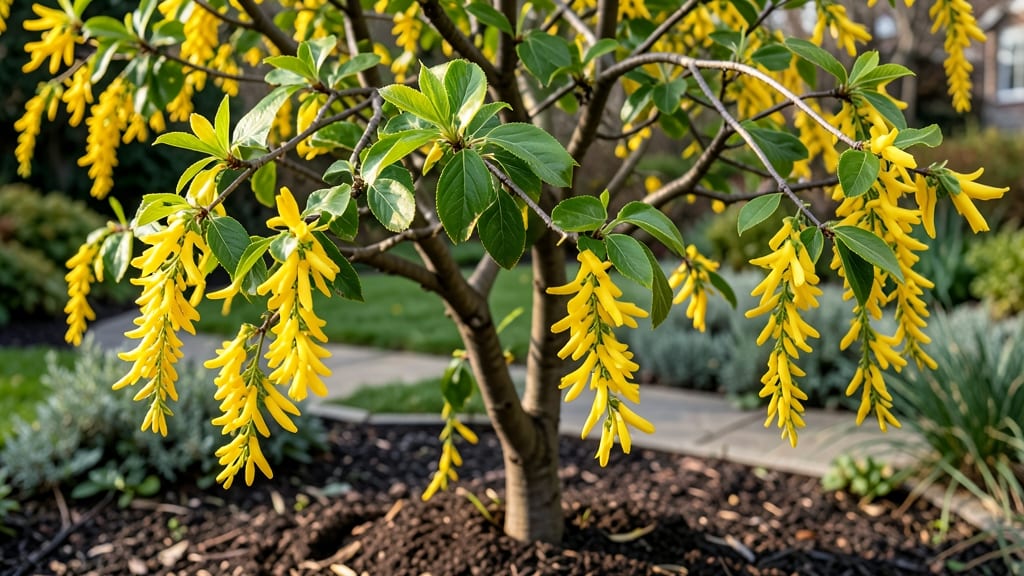
Your garden deserves a tree with green leaves and white flowers that steals the show—no matter the season. ✨ These trees aren’t just pretty; they’re the backbone of a landscape that feels like a postcard year-round, from spring’s delicate blooms to winter’s graceful silhouette.
Think dogwoods with their cloud-like blossoms or magnolias that perfume the air in early spring. They anchor borders, frame patios, or stand alone as a statement piece—each variety offering a different texture and growth habit to play with.
Pair a flowering cherry’s cascading branches with hostas at its base, or let a saucer magnolia’s bold leaves contrast against a sea of perennials. The real magic? Their ability to transform a space with minimal effort. A well-placed tree adds height, structure, and that "wow" factor without demanding constant attention.
And when you prune strategically, you keep those white blooms coming back bigger and brighter every year. Perfect for homeowners who want low-maintenance beauty with high impact. Let’s find your perfect match!
Root Causes Behind Unexpected Blooms
When your tree sports lush green leaves but bursts into unexpected white flowers—especially outside its typical bloom season—it’s often a sign that something (or someone) has nudged its natural rhythms.
Understanding these triggers can help you replicate—or fix—the magic. Here’s why it happens, broken down by the real culprits behind those striking white blooms.
Plants are masters of adaptation, and sometimes, stress forces them to flower earlier or more dramatically than usual. For trees with white blooms (like Halesia carolina, Magnolia stellata, or Cercis canadensis), stress can manifest as:
- Drought or Overwatering:
Too little water triggers xerophytic stress, while soggy roots cause hypoxia (oxygen deprivation). Both disrupt hormone balance, sending signals to produce flowers as a survival mechanism. Action: Monitor soil moisture—aim for consistently moist but well-drained soil.
A moisture meter or the "squeeze test" (grab a handful; if it crumbles, it’s dry; if it sticks, it’s soggy) works.
- Temperature Fluctuations:
Sudden cold snaps or heatwaves confuse the tree’s vernalization process (the internal clock that cues flowering). White-flowering trees like Saucer Magnolia may respond by blooming erratically. Action: Mulch heavily in fall/winter to insulate roots, and provide shade cloth during extreme heat.
- Root Disturbance:
Construction, transplanting, or even aggressive pruning can damage roots, triggering compensatory flowering. The tree prioritizes reproduction over growth to recover. Action: If you’ve recently moved or pruned the tree, avoid heavy root work for at least 6–12 months.
Pruning is a double-edged sword—done right, it encourages blooms; done wrong, it can force untimely or excessive flowering. Here’s how:
- Over-Pruning in Late Winter/Early Spring:
Many white-flowering trees (e.g., Fothergilla, Deutzia) set flower buds the previous summer or fall. Cutting back hard in late winter removes next year’s blooms. Action: Prune right after flowering (never before buds swell) and never remove more than 1/3 of the canopy in one season.
- Under-Pruning (Neglect):
A tree that’s never pruned can become overcrowded, leading to weak, stressed branches. When light and nutrients compete fiercely, the tree may dump energy into flowers to attract pollinators for survival. Action: Thin out dense areas to improve airflow and sunlight penetration.
- Topping or Shearing:
Severely cutting branches back to a stub (topping) or shearing into a flat top disrupts the tree’s natural shape and hormone flow. This can trigger epinastic growth (abnormal stretching) and erratic flowering. Action: Use selective branch removal instead—cut at the branch collar, never flush with the trunk.
White-flowering trees often bloom in response to nutrient shifts. The key players:
| Nutrient | Effect on Flowering | Fix It |
|---|---|---|
| Nitrogen (N) Overload | Excess N promotes leafy growth over flowers, but sudden deficiency (e.g., after heavy rain leaches soil) can trigger compensatory blooming. | Test soil (aim for 0.1–0.2% N for flowering trees). Use a balanced 10-10-10 fertilizer in early spring, not fall. |
| Phosphorus (P) Deficiency | Low P (below 30 ppm) starves roots, forcing the tree to prioritize energy on flowers for reproduction. | Apply bone meal or rock phosphate in early spring. Avoid synthetic P if soil pH is below 6.0—it becomes locked. |
| Potassium (K) Surplus | Too much K (above 0.5%) can delay flowering, but a sudden drop (e.g., after a pot-bound transplant) may trigger blooms. | Use wood ash or greensand for natural K. Avoid synthetic K in late summer. |
Pro Tip: 💡 Evergreen trees with white flowers (like Pieris japonica) often bloom in response to low soil pH. Test your soil—aim for 5.0–6.5. If too acidic, amend with lime gradually.
Some pests and pathogens stress the tree so severely that it flowers prematurely to attract pollinators for seed production. Common culprits:
- Scale Insects or Spider Mites:
These sap-suckers weaken the tree by reducing photosynthesis. The tree responds by flowering early to ensure reproduction before decline. Action: Blast off mites with water spray or treat scale with horticultural oil in dormant season.
- Fungal Infections (e.g., Powdery Mildew):strong>
White fungal growth on leaves (not flowers!) can mimic the desired blooms but actually block sunlight, stressing the tree. Action: Prune for airflow, apply neem oil, and avoid overhead watering.
- Root Rot (Phytophthora):strong>
Waterlogged roots cause systemic stress, leading to stunted growth and erratic flowering. Action: Improve drainage with gravel or raised beds. If severe, consider fungicide drenches (e.g., Subdue).
Warning: ⚠️ If white fungal growth (not flowers) appears on leaves, it’s not the tree’s natural bloom—treat it immediately to prevent spread.
Fixing your tree’s foliage flaws
Reviving your tree’s lush green leaves and delicate white blooms starts with identifying the root cause—and acting fast. Below, we’ve mapped out practical solutions for common issues, from nutrient deficiencies to pests, along with prevention tips to keep your tree thriving year-round. Think of this as your step-by-step care manual!
Signs: Stunted new growth, sparse foliage, or weak branches after aggressive cuts.
How to Fix It: 🔥 Step Back and Assess – Examine the tree’s structure. If you’ve cut too much (especially in one season), growth may take time to recover. Aim to prune no more than 25% of the canopy annually for most trees.
🍳 Encourage Regrowth with Fertilizer – Use a balanced, slow-release fertilizer (like 10-10-10) in early spring. For nutrient-deficient soil, add compost or organic matter to the root zone to boost vitality.
👨🍳 Prune Strategically – Focus on selective pruning to remove only dead, diseased, or crossing branches. Use clean, sharp tools to avoid tearing bark, which invites infections.
⏰ Patience is Key – New leaves and flowers may take 6–12 months to bounce back. Avoid heavy pruning for at least a year to let the tree recover.
💡 Prevention Tip:
- Prune in late winter or early spring (just before new growth starts) to minimize stress.
- Never prune during flowering season—this can reduce next year’s blooms.
Signs: Wilting leaves, yellowing edges, or flowers dropping prematurely.
How to Fix It: 🌡️ Check Soil Moisture – Stick your finger 2–3 inches deep into the soil. If it’s dry, water deeply. If soggy, hold off and improve drainage.
🔥 Deep Watering Routine – Water slowly and deeply (1–2 inches per week) rather than frequent shallow watering. Use a soaker hose or drip irrigation for even distribution.
🥗 Improve Drainage – If your tree sits in a low spot, create a slight mound of soil around the base or install a French drain to redirect excess water.
💡 Prevention Tip:
- Mulch properly – Apply 2–4 inches of organic mulch (like wood chips) 3 inches away from the trunk to retain moisture and regulate temperature.
- Avoid overhead watering – Wet foliage can lead to fungal diseases. Water at the base instead.
Signs: Holes in leaves, sticky residue (sap), black spots, or white webbing.
How to Fix It: 🔪 Identify the Culprit – Common pests include aphids, spider mites, or scale insects. Diseases like powdery mildew (white fungal growth) or bacterial leaf spot (dark lesions) may also be to blame.
💪 Natural Remedies First –
- Neem oil spray (1 tsp per quart of water) – Effective against soft-bodied pests like aphids.
- Horticultural oil – Smothers pests like scale insects (apply in early spring or fall).
- Beneficial insects – Release ladybugs or lacewings to prey on pests naturally.
🌡️ Fungal Issues? – If you spot white powdery growth, treat with baking soda spray (1 tbsp baking soda + 1 tsp soap + 1 gallon water) or copper fungicide.
💡 Prevention Tip:
- Inspect regularly – Catch problems early by checking undersides of leaves and new growth weekly.
- Remove fallen leaves/debris – This reduces hiding spots for pests and fungal spores.
Signs: Pale green or yellow leaves, weak stems, or poor flowering.
How to Fix It: 📊 Soil Test First – Send a sample to your local extension office to check for deficiencies in nitrogen (N), phosphorus (P), or potassium (K).
🍎 Targeted Fertilizing –
- For yellow leaves (nitrogen deficiency): Use a high-nitrogen fertilizer (like blood meal) in spring.
- For weak roots (phosphorus deficiency): Apply bone meal or rock phosphate in early spring.
- For poor disease resistance (potassium deficiency): Use greensand or wood ash (sparingly).
✨ Organic Boost – Mix compost, worm castings, or fish emulsion into the soil around the root zone for a slow-release nutrient punch.
💡 Prevention Tip:
- Fertilize in early spring (just as new growth begins) and avoid late-season feeding, which can encourage tender new growth vulnerable to frost.
Final Thought: Most tree issues are preventable with consistent care—think of pruning like a haircut (too much too often = disaster), watering like a spa treatment (not too much, not too little), and feeding like a balanced diet.
With these fixes, your tree’s green leaves and white flowers will be back in full bloom in no time! 🌸🌿
Frequently asked questions
Which trees with green leaves and white flowers are best for small gardens?
For compact spaces, consider Japanese flowering cherry (Prunus serrulata 'Kwanzan') or dwarf saucer magnolia (Magnolia 'Little Gem'). Both stay under 15–20 feet tall while delivering stunning white blooms. Fothergilla ('Mount Airy') is another great choice—its bottlebrush-like flowers and vibrant fall color fit perfectly in tight spots. All three thrive in partial shade and need minimal pruning.
Do white-flowering trees attract more pollinators than other colors?
Yes! White flowers are highly visible to bees, butterflies, and moths—especially in low-light conditions. Trees like dogwood (Cornus florida) and crabapple (Malus) are pollinator magnets because their white blooms reflect UV light, which insects see as signals. For maximum impact, plant them near pollinator-friendly perennials like lavender or coneflowers.
Can I grow a white-flowering tree in a container?
Dwarf varieties like Japanese maple (Acer palmatum 'Snow Fountain') or pyracantha (Pyracantha 'White Snow') thrive in large containers (15+ gallon pots) with well-draining soil. Use a mix of potting soil and perlite, and repot every 2–3 years. Just ensure the container gets adequate sunlight (matching the tree's needs) and winter protection in cold climates.
Why does my tree's foliage turn yellow after flowering?
Yellowing leaves after blooming often signal nutrient depletion or overwatering. White-flowering trees like magnolias use up stored energy during bloom season. To fix it, apply a balanced fertilizer (10-10-10) in early spring and adjust watering—soil should stay moist but not soggy. If yellowing persists, test soil pH (ideal range: 5.5–6.5 for most species).
What's the best way to prune for maximum white blooms next year?
Timing is key! Prune right after flowering (never in late winter/early spring) to preserve next year's buds. For most white-flowering trees, remove only dead, crossing, or overcrowded branches—never cut more than 25% of the canopy at once. Use clean, sharp tools and cut just outside the branch collar. Avoid heavy pruning on dogwoods or magnolias—they bloom on old wood.