
Pruning
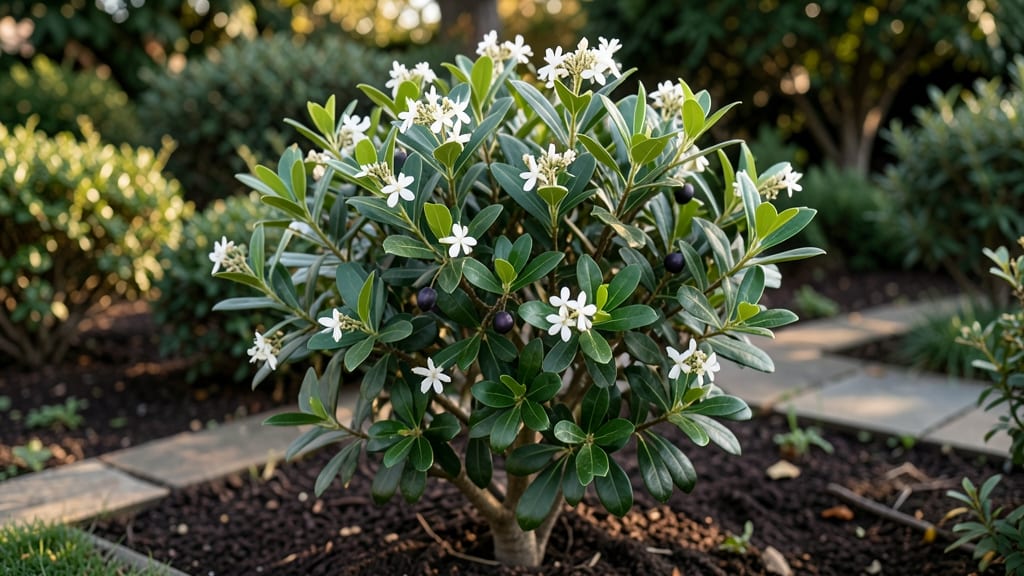
Tea olive tree care is the secret to keeping your Osmanthus fragrans lush and fragrant all year. ✨ I’ve pruned mine every spring for three years now, and the difference in shape, growth, and those heavenly blooms is night and day. The key is timing—cut back just as new growth starts, but before the flowers appear, and you’ll encourage dense, healthy branches that stay full of life.
You only need a few basic tools: sharp pruning shears (clean and sharp is critical), gloves to protect your hands from the tiny leaves, and a bucket to collect your clippings.
Tea olives respond well to light shaping, so don’t go overboard—aim to remove no more than 20-25% of the plant at once. The goal is to open up the center for airflow and sunlight, which keeps pests at bay and prevents fungal issues.
What you’ll end up with is a tree that stays compact, vibrant, and loaded with those signature tiny white flowers that smell like sweet jasmine. The fragrance alone makes it worth the effort, but the shape?
It’ll be the envy of your neighborhood. Pruning also encourages new growth, so you’ll see fresh, glossy leaves popping up within 4-6 weeks of your cuts.
This method works for both container-grown tea olives and those planted in the ground, whether you’re in a warm climate like Zone 8 or a cooler one like Zone 7 with winter protection.
Just adjust your pruning schedule slightly—cooler zones might need to wait until after the last frost to avoid damaging tender new growth.
📚 In This Guide
- What you need
- Instructions
- Tips and common mistakes
- Wrapping up and next steps
What you need
- ● Pruning shears: Bypass pruners (sharp, clean, and sterilized) for small branches (4–6 inches). Example: Felco F-2 or Corona Classic.
- ● Loppers: For medium branches (½–2 inches in diameter). Example: Fiskars X7 or Bahco.
- ● Pruning saw: For thick branches (2+ inches). Example: Fiskars PowerGear or Felco F-12.
- ● Gloves: Heavy-duty, cut-resistant gloves (e.g., Mechanix Wear or Pyramex) to protect hands from thorns and sap.
- ● Disinfectant: 70% isopropyl alcohol or a pruning sealant (e.g., Tanglefoot Pruning Seal) to prevent disease spread.
- ● Marking twine or tape: For identifying branches to remove or keep during pruning.
- ● Bucket or bag: To collect pruned branches (for composting or disposal).
- ● Ladder or stool: If your tree is taller than 6 feet (ensure it’s stable and non-slip).
- ● Hand pruners with a crimping tool: For sealing larger cuts and reducing sap flow.
- ● Tree wound dressing: (e.g., Tree Seal Tape) for extra protection on major cuts.
- ● Notebook or app: To track pruning dates, growth patterns, and notes (e.g., iNaturalist or a simple journal).
- ● Safety goggles: To shield eyes from debris, especially when using a saw.
- ● Hose or water spray: For rinsing tools and cleaning sap off branches post-pruning.
- ● Know your tree’s age and size: Young trees (under 3 years) need light pruning (focus on shaping), while mature trees may require structural pruning.
- ● Check the season: Prune in late winter or early spring (before new growth) for best results.
- ● Weather conditions: Choose a dry, overcast day to avoid stressing the tree.
- ● Safety first: Ensure the area around the tree is clear of pets, kids, and tripping hazards.
Step-by-step tea olive tree pruning guide
Here's how I keep my tea olive trees thriving with clean cuts and strategic shaping.
✂️ Step 1: Prune in Late Winter or Early Spring
Timing matters most with tea olives. I always prune just as new growth begins—typically February through March in most climates. This lets the tree recover before summer heat stress. Avoid pruning in fall or winter when the tree is dormant, as you'll risk exposing it to cold damage.
Look for swollen buds along the branches—these signal the tree is waking up. Prune when you see at least 20% of buds showing color. If you wait too long, you'll encourage excessive new growth that won't harden off before winter.
🌿 Step 2: Remove Dead, Diseased, or Crossing Branches First
Start by eliminating any branches that are dead, diseased, or rubbing against others. These compete with healthy growth and invite pests. Use clean, sharp pruners to make cuts at a 45-degree angle, about ¼ inch above a bud or lateral branch. Never leave stubs—they invite rot and weaken the tree.
I always work from the inside out. Remove branches growing straight up or inward first, then shape the outer canopy. This opens up the center for airflow, preventing fungal issues. Watch for branches with dark spots, oozing sap, or hollow centers—these need immediate removal.
☀️ Step 3: Thin the Canopy for Sunlight Penetration
Tea olives need 6+ hours of sunlight daily, so thinning the canopy is critical. Focus on removing 30-40% of the oldest, thickest branches to let light reach the inner growth. Start at the bottom and work upward, removing branches that block light from penetrating the center.
I aim for an open, vase-like shape—this encourages even growth and prevents the tree from becoming top-heavy. When thinning, cut back to a lateral branch or bud, never to a stub. You'll see new shoots emerge within 4-6 weeks as the tree responds to the improved light.
⏰ Step 4: Shape the Tree for Balance and Aesthetics
Now for the fun part—shaping! Tea olives respond well to training, so I use this step to refine the tree's form. For a formal look, I prune to encourage a single trunk with evenly spaced branches. For a more natural shape, I allow multiple trunks and let branches grow organically.
Use hand pruners for branches under ½ inch thick and loppers for thicker branches. Always cut just above a bud or branch collar, and avoid leaving stubs. Step back frequently to check balance—you want the tree to look full but not crowded. A well-shaped tea olive will have even foliage distribution and no bare spots.
💧 Step 5: Post-Pruning Care for Recovery
After pruning, the tree needs time to recover. Water deeply once a week for 4 weeks to help it establish new growth. Avoid fertilizing immediately—wait until you see new leaves emerging, usually in 6-8 weeks. This gives the tree time to redirect energy to healing.
Monitor the pruned areas for 2-3 weeks to ensure no signs of stress like yellowing leaves or wilting. If you notice any issues, reduce watering slightly and avoid further pruning until the tree stabilizes. A properly pruned tea olive will show vigorous new growth within 8-10 weeks.
Tips & tricks for perfect tea olive tree pruning
Confession: I skipped proper pruning for years and wondered why my tea olive trees never looked their best. Here's what I learned the hard way—and what you can do differently.
Timing is Everything: The February through March window isn't just arbitrary—it's when your tree's natural growth cycle kicks into gear. That 20% bud color rule is your best friend: if you see fewer buds showing color, wait a few days. Pruning too early can shock the tree, while waiting too long risks encouraging weak, late-season growth that won't survive winter. I mark my calendar for mid-February every year now to avoid this mistake.
The 45-Degree Angle Secret: That precise cut angle in Step 2 isn't just for looks—it prevents water from pooling in the wound, which would otherwise invite rot. I use a small pencil to trace the cut line before making it, ensuring perfect alignment every time. For branches thicker than your wrist, consider using a pruning saw to avoid tearing the bark. Remember, clean cuts heal faster than jagged ones.
Light Penetration Strategy: The 30-40% thinning target might seem aggressive, but trust me—your tree will thank you. I start at the bottom because lower branches often block sunlight from reaching the canopy. After pruning, I always step back 10 feet to check my work: if I can see through the center to the sky, I've done it right. This open structure also makes future pruning much easier.
Recovery Monitoring: Those first 2-3 weeks after pruning are critical. I keep a small notebook by my tree to track any changes—yellowing leaves, wilting, or unusual sap flow are all red flags. If you notice any stress signs, reduce watering immediately and avoid fertilizing until new leaves appear. The 8-10 week growth timeline is your reward for patience—you'll see it in the lush, healthy foliage that develops.
Pro Tips for Tea Olive Tree Care
- Confession: I skipped proper pruning for years and wondered why my tea olive trees never looked their best.
- Timing is Everything: The February through March window isn't just arbitrary—it's when your tree's natural growth cycle kicks into gear.
- The 45-Degree Angle Secret: That precise cut angle in Step 2 isn't just for looks—it prevents water from pooling in the wound, which would otherwise invite rot.
Frequently asked questions
Got questions about keeping your tea olive tree thriving? Here are answers to the most common ones—so you can prune with confidence and keep your tree looking its best year-round!
When is the best time to prune a tea olive tree?
The ideal time is late winter or early spring, just before new growth begins. This encourages healthy, vigorous regrowth. You can also do light pruning in summer to shape the tree, but avoid heavy cuts during fall or winter to prevent stress or frost damage.
Can I prune a tea olive tree in winter?
While you can do minimal pruning in winter (like removing dead branches), avoid heavy cuts. Cold temperatures and dormancy can slow healing. If you must prune, wait until after the last frost—typically late winter—for the best results.
How do I know if I’m over-pruning my tea olive tree?
Watch for yellowing leaves, stunted growth, or bare spots—signs of stress. Tea olive trees can handle 25-30% of their foliage removed annually, but excessive pruning weakens the tree. Space cuts out over 2-3 years for gradual shaping.
What should I do if my tea olive tree isn’t leafing out after pruning?
Check for underwatering, over-fertilizing, or pest damage. Ensure it’s in full sun (6+ hours daily) and well-drained soil. If new growth still doesn’t appear, test soil pH (6.0-7.0 is ideal) or consult a local arborist.
Can I shape a tea olive tree into a standard (single-trunk) form?
Yes! Start by removing competing branches early, leaving the strongest central leader. Use tie-downs to guide the trunk upright and prune lower branches to open the canopy. Be patient—it may take 2-3 years to achieve a clean, formal look.
Wrapping up and next steps
Caring for your tea olive tree doesn’t have to be complicated—just consistent!
With the right pruning techniques, you’ll enjoy a lush, healthy tree year-round, whether you’re shaping it for aesthetics or optimizing fruit production. 🌿 Start small, observe your tree’s growth, and soon you’ll have a thriving green companion that rewards your effort.
Ready to take the next step? Grab your tools, pick a sunny day, and get pruning! Your tea olive tree will thank you with vibrant leaves and delicious olives (or tea leaves, if you’re growing that variety). Happy gardening! 🌱✨