
Pruning
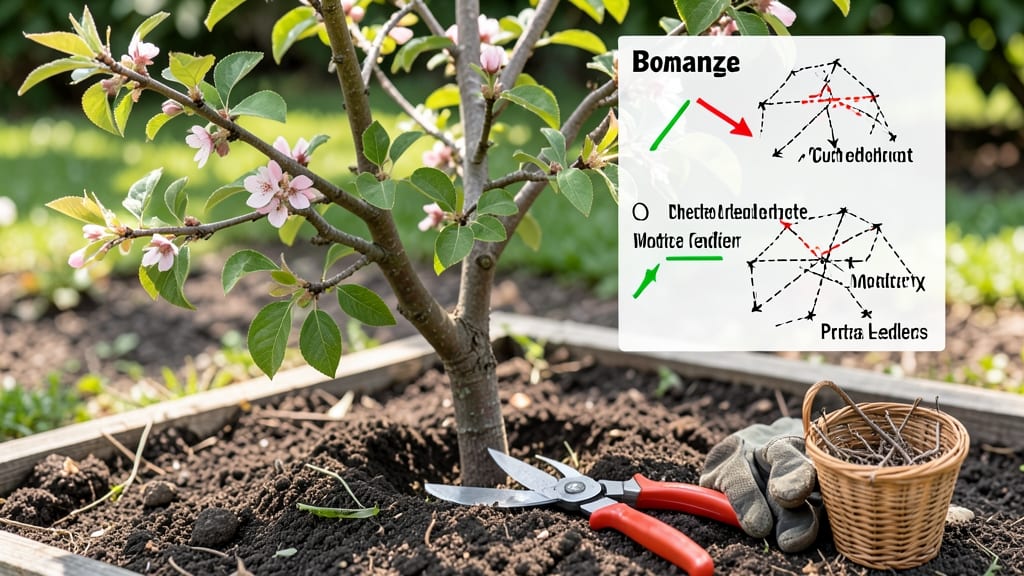
A small peach tree pruning diagram could be your secret to 100% more fruit next summer—if you cut at the right time and in the right places.
Most guides skip the visuals that actually show where to make those cuts, but without proper pruning, your tree will either grow too leggy or produce tiny, bitter peaches. Start with the basics: you’ll need sharp pruners, rubbing alcohol (to sterilize between cuts), and a clear day to work.
The best time to prune is late winter or early spring, while the tree is still dormant but before buds swell. This gives your peach tree the energy to focus on fruit production instead of repairing damaged branches.
You’ll end up with a tree that’s easier to reach, produces larger fruit, and has fewer disease-prone spots. The cuts themselves are simple once you see the diagram—just follow the angles and the "open vase" shape. I’ll show you exactly where to trim to encourage strong growth and better airflow.
This method works for dwarf peach trees, standard-sized trees, and even container-grown varieties. Let’s get those branches shaped for a healthy, productive harvest!
📚 In This Guide
- What you need
- Instructions
- Tips and common mistakes
- Wrapping up and next steps
What you need
- ● Pruning shears: Bypass pruners (for clean cuts on small branches, 4-6 inches long). Quantity: 1 pair.
- ● Loppers: Long-handled (for thicker branches, 8-12 inches). Quantity: 1 pair.
- ● Hand saw: Pruning saw with fine teeth (for stubborn, larger branches). Quantity: 1.
- ● Disinfectant: 70% isopropyl alcohol or diluted bleach (to sterilize tools between cuts). Quantity: Small bottle.
- ● Rubbing alcohol or bleach solution: 1 part bleach to 9 parts water (for cleaning tools). Quantity: As needed.
- ● Garden twine or tape: For temporary support (if needed for weak branches). Quantity: Small roll.
- ● Gloves: Heavy-duty gardening gloves (to protect hands from thorns and sap). Quantity: 1 pair.
- ○ Pruning sealant: Optional but recommended for large cuts (to prevent disease). Quantity: Small tube.
- ● Pruning diagram or sketch: Printed or digital small peach tree pruning diagram for reference.
- ● Marking spray: White or colored (to mark branches for removal).
- ● Ladder or stool: Stable and tall enough (for reaching higher branches).
- ● Sharpie or label tags: For labeling cuts (if tracking growth stages).
- ● Trash bag: For collecting pruned branches (keep workspace clean!).
Step-by-step cuts for pruning a small peach tree
Here’s how I prune my peach tree each year to keep it productive and healthy—no fancy tools needed.
Remove Dead or Diseased Branches First
Start by scanning the tree for branches that are brown, brittle, or showing signs of disease like black spots or fungal growth. These branches won’t recover and will only spread problems to healthy wood. Use clean, sharp pruners to cut these branches back to the main trunk or a healthy lateral branch. Make your cuts at a 45-degree angle, about ¼ inch above a outward-facing bud—this encourages new growth in the right direction.
If a branch is thicker than your pruners can handle, use a pruning saw instead. Always sterilize your tools with rubbing alcohol between cuts to prevent spreading disease. I like to work when the tree is dormant in late winter, but you can prune lightly after harvest too.
Thin Out Crowded or Crossing Branches
Next, look for branches that are growing toward the center of the tree or crossing over others. These compete for sunlight and air circulation, which weakens the tree and invites pests. Remove one of the two crossing branches, cutting back to a lateral branch or the trunk. Always remove the weaker branch—it’s usually thinner or has fewer leaves.
Pay special attention to branches that rub against each other. Even small friction wounds can become entry points for disease. After each cut, step back and visualize the tree’s shape. You’re aiming for an open center that lets sunlight reach all branches evenly.
Shape the Tree for Airflow and Light
Now focus on the tree’s overall structure. Peach trees thrive with a modified central leader shape—one main trunk with scaffold branches spaced 12-18 inches apart along the trunk. Prune back any branches that grow too close together or upward at sharp angles. Cut these back to a side branch or bud that grows outward.
For young trees, limit yourself to no more than 25% of the tree’s foliage in one pruning session. Over-pruning stresses the tree and reduces fruit production. If you’re unsure, err on the side of caution—you can always prune more next year.
Prune for Fruit Production
To encourage fruit-bearing branches, look for water sprouts—fast-growing, vertical shoots that steal energy from fruit production. Cut these back to a lateral branch or bud. Also, prune back last year’s fruit spurs (short, stubby branches with clusters of fruit) by one-third to promote new growth while keeping the tree’s shape.
Finally, remove any suckers—shoots growing from the base of the tree. These compete with the main tree for nutrients. Cut them off at ground level. This step ensures the tree’s energy goes toward developing strong branches and fruit, not unwanted growth.
Clean Up and Monitor
After pruning, rake up and dispose of all clippings—don’t leave them on the ground, as they can harbor disease. Sterilize your tools again with rubbing alcohol to prevent cross-contamination. Water the tree deeply to help it recover from the stress of pruning.
Keep an eye on the tree in the weeks following pruning. If you see new shoots growing where you didn’t cut, that’s a good sign—it means the tree is responding well. Avoid fertilizing immediately after pruning, as new growth is more susceptible to pests and disease.
Tips & tricks for pruning a small peach tree
Pruning a peach tree might seem intimidating at first, but these practical tips will help you achieve a healthier, more productive tree with confidence.
Tool Preparation: Sterilizing your tools between cuts is non-negotiable. I keep rubbing alcohol in a small spray bottle near my work area and give my pruners a quick wipe after every 3-4 cuts. This prevents spreading disease from diseased branches to healthy ones. For thicker branches, I use a pruning saw with a clean blade—never reuse a dirty saw on healthy wood.
Visualizing the Tree's Future: After each cut, step back and visualize the tree's shape. Imagine sunlight filtering through the branches—you want an open center that lets light reach all parts. In Step 3, when shaping for airflow, look for branches growing straight up (called "vertical dominants") and cut them back to encourage outward growth. This modified central leader shape is key for peach trees.
Seasonal Timing Insight: While late winter dormancy is ideal, you can do light pruning after harvest too. If you prune in summer, focus only on removing water sprouts and suckers—avoid major structural cuts. The tree's natural healing process works best when you time cuts with its growth cycles.
Pruning for Fruit Quality: In Step 4, when pruning fruit spurs, cut back by exactly one-third to maintain their shape. These spurs produce most of your fruit, so preserve their structure. For water sprouts, cut them back to a lateral branch—never leave a stub. This redirection of energy leads to stronger fruit-bearing branches next season.
Pro Tips for Small Peach Tree Pruning Diagram
- Pruning a peach tree might seem intimidating at first, but these practical tips will help you achieve a healthier, more productive tree with confidence.
- Tool Preparation: Sterilizing your tools between cuts is non-negotiable.
- Visualizing the Tree's Future: After each cut, step back and visualize the tree's shape.
Frequently asked questions
When is the best time to prune a small peach tree?
The ideal time is late winter or early spring (before buds swell) to avoid disease risks. For young trees, prune during dormancy (Dec–Feb) to establish strong structure. Avoid pruning in fall—it can leave wounds vulnerable to pests. Pro tip: If you must prune in summer, do it after harvest to reduce stress.
How much can I cut off a young peach tree?
For young trees (under 3 years), remove no more than 20–25% of the foliage per year. Focus on dead, crossing, or weak branches. Over-pruning stresses the tree and delays fruiting. Example: If your tree has 50 branches, trim 10–12 carefully.
What if I accidentally prune too much?
Don’t panic! If you’ve removed too many branches, the tree may recover but could take a season to bounce back. Fix it by:
- Watering deeply to reduce shock.
- Avoiding fertilizers for 4–6 weeks.
- Monitoring for pests (stressed trees attract them).
Should I prune peach trees the same way as other fruit trees?
Not exactly! Peach trees are more sensitive to disease (like bacterial leaf spot) from deep cuts. Use clean, sharp tools and avoid leaving stubs. Also, peaches fruit on last year’s wood, so prune lightly to preserve fruiting branches. Key difference: Open the canopy more than apples but less than pears.
Can I prune a peach tree in containers or small spaces?
Yes! Container-grown peach trees need regular pruning to control size and shape. Trim back by 1/3 of new growth in spring, and remove any branches rubbing against the pot. Bonus: Dwarf varieties (like ‘Bonanza’) are perfect for small spaces—prune them like mini versions of standard trees!
What tools do I need beyond basic pruners?
For small peach trees, hand pruners and loppers are usually enough. For thicker branches (over 1 inch), a pruning saw works best. Don’t forget:
- Rubbing alcohol (to sterilize cuts).
- Sealing compound (for large wounds).
- Gloves (peach trees can be thorny!).
Wrapping up and next steps
Pruning your small peach tree may seem daunting at first, but with the right diagram and techniques, you’ll soon be shaping a thriving, fruit-bearing tree! 🌱 The key takeaways? Focus on removing dead or crossing branches, opening the canopy for sunlight, and encouraging airflow to prevent disease.
A little effort now means bigger harvests and healthier growth later.
Ready to take the next step? Grab your pruners, study your small peach tree pruning diagram, and get started—your future peach pies will thank you! 🍑✨ For extra confidence, mark your calendar for seasonal pruning reminders and watch your tree flourish.