
Pruning
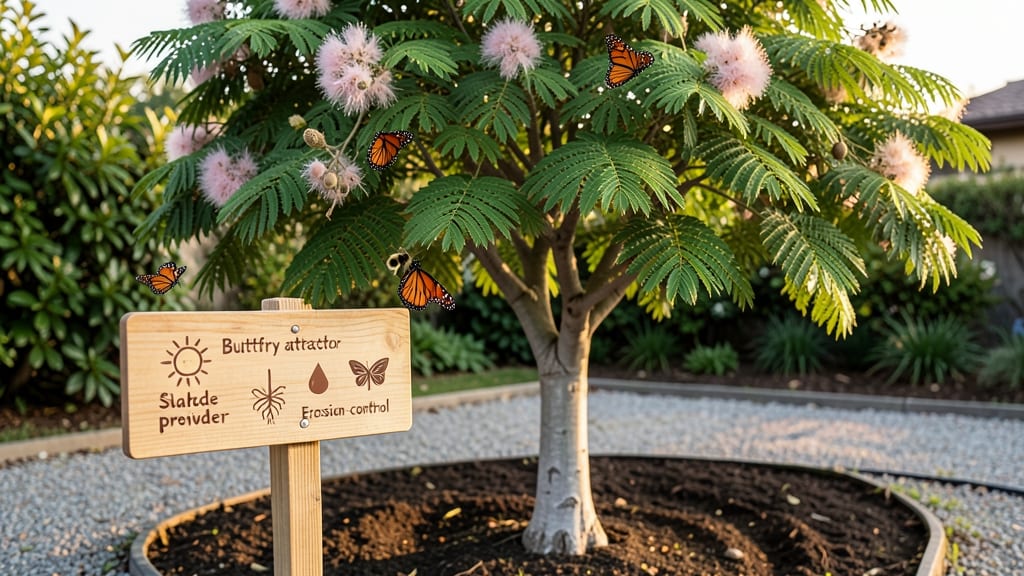
The Persian silk tree uses are diverse and valuable for landscaping, offering rapid shade growth, drought-resistant foliage, and minimal maintenance. Their ornamental purple blooms and distinctive seed pods enhance visual appeal while adapting to poor soil quality.
The Persian silk tree uses in both urban and rural settings stem from its hardy nature. 🌿 Their deep root systems access water efficiently, making them ideal for dry climates where other shade trees struggle.
I've seen them transform neglected areas into lush green spaces with minimal watering—once established, they require very little attention. The combination of their drought tolerance and fast growth makes them a favorite for eco-conscious landscapers looking to reduce irrigation needs without sacrificing beauty.
Beyond their practical benefits, Persian silk trees offer year-round interest. The purple flowers appear in spring, followed by silky seed pods that add texture to winter landscapes.
Their ability to tolerate alkaline or sandy soils means they'll thrive where many other trees would fail, making them perfect for coastal regions or areas with poor drainage. Plus, their non-invasive root systems prevent damage to sidewalks or foundations.
💡 In This Article
- How Persian Silk Trees Adapt to Harsh Climates
- Best Landscaping Applications for Persian Silk Trees
How Persian silk trees adapt to harsh climates
Persian silk trees—scientifically known as Albizia julibrissin—have evolved remarkable adaptations that let them thrive in conditions where many other trees would struggle. Their deep taproot system can extend up to 10 feet below the surface, allowing them to access groundwater that shallow-rooted trees like maples or willows can't reach.
This adaptation is particularly valuable in drought-prone regions, where surface moisture evaporates quickly. 🌵 The roots also release allelochemicals that suppress competing weeds, reducing water competition in their immediate vicinity.
Their compound leaves (each made of 10-20 leaflets) work like tiny solar panels, maximizing photosynthesis while minimizing water loss. The leaflets fold inward during hot afternoons—a behavior called nyctinasty—to reduce exposure to direct sunlight, cutting transpiration by up to 30%.
Unlike oaks or pines, which require rich, moist soil, Persian silk trees flourish in sandy, alkaline, or nutrient-poor conditions, thanks to their ability to form symbiotic relationships with nitrogen-fixing bacteria in their root nodules. This lets them grow in areas where other shade trees would yellow and wilt.
Heat tolerance is another standout feature. These trees can withstand temperatures up to 110°F without permanent damage, thanks to their high stomatal resistance (a physiological trait that limits water loss through leaf pores). In contrast, popular shade trees like sycamores or sweetgums often show leaf scorch at 95°F or higher.
Their silvery-gray bark also reflects sunlight, reducing heat absorption by the trunk. This combination of traits makes them ideal for urban heat islands, where pavement and buildings amplify temperatures.
What sets them apart from other drought-resistant trees (like mesquite or palo verde) is their fast growth rate. While mesquite might take 10 years to reach 20 feet, a Persian silk tree can hit that height in just 5-7 years, providing shade almost immediately.
Their minimal maintenance needs—requiring only one deep watering per month once established—make them a low-stress choice for busy gardeners or water-conscious communities.
One lesser-known adaptation is their seed pod resilience. The fuzzy, cotton-like pods (often mistaken for silk) insulate the seeds against extreme temperatures, allowing them to germinate even after being buried for months.
This trait has made them a natural survivor in Mediterranean climates, where summer droughts and winter freezes are common. Their ability to self-seed also means they’ll gradually expand their territory without human intervention.
For comparison, consider a live oak, which demands well-draining, acidic soil and consistent moisture. A Persian silk tree, by contrast, will grow in pH levels from 6.0 to 8.5 and tolerate brief periods of flooding—a flexibility that opens up far more planting options.
Their non-invasive roots also avoid the structural damage that willow or poplar trees can cause to sidewalks or foundations.
If you're dealing with poor soil, high heat, or limited water, the Persian silk tree’s adaptations make it a standout performer. Its ability to thrive where others fail isn’t just luck—it’s the result of millions of years of evolution in harsh environments. 💫