
Pruning
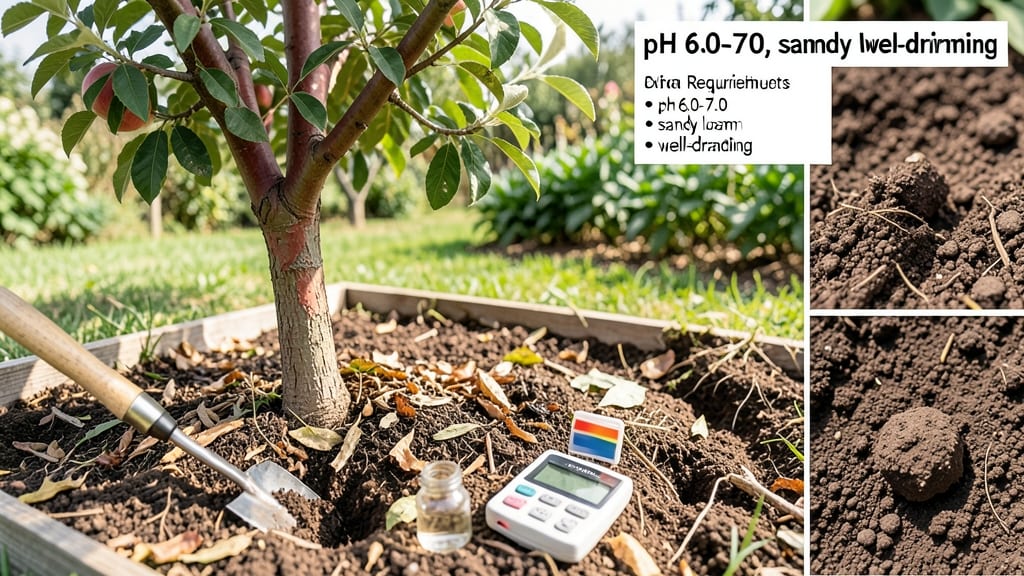
Peach tree soil requirements are the foundation of a thriving orchard—get them right, and your 🍑 tree will reward you with juicy fruit for decades.
Picture this: You’ve planted your peach tree, only to watch it struggle with stunted growth or poor fruit set. The issue might not be pests or disease—it’s often the soil. Too much clay? Too sandy?
The wrong pH? These factors directly impact root health, nutrient uptake, and even flavor. But don’t worry—with the right adjustments, you can turn even tricky soil into a powerhouse for peach production.
The ideal conditions for a peach tree include a slightly acidic pH of 5.5 to 6.5, well-draining soil (think loamy or sandy loam), and plenty of organic matter. Heavy clay or alkaline soils can choke roots, while poor drainage leads to root rot.
I’ll walk you through testing your soil, fixing common problems, and keeping your tree fed for maximum harvests.
From regional tweaks for sandy soils to nutrient schedules that boost fruit quality, this guide covers everything you need to give your peach tree the perfect growing environment. Let’s dig in!
Optimal pH, drainage & soil texture for peach trees (with fixes for common problems)
Peach trees thrive when their soil conditions mimic their natural habitat—well-draining, slightly acidic, and rich in organic matter. The right mix ensures strong root growth, vibrant blooms, and sweet, juicy fruit.
Without it, you’ll battle stunted growth, leaf yellowing, or even nutrient deficiencies that kill fruit set. Let’s break down the ideal soil requirements and how to fix common issues.
First, peach trees demand a pH range of 5.5 to 6.5. This slightly acidic environment unlocks essential nutrients like iron, zinc, and manganese—critical for leaf health and fruit development.
If your soil tests higher (alkaline) or lower (acidic), roots struggle to absorb these nutrients, leading to chlorotic leaves or poor flowering. Drainage is equally critical; soggy soil invites root rot, while sandy soil drains too quickly, starving roots of moisture.
Here’s a quick reference for your peach tree’s soil needs:
For alkaline soils (common in arid regions), aim to lower the pH by adding elemental sulfur or peat moss. Work 1–2 pounds of sulfur per 100 square feet into the top 6 inches of soil 2–3 months before planting.
Test again in spring to monitor progress. Acidic soils, on the other hand, need a boost of pelletized lime (apply 5–10 pounds per 100 sq ft) to raise pH gradually.
If your soil is heavy clay, improve drainage by mixing in coarse sand or perlite (1 part sand to 3 parts clay). For sandy soils, blend in compost or coconut coir to retain moisture and nutrients.
A simple DIY test: Grab a handful of moist soil—if it crumbles easily, it’s too sandy; if it forms a tight ball, it’s too clay-heavy. Aim for a loamy texture that holds moisture without waterlogging.
Mulching plays a dual role: it regulates soil temperature and prevents moisture loss. Use wood chips or straw (3–4 inches deep) around the tree’s drip line, keeping mulch 6 inches away from the trunk to avoid rot.
Avoid synthetic mulches—they can alter soil chemistry over time. Organic mulches break down slowly, enriching the soil as they decompose.
Compacted soil is a silent killer for peach trees. To fix it, aerate annually with a manual aerator or fork, creating holes 6–8 inches deep. Top-dress with compost tea or worm castings to encourage microbial activity, which fluffs up dense soil naturally.
Avoid heavy foot traffic around the root zone—it compacts soil faster than you think.
One often-overlooked factor is soil depth. Peach trees need at least 18–24 inches of loose soil for roots to spread. If your yard has shallow topsoil, consider planting in a raised bed or amending the native soil with topsoil and compost to a depth of 2 feet.
This mimics the deep, fertile layers peach trees crave in their native habitats.
Finally, regional differences matter. In cooler climates (USDA Zones 5–7), focus on drainage and organic matter to prevent winter waterlogging. In hot, dry zones (Zones 8–10), prioritize moisture retention by adding hydromulch or hydrogel crystals to sandy soils.
Always test your soil before planting—local extension offices offer affordable pH and nutrient tests.
When soil conditions are perfect, your peach tree rewards you with vibrant growth, abundant blooms, and fruit so sweet it tastes like summer. Start with these fixes, and you’ll be well on your way to a thriving orchard—no matter where you garden. 🌱🍑
Essential nutrients & fertilizer schedule for peach trees (what to add & when)
Peach trees thrive when their soil is packed with the right nutrients, but timing and balance are everything. Too much nitrogen early in the season can delay fruit production, while insufficient phosphorus or potassium weakens blooms and fruit set.
I’ve learned that organic and synthetic fertilizers each have their place—organic for slow-release benefits, synthetic for quick fixes when trees need a boost.
A well-fed peach tree needs macronutrients (nitrogen, phosphorus, potassium) and micronutrients like zinc and boron. Nitrogen fuels leafy growth, phosphorus supports root development and flowering, and potassium strengthens disease resistance. Micronutrients like boron prevent blossom-end rot in peaches, while zinc deficiency can cause stunted growth or yellowing leaves.
- 1
- 2
- 3
- 4
- 5
For organic vs synthetic choices, I recommend blending both. Synthetic fertilizers provide immediate results when trees need a quick boost, like after transplanting or during fruit set. Organic options, such as compost, manure, or fish emulsion, improve soil structure over time and reduce salt buildup that can harm roots.
Micronutrients are often overlooked but critical. A zinc deficiency shows up as yellow bands on leaves, while boron deficiency causes cracked or deformed fruit. I’ve had success using chelated micronutrients or foliar sprays in early spring to prevent these issues. Always follow package instructions to avoid overapplication.
Pro tip: Test your soil every 2-3 years to monitor nutrient levels. Adjust your fertilizer schedule based on results—peach trees in sandy soils may need more frequent feeding, while those in clay soils benefit from organic matter to improve drainage and nutrient retention.
Remember, the goal is balanced growth: strong roots, vibrant blooms, and sweet fruit. Over-fertilizing can lead to excessive leafy growth at the expense of peaches, so always follow the recommended rates and adjust based on your tree’s response. 🌱🍑✂️