
Pruning
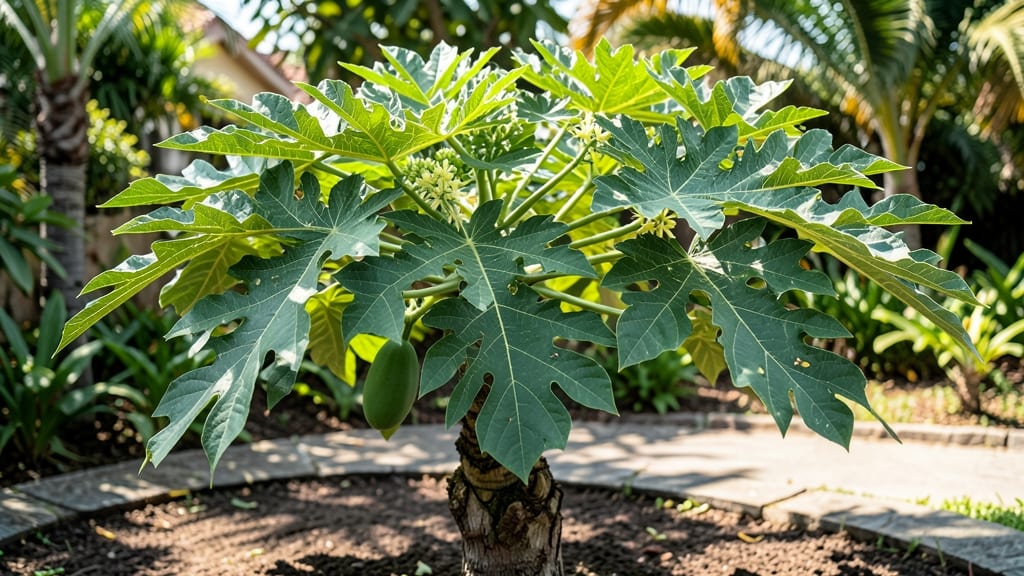
Papaya trees thrive in California's warmest regions, particularly in Southern California where varieties like 'SunUp' and 'Red Maradol' produce abundant fruit. Plant them in fast-draining soil, ensure full sun exposure, and shield from frost using greenhouse setups or move potted trees indoors during cooler months.
Southern California's coastal areas—especially San Diego and Los Angeles—offer the perfect microclimate for papaya cultivation, with mild winters and long growing seasons. 🌿 The key to success lies in mimicking tropical conditions: well-draining soil (sandy loam works best) and consistent moisture without waterlogging.
I've found that container growing extends your options, letting you move plants to sheltered spots when temperatures dip below 50°F. Varieties like 'SunUp' mature faster, while 'Red Maradol' delivers sweeter fruit but needs slightly more warmth.
For year-round care, focus on seasonal adjustments: reduce watering slightly in winter but never let soil dry completely, and prune lightly after harvest to encourage new growth. Organic compost boosts soil fertility naturally, while synthetic fertilizers with balanced NPK ratios (10-10-10) can accelerate fruiting.
The biggest challenge? Frost—even a light freeze can kill young trees, so having a backup indoor space is a game-changer for Northern California growers.
💡 In This Article
- Climate and Soil Requirements for California Papaya Trees
- Year-Round Care Calendar for California Papaya Growers
Climate and soil requirements for California papaya trees
California's coastal regions—particularly San Diego and Los Angeles—create ideal conditions for papaya trees because they mimic tropical climates with mild winters and consistent daytime temperatures above 65°F.
Papayas originate from Central America, where they thrive in USDA Hardiness Zones 10-12, but Southern California's Zone 9b-10a microclimates provide just enough warmth. The key difference?
Coastal areas benefit from ocean breezes that moderate extreme heat, while inland zones like Riverside can experience more intense summer sun requiring afternoon shade protection.
The soil requirements are equally critical. Papayas demand well-draining soil with a pH between 6.0 and 7.5—too acidic or alkaline, and nutrient uptake suffers.
Sandy loam mixes work best because they prevent root rot while allowing oxygen flow. 🌱 In natural tropical soils, organic matter decomposes rapidly, but California's drier climate means you'll need to amend native soil with 3-4 inches of compost before planting.
Container growing solves many soil challenges, letting you control drainage and mix custom substrates with perlite or coconut coir.
Microclimate matters more than you might think. Coastal planting zones near the ocean benefit from higher humidity, which papayas prefer, while inland areas require daily watering to compensate for dry air. The trade-off? Coastal plants may need protection from salt spray, while inland varieties face higher evaporation rates.
I've seen 'SunUp' papayas in San Diego produce fruit year-round with minimal stress, while identical plants in inland Temecula needed afternoon shade cloth during peak summer to prevent leaf scorch.
Temperature extremes are the biggest threat. Papaya trees cannot tolerate frost—even 32°F temperatures will kill young plants. This is why growers in Zone 8 or cooler regions rely on greenhouse setups or move potted trees indoors during winter.
The good news? Southern California's frost-free periods average 250+ days, giving papayas plenty of growing time. For container growers, a simple space heater near the windowsill can maintain safe nighttime temperatures during rare cold snaps.
Light requirements are straightforward: papayas need full sun exposure (6-8 hours daily). In California's intense summer sun, young plants should acclimate gradually to avoid sunburn. Mature trees develop a natural tolerance, but their large leaves can create dense canopies that block lower branches from sunlight.
Pruning to open the canopy improves air circulation and fruit production. The most productive trees I've grown receive morning sun and afternoon shade, balancing photosynthesis with heat stress prevention.
One surprising factor? Wind patterns. Coastal areas experience steady breezes that help prevent fungal diseases, but inland zones can develop stagnant air pockets that trap humidity. A simple fan on low speed near potted plants creates similar airflow benefits. The result? Healthier foliage and fewer pest issues. 💫