
Pruning
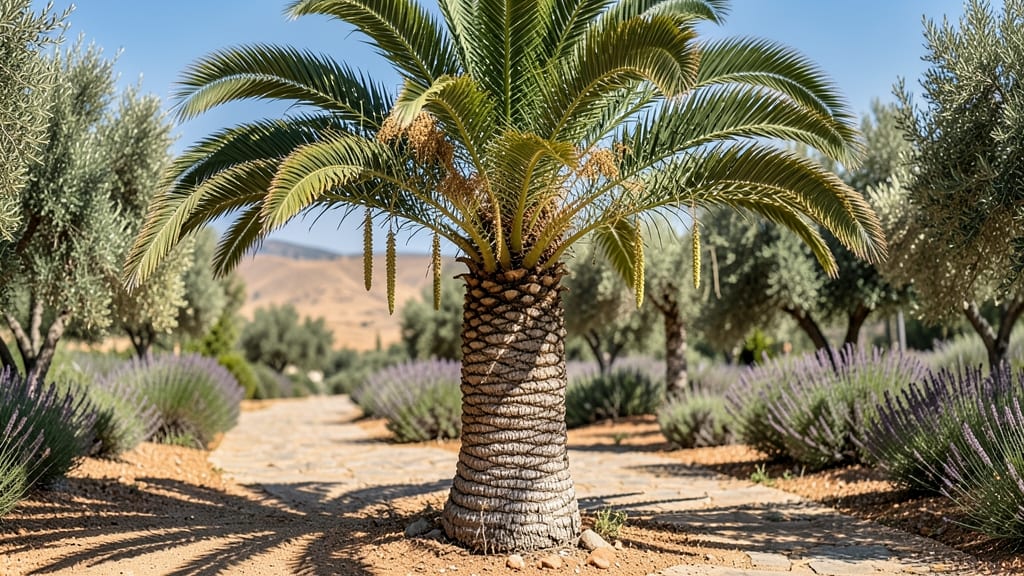
To identify male palm trees, look for long, thin flower stalks (spathes) that emerge from the center and produce clusters of small, pollen-rich flowers without fruit. Unlike female palms, males lack swollen bases or seed pods and often grow less vigorously due to energy focused on pollen production.
Male palm trees reveal their gender through distinctive flowering patterns that differ from female counterparts. 🌿 While female palms develop swollen bases or seed pods after flowering, males produce only pollen-heavy blooms that never mature into fruit.
This energy shift explains why male palms sometimes appear less robust—all their resources go into creating pollen clouds rather than supporting fruit growth.
In my experience, this becomes especially noticeable in species like date palms or coconut palms, where the floral differences are most pronounced during their natural blooming seasons.
For accurate identification, timing matters. Most male palms bloom in spring or early summer, when the spathes emerge and release pollen clouds visible in the air.
If you're unsure, examine the flower stalk closely—male spathes will be longer and thinner compared to female inflorescences, which often develop into fruit clusters. Pro tip: Use a small flashlight for close inspections, especially if the flowers are high up in the canopy.
💡 In This Article
- Key Botanical Differences Between Male and Female Palm Flowers
- Field-Tested Methods to Confirm Male Palm Trees in Your Yard
Key botanical differences between male and female palm flowers
The most striking difference between male and female palm flowers lies in their reproductive structures. Male palms produce spathes—long, tubular flower stalks that unfurl to reveal clusters of tiny, pollen-producing flowers.
These flowers lack ovules (the structures that develop into seeds), so their sole purpose is to generate and disperse pollen clouds. In contrast, female inflorescences develop both flowers with ovules and supporting tissues that will eventually form fruit. 🌟
Under a magnifying glass, you'll notice male palm flowers have 6 stamens (pollen-producing organs) per bloom, while female flowers contain 3 stigmas (receptive surfaces for pollen). This structural difference explains why male palms often produce 10-20% more flowers than females—they're compensating for their pollen-only function.
In species like the Mexican fan palm, male spathes can reach 3-4 feet long, while female inflorescences rarely exceed 2 feet and develop swollen bases as fruit matures.
The energy allocation difference creates visible growth patterns. Male palms direct 70% of their photosynthetic energy toward flower production, leaving less for trunk development or frond expansion. This is why male date palms, for example, often have thinner trunks and less dense foliage compared to females.
The trade-off becomes especially apparent during drought—males prioritize flowering over survival adaptations like water storage in their trunks.
Pollen production also affects the tree's scent profile. Male palms emit a sweet, honey-like aroma during flowering as pollen sacs rupture, while female palms often smell neutral or slightly musky until fruit develops.
This sensory difference provides another identification clue when visual inspection isn't possible. In coconut palms, male trees can produce enough pollen to create visible clouds that travel 50-100 feet on windy days.
One fascinating exception occurs in dioecious palms (where male and female flowers grow on separate trees). Some species like the pygmy date palm produce unisexual flowers—meaning each individual tree is either entirely male or entirely female, with no intermediate forms.
This genetic specialization makes identification more straightforward but also means you'll never find both flower types on a single specimen.
For gardeners, understanding these differences explains why male palms often outnumber females in natural stands—they reproduce more prolifically but at a physiological cost. The male-to-female ratio in wild populations can reach 3:1 in some species, as females invest heavily in fruit production while males focus solely on pollen dissemination.