
Pruning
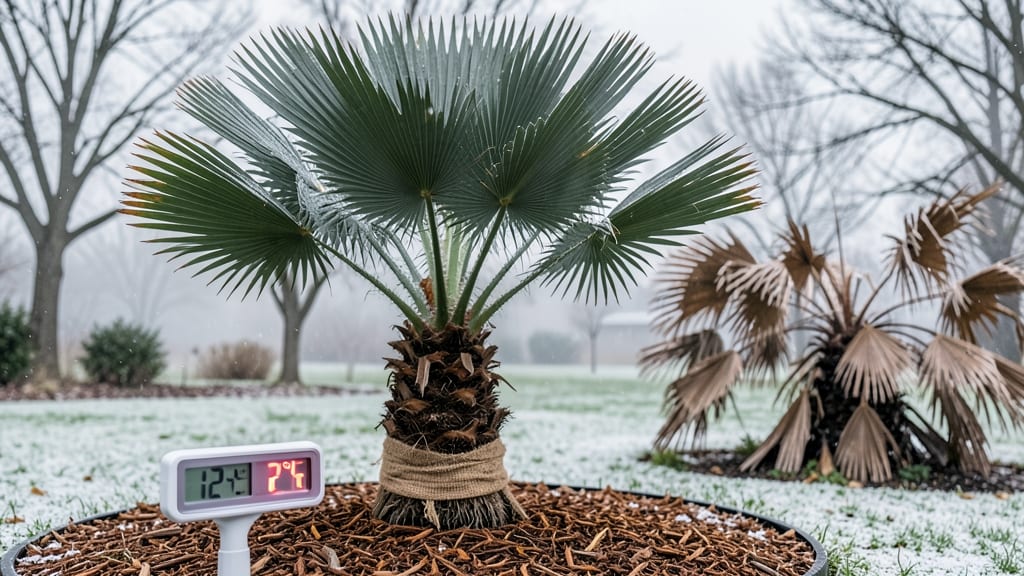
Understanding palm tree cold tolerance reveals that species vary widely, with most thriving in USDA Zones 10-11 but some resilient varieties enduring brief temperature drops to 15°F (-9°C). Effective winter protection—through mulching, trunk wrapping, and smart watering—can dramatically improve their survival odds in colder regions.
Not all palm trees react the same way to chilly weather, which is why knowing your specific variety matters. 🌵 For example, the Windmill Palm can handle temperatures down to 20°F (-7°C) for short periods, while Mediterranean Dwarf Palms struggle below 25°F (-4°C).
The key difference lies in their native climates—some evolved in cooler coastal areas, while others come from tropical regions where frost is unheard of. Even within hardy species, prolonged exposure to freezing temps will eventually cause damage, so temporary protection becomes essential during extended cold snaps.
What makes winter care so critical is how quickly cold stress affects palm trees. Unlike deciduous plants that can shed leaves, palms remain vulnerable year-round.
A thick layer of mulch around the base helps insulate roots, while wrapping trunks with burlap or specialized palm wraps prevents cracking from rapid temperature swings. I’ve seen dramatic results by combining these methods with strategic watering—keeping soil moist (but not soggy) helps maintain cellular function during cold snaps.
💡 In This Article
- Cold-Hardy Palm Tree Species and Their Survival Limits
- Winter Care Strategies for Protecting Palm Trees from Freezing
Cold-hardy palm tree species and their survival limits
The cold tolerance of palm trees isn't just about the lowest temperature they can handle—it's about how long they can endure those conditions. For instance, the Needle Palm (Rhapidophyllum hystrix) can survive brief dips to 5°F (-15°C), making it one of the most resilient species.
This hardiness comes from its native habitat in the southeastern U.S., where it evolved to withstand occasional frost. In contrast, the Mediterranean Dwarf Palm (Chamaerops humilis) struggles below 25°F (-4°C) for extended periods, as its roots aren't adapted to freezing soil. 🌟
Duration matters just as much as temperature. A Windmill Palm (Trachycarpus fortunei) might survive a single night at 20°F (-7°C), but prolonged exposure below 15°F (-9°C) will cause irreversible damage to its fronds and trunk.
Hybrid varieties, like the Chinese Windmill Palm crosses, often bridge these gaps, offering 10-15°F (-12 to -9°C) tolerance through selective breeding. These hybrids combine the cold resistance of their parent species while retaining tropical aesthetics.
For example, a Trachycarpus 'Wabash Avenue' hybrid can handle 10°F (-12°C) better than its purebred counterparts.
What most gardeners overlook is how wind and moisture amplify cold damage. A palm tree in a sheltered microclimate with 30% humidity can tolerate 5°F colder than one exposed to dry, windy conditions.
This is why wrapping trunks with burlap or foam insulation isn't just about temperature—it's about protecting the vascular system from desiccation. The Sabal Palm (Sabal minor), for example, can endure 15°F (-9°C) when properly insulated, but its fronds will brown if winds exceed 20 mph during a freeze.
Another critical factor is the palm's growth stage. Young palms are far more vulnerable than mature ones because their vascular systems aren't fully developed. A 3-year-old Needle Palm might survive 10°F (-12°C) with protection, while a 20-year-old specimen could handle 5°F (-15°C) under the same conditions.
This is why gardeners in USDA Zone 8 often plant cold-hardy species like Dwarf Palmetto (Sabal minor) in containers—they can be moved to sheltered areas during winter, extending their survival range by 5-10°F.
To put these tolerances into perspective, consider that most tropical palms (like Coconut or Royal Palms) begin showing damage at 32°F (0°C)—a threshold that cold-hardy species like the Needle Palm can withstand for weeks.
The difference lies in their cellular structure: cold-hardy palms produce antifreeze proteins similar to those in cold-resistant plants like winter wheat, which prevent ice crystal formation in their tissues. This biological adaptation is what allows them to push their limits further than their tropical cousins. 💫
For gardeners pushing the boundaries, microclimate manipulation is the key. Using windbreaks, mulch rings, and even temporary greenhouses can create localized conditions that add 3-8°F of protection. For example, a Chinese Windmill Palm planted near a south-facing wall in Zone 7 might survive winters that would otherwise be lethal.
The wall absorbs solar radiation during the day, radiating heat back at night—a natural insulation effect that mimics the palm's native subtropical environments.