
Pruning
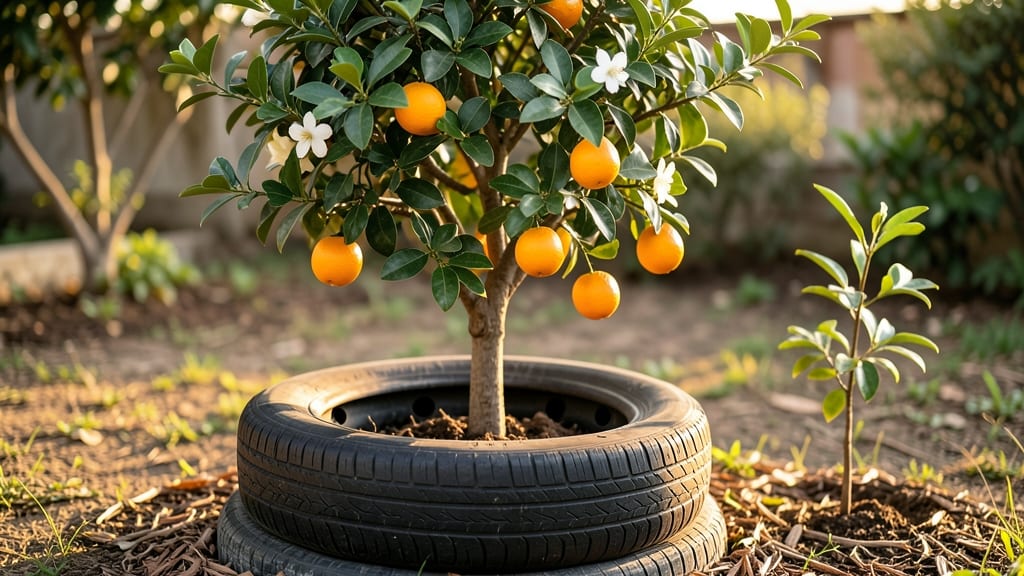
Repurposing old tires into orange tree planters saves space and gives your dwarf citrus a whimsical, industrial-chic look. 🌱 I’ve turned discarded tires into thriving orange trees—each one a vertical garden statement that doubles as a conversation starter.
The key? Proper prep (drainage, lining) and soil that mimics their Mediterranean roots.
Start with clean, dry tires—drill drainage holes and line them with plastic to block tire toxins. Fill with a mix of 60% potting soil, 30% perlite, and 10% compost to keep roots aerated and moist.
Dwarf varieties like ‘Calamondin’ or ‘Meyer’ stay compact, perfect for stacking tires into rustic towers or lining them along fences.
You’ll end up with sun-drenched, fragrant citrus that produces fruit in just 2–3 years. The vertical setup maximizes tiny patios, and the tires’ dark color warms up cool spaces. Just keep an eye on drainage—overwatering in tires is a fast track to root rot.
For extra flair, paint tires with non-toxic chalk paint or leave them raw for a rugged vibe. Group odd-sized tires for a playful, organic look. This project turns trash into treasure while giving your dwarf orange tree the perfect home.
📚 In This Guide
- What you need
- Instructions
- Tips and common mistakes
- Wrapping up and next steps
What you need
- ● Pruning shears: Bypass pruners (sharp, clean, and sterilized with rubbing alcohol to prevent disease). Size: 6–8 inches for small branches.
- ● Loppers: For thicker branches (up to 1.5 inches in diameter). Quantity: 1 pair.
- ● Hand pruners: For precision trimming of tiny shoots. Quantity: 1 pair.
- ● Disposable gloves: Nitril-coated for grip and protection. Quantity: 1–2 pairs.
- ● Rubbing alcohol (70% or higher): For sterilizing tools between cuts. Quantity: Small bottle.
- ○ Pruning sealant (optional): Wound dressing for larger cuts (e.g., Tanglefoot Tree Wound Pruning Seal). Quantity: Small tube.
- ● Container or bucket: For collecting clippings (if composting or disposing). Size: Large enough to hold trimmings.
- ● Timing: Prune during the tree’s dormant season (late winter/early spring) or after fruiting (for dwarf varieties). Avoid heavy pruning in summer.
- ● Weather: Choose a dry, overcast day to minimize stress on the tree and reduce disease risk.
- ○ Safety gear: Safety glasses (optional but recommended for debris-prone pruning).
- ● Tree health check: Inspect the tree for pests/diseases before pruning. Treat issues first!
- ● 🔥 Sharpen your tools: Dull blades tear bark—always sharpen pruners before starting.
- ● 🌡️ Sterilize between trees: If you have multiple citrus plants, clean tools with alcohol to avoid cross-contamination.
- ● ✨ Mark your cuts: Use a permanent marker to outline where you’ll trim for a cleaner look.
Step-by-step guide to pruning dwarf orange trees in containers
Here’s how I keep my dwarf citrus trees compact, productive, and healthy—without sacrificing fruit.
✂️ Step 1: Time Your Pruning for Best Results
Prune your dwarf orange tree in late winter or early spring, just as new growth begins. This timing ensures you don’t cut back into wood that’s already set buds for next year’s fruit. Avoid pruning in fall, as the tree needs its leaves to store energy for winter dormancy.
Look for swollen buds on the branches—these signal the tree is waking up from dormancy. That’s your cue to start shaping. If you prune too early, you’ll remove potential fruit-bearing wood. If you wait too long, you’ll encourage excessive summer growth that weakens the tree before winter.
✂️ Step 2: Remove Dead or Weak Growth First
Start by cutting out any dead, diseased, or crossing branches with clean, sharp pruning shears. Dead wood is easy to spot—it’s brown, brittle, and doesn’t bleed sap when cut. Diseased branches may have black spots, mold, or ooze. Remove these first to improve airflow and reduce pests.
Next, trim back any weak or leggy growth—thin stems that stretch outward without leaves or buds. These branches steal energy from the tree instead of producing fruit. Cut them back to a strong lateral branch or bud, making your cut at a 45-degree angle just above the growth point.
✂️ Step 3: Shape the Tree for Compact Growth
Dwarf orange trees benefit from an open-center shape, where the branches spread outward rather than growing straight up. Start by selecting 3-4 main scaffold branches—these should be evenly spaced around the trunk and angled outward. Remove any competing branches that grow inward or crowd these main stems.
To encourage bushier growth, trim back the tips of the remaining branches by one-third. This stimulates lateral bud growth, creating a fuller, more compact tree. Avoid cutting into old wood—focus on the newer growth from the current season. You’ll see fresh, green shoots emerge within 2-3 weeks.
✂️ Step 4: Thin Out Overcrowded Areas
If your tree has too many branches in one area, they’ll compete for sunlight and nutrients, leading to smaller fruit and weaker growth. Use your fingers to gently separate the branches—if they’re rubbing against each other, it’s time to thin. Remove the weaker branch, cutting it back to a strong lateral branch or the trunk if necessary.
Pay special attention to the center of the tree, where branches often grow tightly together. Open up this space to allow sunlight to reach the inner growth, which prevents disease and encourages fruit production. A well-thinned tree will have evenly spaced branches with good airflow between them.
🌿 Step 5: Clean Up and Monitor After Pruning
After pruning, sterilize your tools with rubbing alcohol to prevent spreading disease. Collect and dispose of all pruned branches—don’t leave them on the ground, as they can harbor pests. If you’re composting, bag the clippings first to prevent fungal spores from spreading.
Water your tree deeply 24 hours after pruning to help it recover. Keep an eye on new growth—if you see yellowing leaves or wilting, it could mean the tree is stressed. In this case, reduce watering slightly and ensure it’s getting enough bright, indirect light (6+ hours daily). With proper care, your dwarf orange tree will bounce back stronger and more productive.
Tips & tricks for perfect dwarf orange tree pruning
Keeping your container-grown dwarf orange tree healthy and compact takes just a few key insights—here's what I've learned after years of trial and error.
Timing is Everything: The late winter to early spring window is critical because that's when your tree naturally enters active growth. I always check for those swollen buds—if they're still tight, wait a few more days. If you're in a warmer climate where buds appear earlier, aim to prune just as they begin to plump up. This ensures you're not cutting into next year's potential fruit.
Tool Prep Makes All the Difference: Before you even touch a branch, sterilize your pruning shears with rubbing alcohol. I keep a small bottle right next to my tools—this prevents spreading disease from one cut to the next. Also, make sure your shears are sharp; dull blades tear wood instead of making clean cuts, which slows healing and invites infection. A quick test: if you need to force the blades through a twig, they're too dull.
Shape with Purpose: When selecting those 3-4 main scaffold branches in Step 3, think about sunlight exposure. Place them evenly around the trunk so no single branch gets shaded by others. I like to visualize the tree from above—imagine it as a wheel with spokes radiating outward. This open-center shape isn't just aesthetic; it creates better airflow and prevents fungal issues that thrive in dense foliage.
Post-Pruning Recovery: That 24-hour watering window after pruning is your tree's chance to recover. I always give mine a thorough soak, but I monitor the soil afterward—if it's still damp 24 hours later, I hold off on watering again. Watching for yellowing leaves is key too; if you see them, it's usually a sign of stress from either overwatering or insufficient light. Move the tree to a sunnier spot if needed, but avoid direct midday sun until it recovers.
Pro Tips for Orange Tree Tire
- Keeping your container-grown dwarf orange tree healthy and compact takes just a few key insights—here's what I've lea...
- Timing is Everything: The late winter to early spring window is critical because that's when your tree naturally ente...
- Tool Prep Makes All the Difference: Before you even touch a branch, sterilize your pruning shears with rubbing alcoho...
Frequently asked questions
Got questions about managing your dwarf orange tree in containers? Here are some common concerns—and their answers—to help you keep your orange tree tire (or any container-grown citrus) thriving while controlling its height:
Why is my dwarf orange tree growing too tall for its container?
Even dwarf varieties can outgrow their containers if pruned too lightly or fertilized heavily. Root-bound stress or overcrowding also triggers vertical growth. Prune in late winter/early spring to encourage bushier growth—focus on cutting back 1/3 of the tallest branches to redirect energy outward. If repotting isn’t an option, trim roots gently (sterilized scissors) to curb height spikes.
When is the best time to prune a dwarf orange tree in a tire planter?
The ideal window is late winter to early spring (just before new growth starts). Avoid heavy pruning in summer—it stresses the tree and exposes it to pests. For container-grown trees, light maintenance pruning (removing dead wood or crossing branches) can happen year-round, but major height control waits for dormancy.
Can I use the same pruning techniques for a dwarf orange tree as a full-size one?
Yes, but with key adjustments! Both use the "open-center" method (pruning to create an airy canopy), but dwarf trees need less aggressive cuts. Avoid removing more than 25% of foliage at once—dwarf varieties are more sensitive to shock. Also, sterilize tools between cuts to prevent disease spread in compact tire planters.
What should I do if my orange tree’s new growth is leggy after pruning?
Leggy growth usually means the tree needs more light or balanced nutrients. Move your tire planter to a sunnier spot (6+ hours of light daily) and adjust fertilizer: Reduce nitrogen (which fuels leafy growth) and add phosphorus/potassium (for fruit/bushiness). Pinch back the tips of new shoots to encourage branching—this tricks the tree into growing wider.
Are there non-pruning alternatives to control height in a container?
If pruning feels drastic, try these low-effort tricks:
- Top-dressing: Add a 2-inch layer of compost around the base to crowd roots and slow vertical growth.
- Thinning fruit: Heavy fruit loads can stunt growth—remove 50% of small oranges to redirect energy to foliage.
- Container size: Upgrade to a 1–2 inch larger tire (if possible) to give roots more room to spread horizontally.
For stubborn height issues, root pruning (trimming circling roots) can also help—just do it in early spring!
Wrapping up and next steps
Mastering orange tree tire pruning for dwarf varieties in containers is all about balance—keeping your tree healthy, compact, and thriving! 🌱 With the right tools, timing, and techniques, you’ll enjoy bountiful harvests while maintaining control over its growth.
Whether you’re a beginner or a seasoned gardener, every trim brings you one step closer to a perfectly shaped, productive little citrus tree.
Ready to take the next step? Monitor your tree’s progress after pruning—adjust as needed—and don’t forget to share your success (or ask questions!) in gardening communities. Happy pruning! 🍊✂️