
Trees
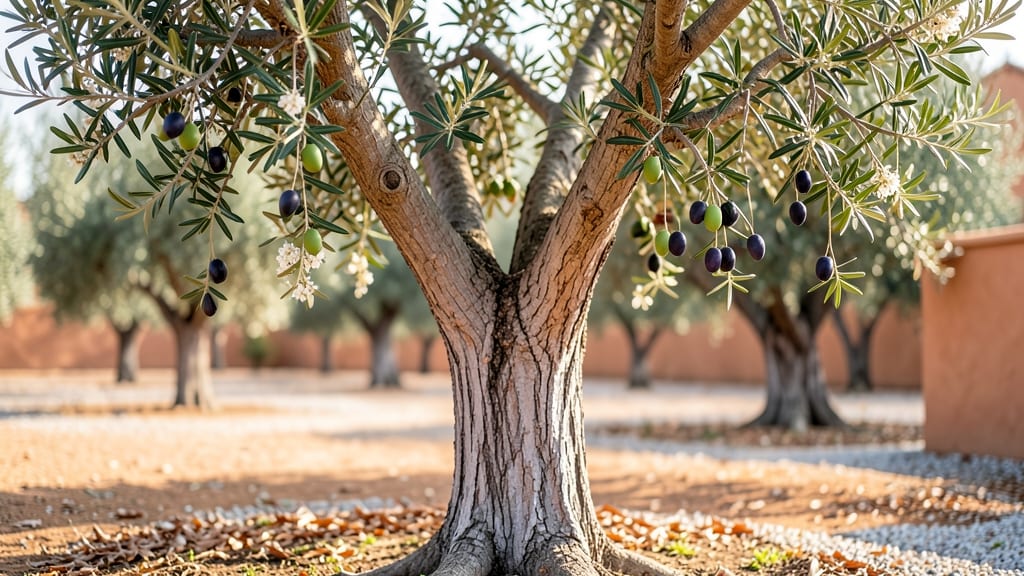
Understanding the olive tree fruit stages 🫒 is the key to predicting when your harvest will arrive—and how to care for the tree at each step.
Picture this: one morning, your olive tree is blanketed in tiny white flowers, and by summer, you’re staring at tiny green olives that’ll eventually turn deep purple or black. But what happens between those two points? And how do you know when they’re truly ready to pick?
This month-by-month guide breaks down every stage of olive fruit development, from pollination to harvest readiness. You’ll learn how to spot the subtle color shifts, size changes, and even texture clues that signal ripeness—so you never miss the perfect moment to harvest.
Whether you’re a first-time grower or a seasoned gardener, these practical tips will help you avoid common mistakes, like harvesting too early (bitter olives) or too late (soft, spoiled fruit). Let’s dive into the fascinating journey from bloom to bounty.
Olive tree flowering to fruit set: critical stages and what to watch for
When your olive tree bursts into white or pink blossoms in early spring, it’s a critical window for fruit development. These flowers—some perfect (male and female) and others staminate (male-only)—must pollinate successfully to set fruit.
Without proper care, up to 90% of blossoms may drop before forming olives, leaving you with sparse harvests.
This March–May transition is where environmental factors like temperature swings, water stress, and pest pressure can make or break your crop. Understanding these stages helps you intervene early—whether it’s adjusting irrigation or protecting against olive fruit flies.
🌱
| Stage | Key Features | Critical Actions | Watch For |
|---|---|---|---|
| Flowering (March) | White/pink perfect flowers (both sexes) and staminate flowers (male-only). Fragrant, clustered blooms. | Monitor for bee activity (pollinators). Avoid wind disruption (e.g., fans). | Premature drop if temps < 50°F or > 90°F. |
| Pollination (Late March) | Flowers wilt; tiny green olives (peas) form. 20% fruit set is ideal. | Check for olive fruit fly eggs (tiny white specks). Apply kaolin clay if needed. | Blackened buds = fungal infection (e.g., peacock spot). |
| Fruit Set (April) | Olives grow to pea size (0.25"). 50% drop occurs if stressed. | Reduce watering frequency to every 10–14 days. Prune water sprouts to redirect energy. | Wilting leaves = root aphid infestation or overwatering. |
| Early Growth (May) | Olives reach cherry size (0.5"). Color shifts from bright green to dull green. | Apply balanced fertilizer (5-10-10) if soil tests low in potassium. | Yellowing leaves = nutrient deficiency (e.g., magnesium). |
During flowering, olive trees rely on bees and wind for pollination, but temperature extremes can disrupt this process. If nights dip below 50°F (10°C) or days exceed 90°F (32°C), blossoms may abort before setting fruit.
I’ve seen entire crops fail in heatwaves or after late frosts, so monitoring your local 10-day forecast is key.
Another common issue is premature fruit drop, often caused by water stress or over-fertilization. Olive trees are drought-tolerant, but their fruit is not. If you’ve ever watered deeply one day and skipped the next, you’ve likely triggered this problem.
Aim for consistent moisture—deep watering every 7–10 days—rather than frequent shallow drinks.
Pests like the olive fruit fly and scale insects also target young fruit. You’ll spot their damage as tiny holes or sticky residue on olives. Early intervention with neem oil or horticultural oil can save 30–50% of your crop.
I recommend spraying in the early morning to avoid harming pollinators still active on the tree.
One pro tip I’ve learned is to thin fruit when olives reach pea size. Overloaded branches can’t support all the weight, leading to small, misshapen olives.
Simply pinch off every other olive to leave 6–8 inches between fruits. This boosts size and oil content in the remaining olives.
Finally, keep an eye on leaf curl or yellowing, which can signal bacterial or fungal issues. Prune affected branches immediately and sterilize tools with 70% isopropyl alcohol to prevent spread. A healthy tree in this stage sets the foundation for a successful harvest come fall.
☀️
Olive fruit growth timeline: month-by-month size, color, and ripeness guide
From June to October, your olive tree’s fruit undergoes dramatic changes—shifting from tiny green pebbles to rich, harvest-ready olives. Understanding these monthly milestones helps you predict ripening and avoid premature drops.
Early summer brings rapid growth, while late fall signals peak flavor. Let’s break down the visual and tactile cues you’ll notice each month.
In June, olives start as pea-sized (0.25–0.5 inches) and bright green, resembling tiny marbles. By July, they double in size (0.5–1 inch) and develop a slightly waxy texture. This is when color shifts begin—some varieties like Manzanillo stay green longer, while Arbequina may show faint purple streaks.
Pay attention to fruit drop; healthy trees shed 30–50% of olives naturally, but excessive loss signals stress.
| Month | Manzanillo | Arbequina | Size (inches) | Color | Ripeness Test |
|---|---|---|---|---|---|
| June | Bright green | Bright green | 0.25–0.5 | 🟢 | Firm, no pit movement |
| July | Green with waxy coating | Green-purple blush | 0.5–1 | 🟢/🟣 | Pit slightly movable |
| August | Dark green | Purple-black | 1–1.5 | 🟣 | Skin softens |
| September | Black-green | Deep purple | 1.2–1.8 | 🟣/⚫ | Pit detaches easily |
| October | Black | Black | 1.5–2 | ⚫ | Skin wrinkles slightly |
By August, olives reach 1–1.5 inches and their color darkens. Manzanillo stays dark green-to-black, while Arbequina turns deep purple. Test ripeness by gently squeezing the fruit—if the pit moves slightly inside, it’s nearing readiness.
Avoid harvesting too early; unripe olives are bitter and astringent. Reduce watering in late summer to concentrate sugars in the fruit.
September is critical for harvest timing. Olives should be 1.2–1.8 inches with a wrinkled skin and dark purple-to-black hue. Press a fruit against your palm—if the pit slips out easily, it’s prime.
Arbequina ripens 2–3 weeks earlier than Manzanillo, so monitor both varieties separately. Overripe olives become soft and prone to mold, so act quickly once you spot these cues.
In October, olives reach their final size (1.5–2 inches) and peak flavor. The skin turns uniformly black, and the flesh softens enough to wrinkle slightly. This is your harvest window—delaying too long risks fruit drop or spoilage.
For table olives, harvest when 70–80% ripe; for oil production, wait until fully black. Store harvested olives in shaded, dry conditions to preserve quality.