
Pruning
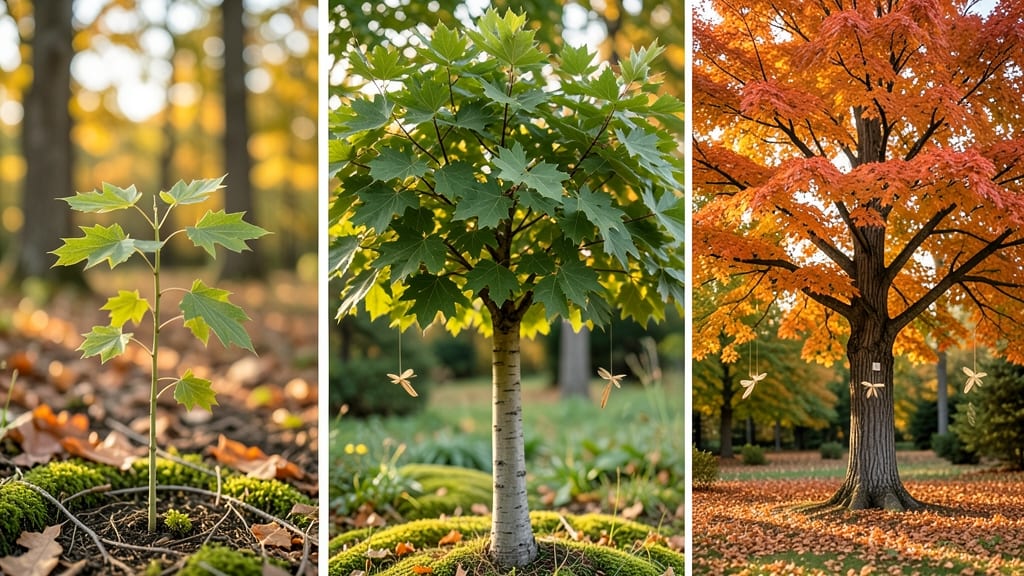
Understanding the maple tree growth stages turns a guessing game into a rewarding journey, where each season reveals new milestones in your tree’s life 🌳.
Picture this: a tiny seedling unfurling its first leaves in spring, then racing toward 6 feet by summer, only to pause in winter—each phase demanding different care. Without knowing these stages, you might overwater a young sapling or prune at the wrong time, stunting its potential.
In this guide, I’ll walk you through every stage—from seed germination to a towering mature tree—so you can spot healthy growth and troubleshoot problems before they start.
You’ll learn how sunlight, soil, and seasonal shifts influence each phase, plus practical tips to keep your maple thriving year-round in Zone 6a and beyond.


Maple tree growth stages by age: from seedling to mature canopy
Understanding your maple tree’s growth stages helps you provide the right care at each life phase. In the first 5 years, rapid root and trunk development set the foundation, while 5-20 years focuses on canopy expansion.
After 20+ years, your tree reaches its mature height and structural integrity. Each stage responds differently to sunlight, soil, and water—critical factors that determine whether your maple thrives or struggles.
For young maples (0-5 years), focus on protecting delicate roots and stems from harsh conditions. Mature trees (20+ years) need less frequent watering but benefit from regular pruning to maintain their grand stature.
The key is adapting your care routine to match these developmental milestones while monitoring seasonal growth patterns.
🌱 Growth Stage Summary
In the seedling stage (0-2 years), your maple’s growth is all about establishing roots. During this phase, focus on consistent moisture and protecting the young trunk from physical damage.
Seedlings need partial shade to prevent stress, especially in hot climates. Without proper care, they’re vulnerable to root rot or stem breakage from wind.
By years 3-5, your sapling enters its fastest growth phase. This is when you’ll see the first lateral branches forming and leaves reaching 4-6 inches in length. Provide full sun exposure (6+ hours daily) to encourage strong trunk development.
Poor sunlight at this stage can lead to weak, spindly growth that’s prone to snapping in storms.
Between 5-20 years, your maple’s canopy expands dramatically. This is the ideal time to prune for structure, removing weak or crossing branches before they become permanent fixtures.
During this phase, maples are most responsive to balanced fertilization (10-10-10 NPK) applied in early spring. Over-fertilizing now can cause excessive leaf growth at the expense of root development.
Once your maple reaches 20+ years, growth slows but the tree’s majesty becomes undeniable. Mature maples develop thick, furrowed bark and canopies wide enough to provide shade for an entire yard.
At this stage, focus shifts to maintenance pruning to remove deadwood and maintain airflow. Established trees tolerate drought better but still need deep watering during prolonged dry spells.
Seasonal variations play a crucial role in maple growth. In spring, new leaves emerge after buds swell—this is when your tree needs the most water. Summer growth is all about leaf expansion, while autumn brings the famous foliage display.
Winter dormancy is essential for maples; avoid pruning during this time as it stresses the tree and invites pests.
Environmental factors like soil pH (ideal: 6.0-7.5) and drainage directly impact growth rates. Compacted or waterlogged soil stunts root development, while well-draining loam encourages vigorous growth. Test your soil annually and amend with compost if needed. For container-grown maples (dwarf varieties), repot every 2-3 years to prevent root binding.
My biggest tip for nurturing maples through all stages? Observe their growth patterns seasonally. A healthy young maple will produce bright green leaves in spring that darken to rich green by summer.
Any yellowing or wilting signals stress—often from overwatering or nutrient deficiencies. Adjust your care immediately to prevent long-term damage.
Seasonal changes in maple tree growth: buds, leaves, and sap flow explained
Every season brings dramatic changes to your maple tree—from the first spring sap flow to the vibrant autumn foliage that makes these trees iconic.
Understanding these shifts helps you provide the right care at the right time. Spring signals new growth, summer expands the canopy, fall transforms leaves into fiery displays, and winter prepares the tree for dormancy. Let’s break down what to expect and how to support your maple through each cycle.
In late winter, your maple’s buds swell with anticipation, a sign that the tree is preparing for spring growth. By March or April, depending on your USDA zone, these buds burst open to reveal tender new leaves.
This is also when sap flow peaks, making it the ideal time for maple syrup tapping if you’re growing sugar maples. Pay attention to bud color—green indicates healthy growth, while brown or mushy buds may signal disease or frost damage.
Buds swell and open into green leaves. Sap flow is at its peak—tap sugar maples now. Watch for bud blight (brown, crusty buds).
Leaves fully unfold by June, reaching 3–6 inches wide. Prune to shape canopy; avoid heavy cuts that stress the tree. Yellowing leaves may signal nutrient deficiency or pests like aphids.
Leaves turn red, orange, or yellow as chlorophyll breaks down. Drought stress can dull colors—water deeply if summer was dry. Avoid pruning now; it disrupts the tree’s energy reserves before winter.
Tree enters dormancy; sap flow stops. Mulch the base to protect roots from freezing. Bark splitting or peeling is normal—it’s how the tree adjusts to temperature changes. Avoid pruning until buds swell in spring.
During summer, your maple’s canopy thickens as leaves expand to their full size—typically 3–6 inches wide, depending on the species. This is the best time to prune for shape, but limit cuts to 10–15% of the canopy to avoid stress.
Look for yellowing leaves or sticky residue (a sign of aphids or scale insects). A light application of horticultural oil can help if pests appear.
As autumn arrives, the real magic happens. The chlorophyll in leaves breaks down, revealing anthocyanins and carotenoids that create those stunning reds, oranges, and yellows. Drought stress or nutrient deficiencies can dull these colors, so ensure your tree has consistent moisture and balanced soil.
Avoid pruning now—it removes the tree’s energy reserves before winter.
When winter settles in, your maple enters dormancy, a critical period for its survival. Sap flow stops, and the tree relies on stored nutrients to survive freezing temperatures. Mulch the base with 3–4 inches of organic mulch (like wood chips) to insulate roots.
Watch for bark splitting or peeling, which is normal as the tree adjusts to temperature fluctuations. Never prune during dormancy—wait until buds swell in late winter.
By understanding these seasonal shifts, you’ll know exactly when to water, fertilize, prune, or protect your maple. Healthy growth in spring sets the stage for a vibrant summer, a showstopping fall, and a resilient winter.
With the right care, your maple will thrive for decades—adding beauty and value to your landscape year after year. 🌳